
Free visual inspection and a written scope of work before any mitigation begins - photos, moisture readings, and drying logs go in your claim file
The scope we write is the scope we bill. Anything new gets shown to you, in writing, before we touch it.
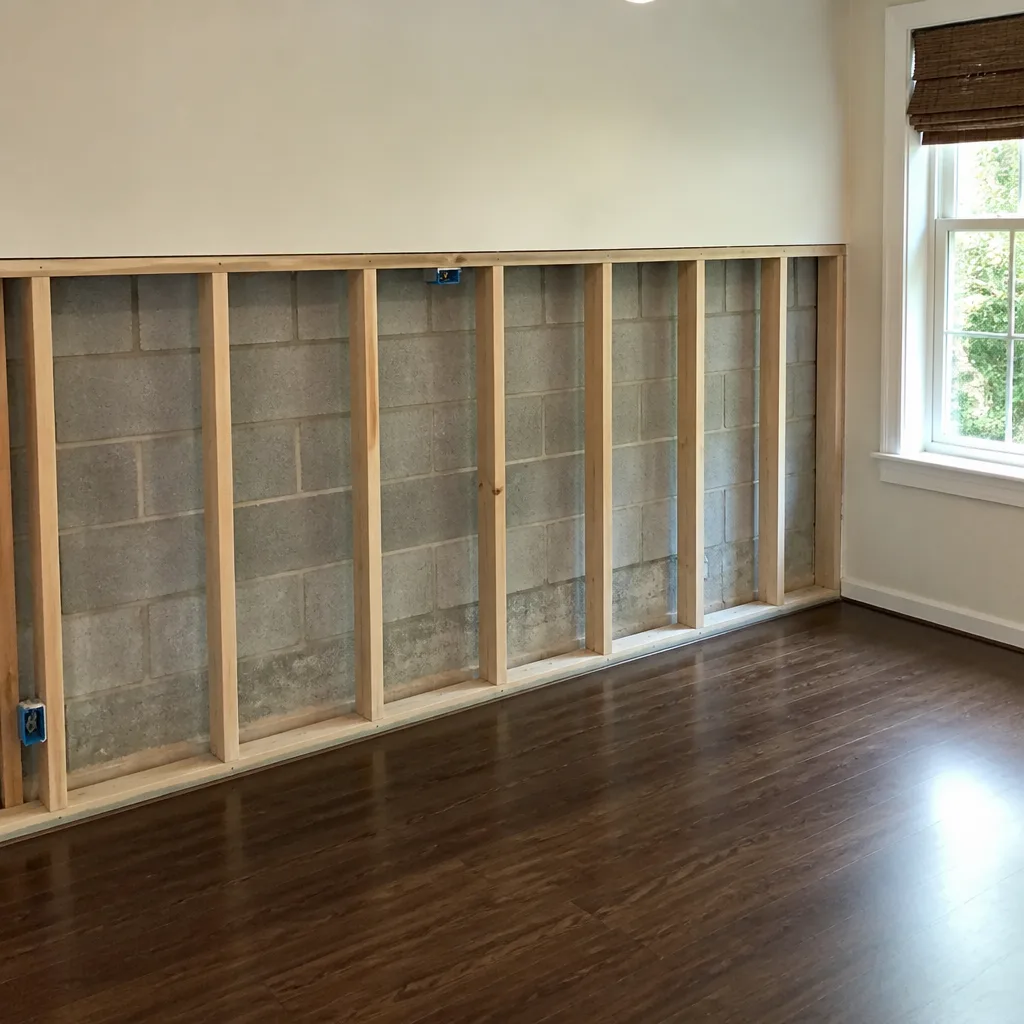
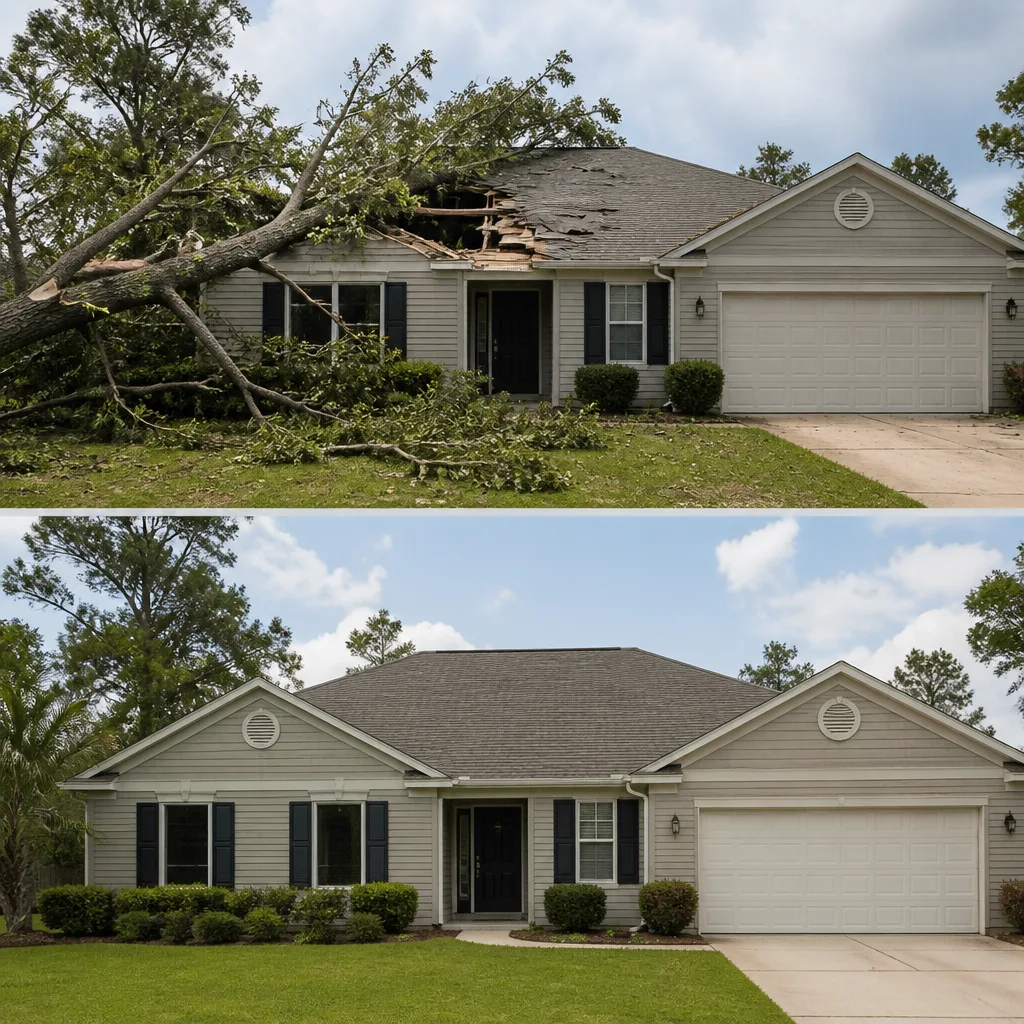
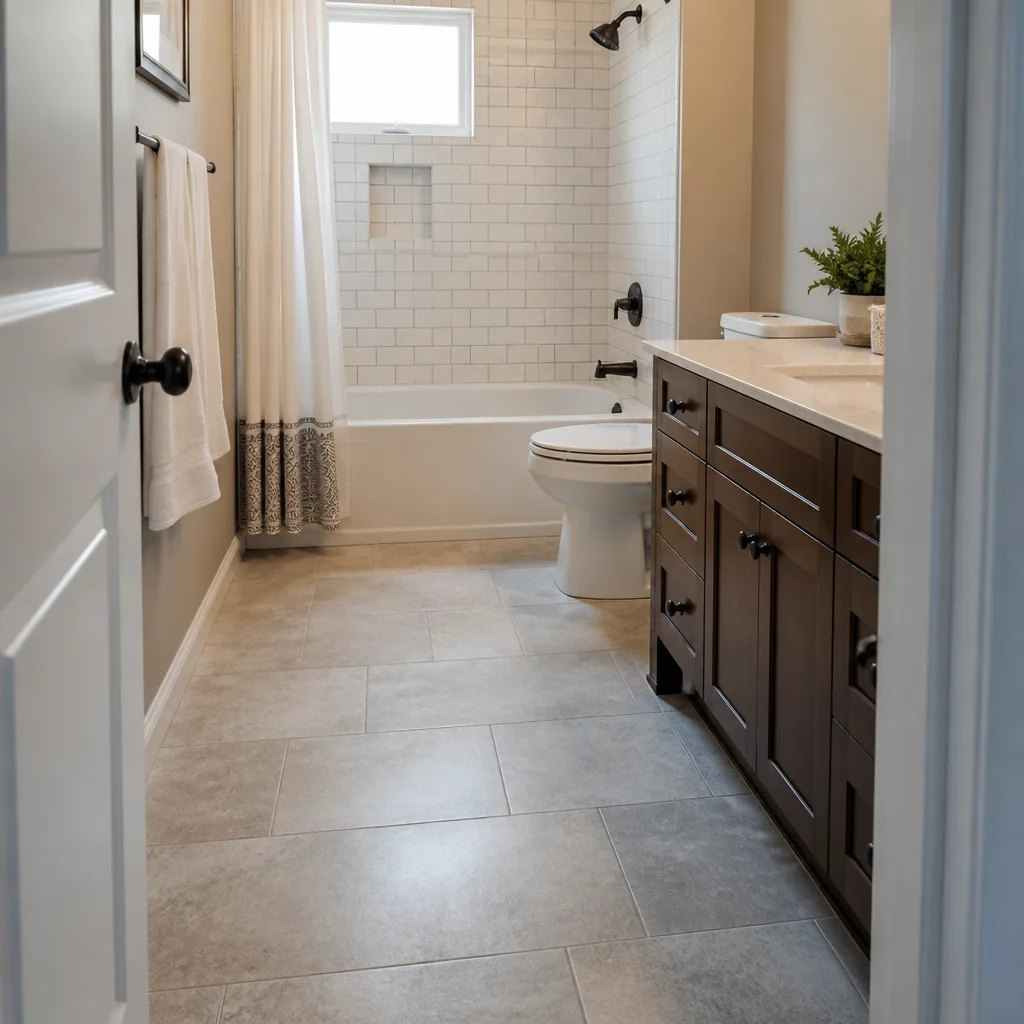
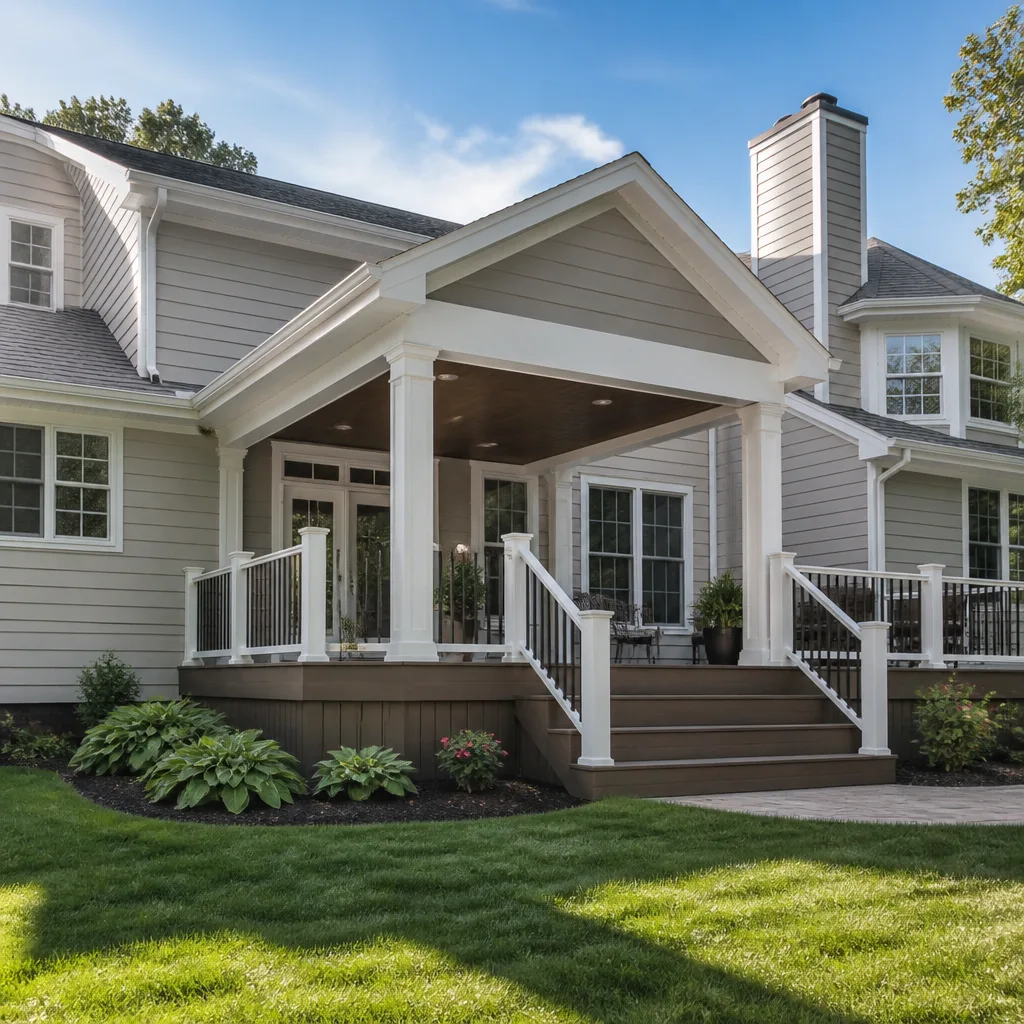
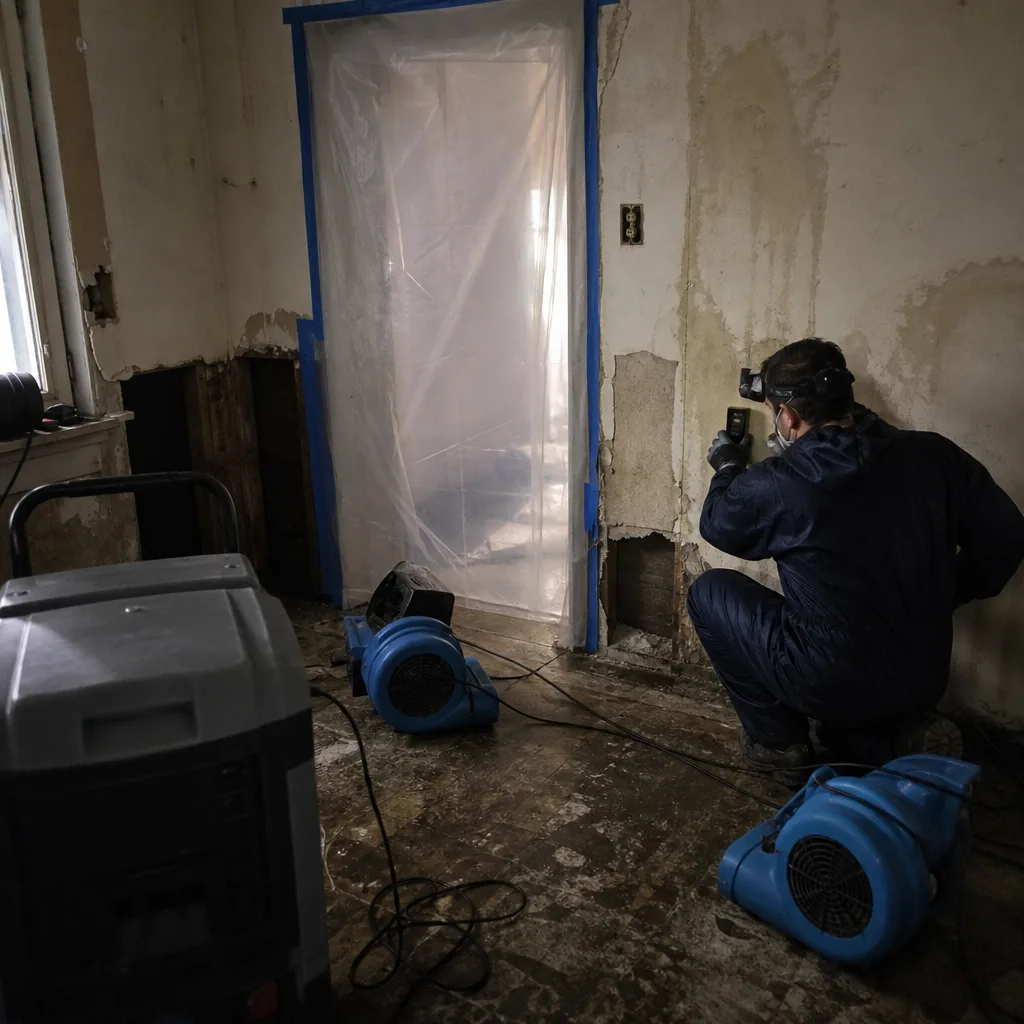 Before
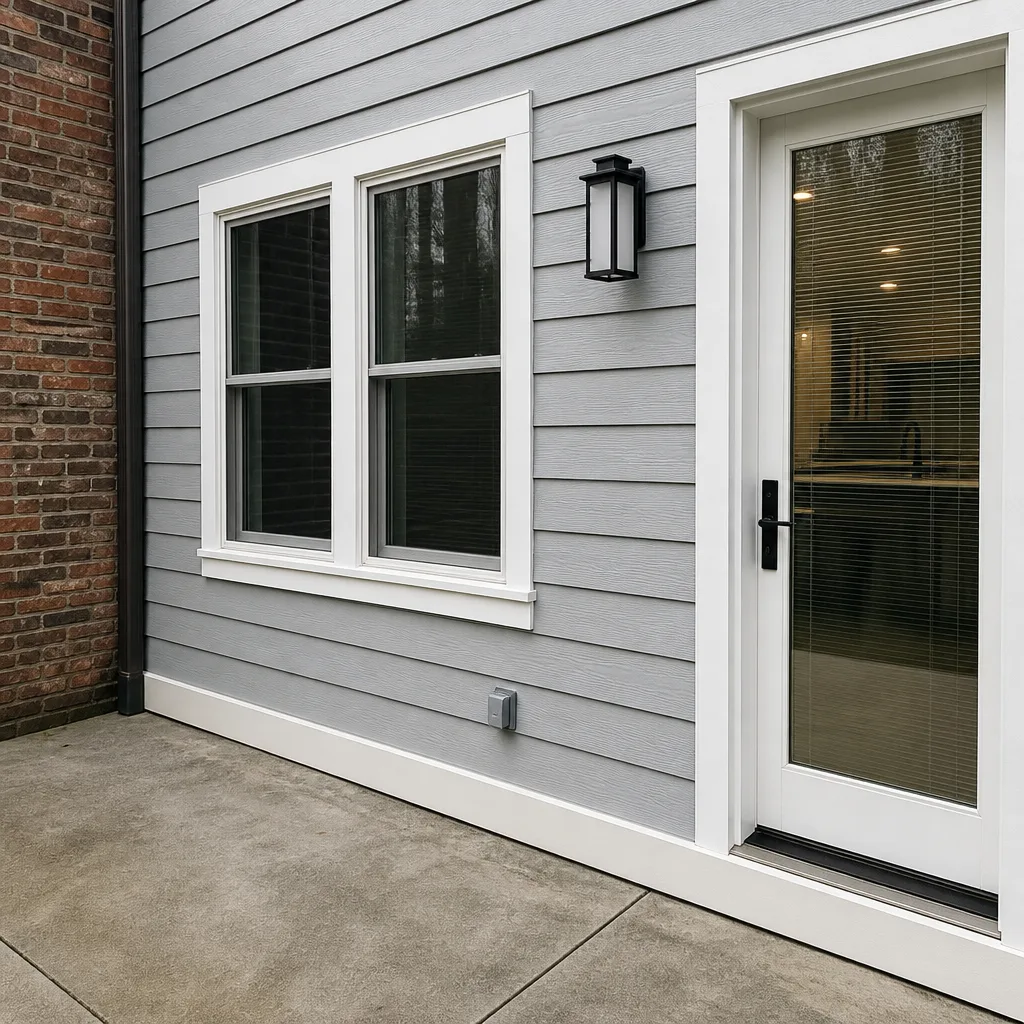 After
After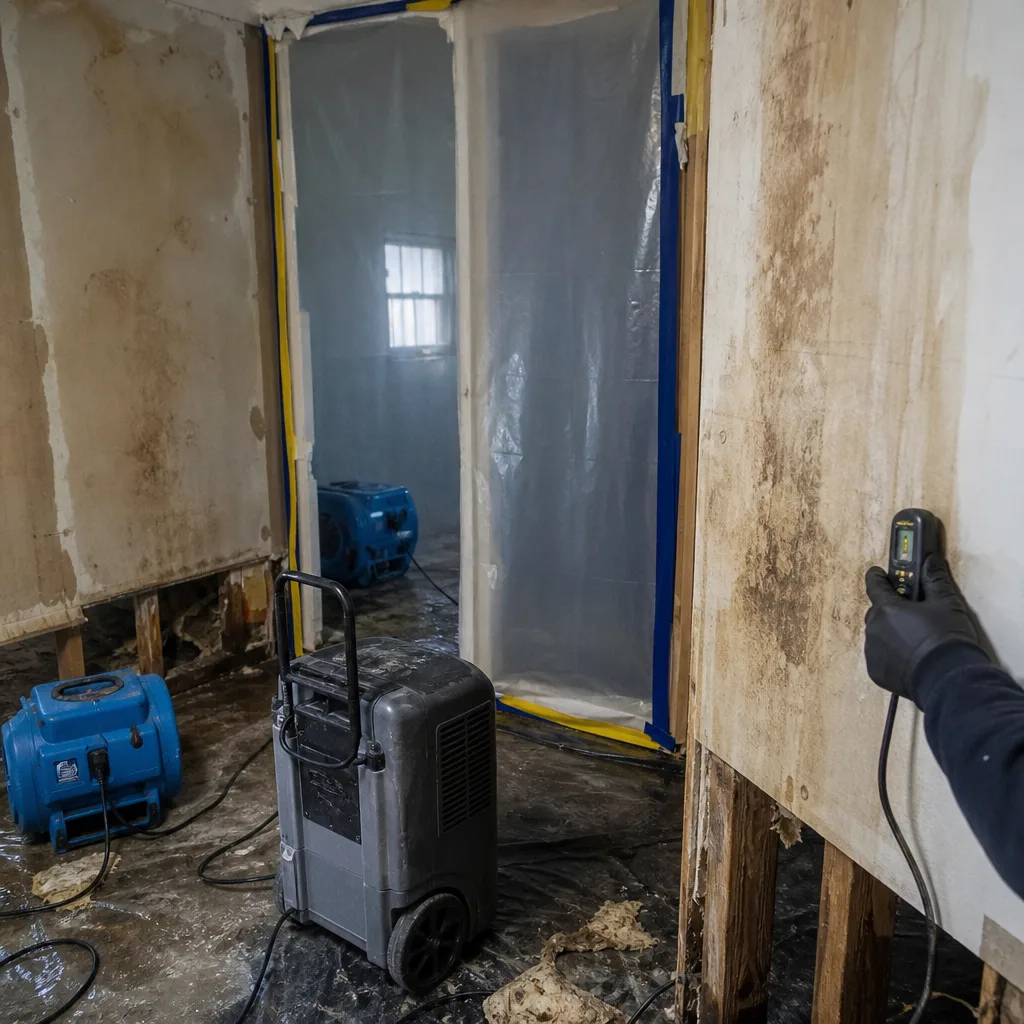 Before
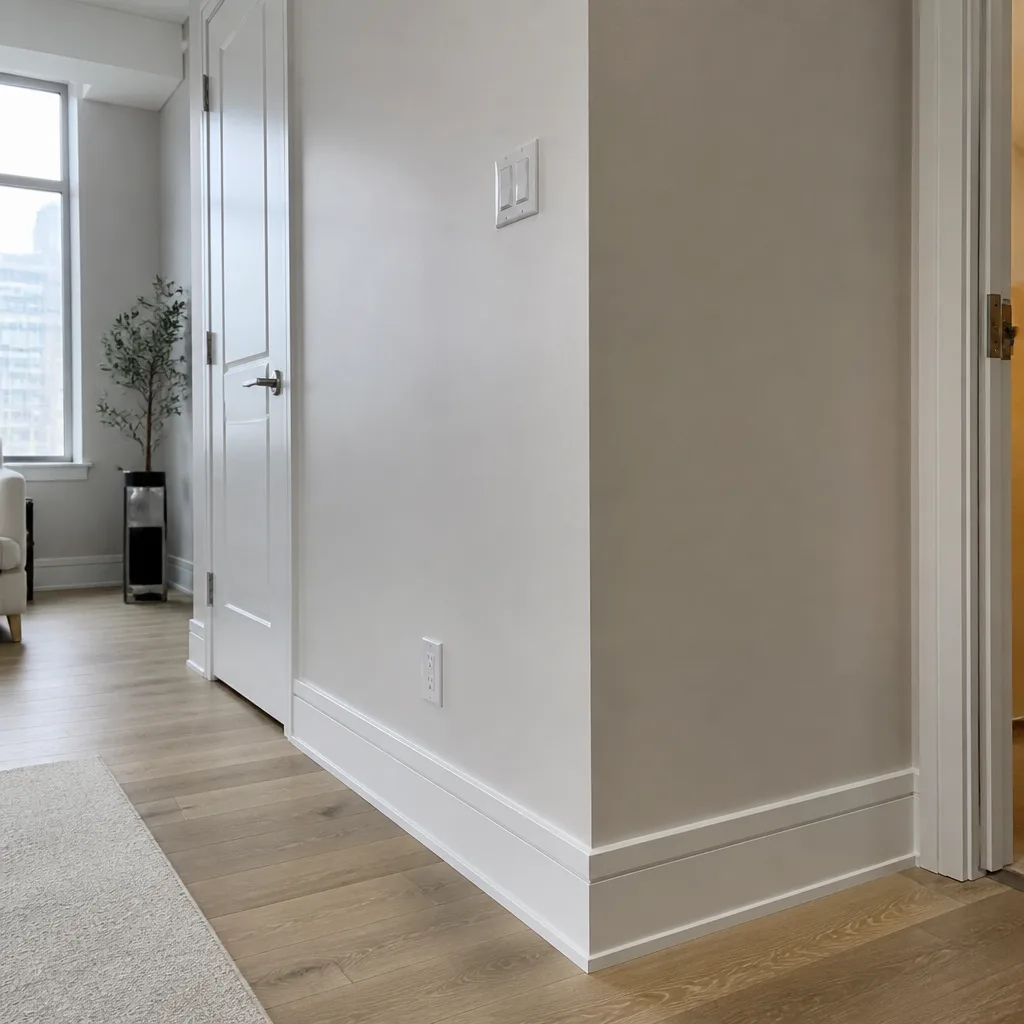 After
After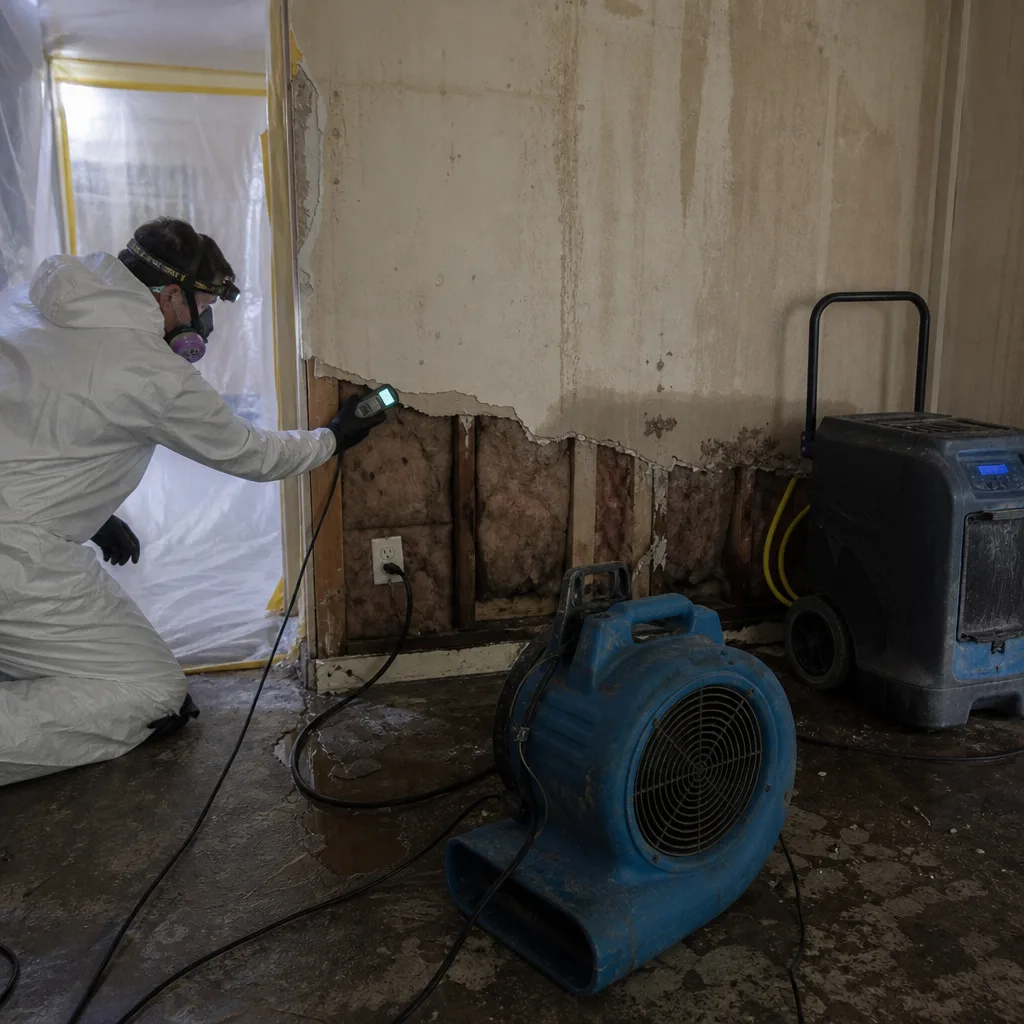 Before
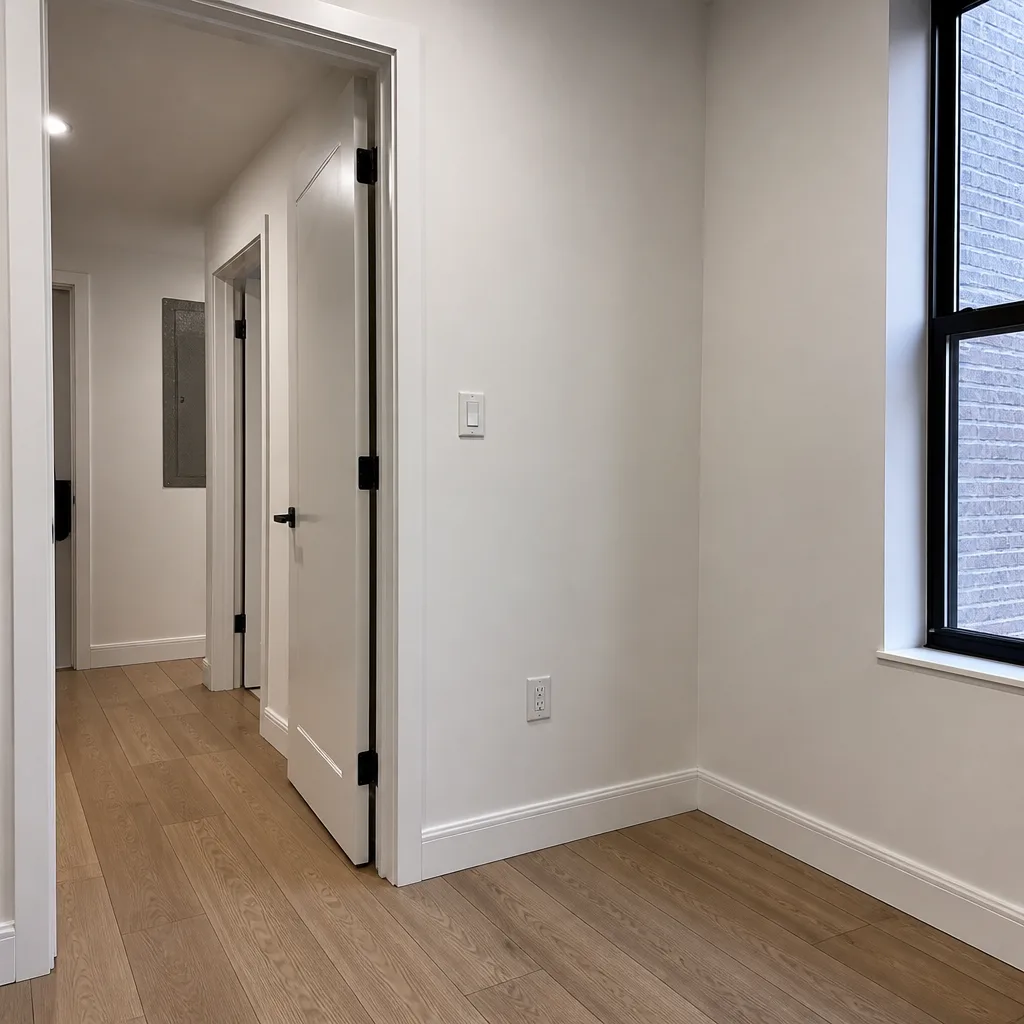 After
After24/7 Emergency Storm & Disaster Restoration in Lower Manhattan
Storm damage in Lower Manhattan moves fast, and the first call you make determines how much of your building can be saved. Our crews respond to the Financial District, Battery Park City, Tribeca, and every neighborhood below Canal Street around the clock. A live dispatcher answers at (518) 663-6491, day or night, and a certified crew reaches your property with extraction equipment running the same visit. Saltwater from a nor’easter or tropical storm begins corroding electrical panels and steel within hours, not days. The sooner we start, the less the restoration costs and the less gets torn out.
Understanding Storm & Disaster Restoration Severity in Lower Manhattan Properties
Lower Manhattan’s building stock presents restoration challenges you simply don’t see in the outer boroughs. A 19th-century Tribeca cast-iron loft with timber post-and-beam framing absorbs Category 3 stormwater differently than a 1980s Battery Park City tower built on Hudson River landfill. The cast-iron columns and unreinforced brick party walls wick moisture upward through capillary action, hiding damage behind finished surfaces. The landfill-based towers, meanwhile, fight a different battle: compromised waterproofing membranes below grade let the river in year-round, and a single storm surge overwhelms sub-grade drainage entirely. Saltwater compounds every category. Category 3 water carrying harbor chlorides corrodes wiring, switchgear, and structural steel at an accelerated rate, and mold timelines compress from days to hours when salt-trapped moisture sits inside wall cavities. We assess severity using thermal imaging and moisture mapping before a single fan gets placed, because guessing wrong in a pre-war loft means tearing out plaster twice.
Why Lower Manhattan Property Owners Choose Floodline Restoration Co.
- 45-minute response commitment: When you call (518) 663-6491, a crew is dispatched immediately from our metro office, not scheduled for tomorrow morning.
- 24/7 live answer, always a person: No automated system, no voicemail at 2 a.m. A trained dispatcher picks up, asks the right questions, and gets equipment moving.
- IICRC-certified crews: Our technicians hold WRT and FSRT certifications and follow RIA and IFA protocols. They read moisture maps, not guesses.
- Free visual inspection: We assess the damage in person, explain exactly what we found, and hand you a written scope before any work begins.
- Direct insurance billing: We bill your carrier directly and coordinate with your adjuster. You never play messenger between us and the insurance company.
- One team, start to finish: The same certified crew that extracts and dries also handles reconstruction. No mid-job handoff, no inherited subs, no one pointing fingers.
Our Storm & Disaster Restoration Process
Inspection & Assessment
We arrive, walk the property with you, and map every affected area. Thermal cameras identify moisture behind walls and under floors that the eye misses. The written scope you receive before work starts is the scope we stand behind.
Extraction & Stabilization
Standing water comes out immediately with truck-mounted and portable extraction units. In saltwater events, we begin chloride testing on day one so the drying plan accounts for corrosion, not just moisture. Emergency board-up and roof tarping happen now if the envelope is open.
Drying & Dehumidification
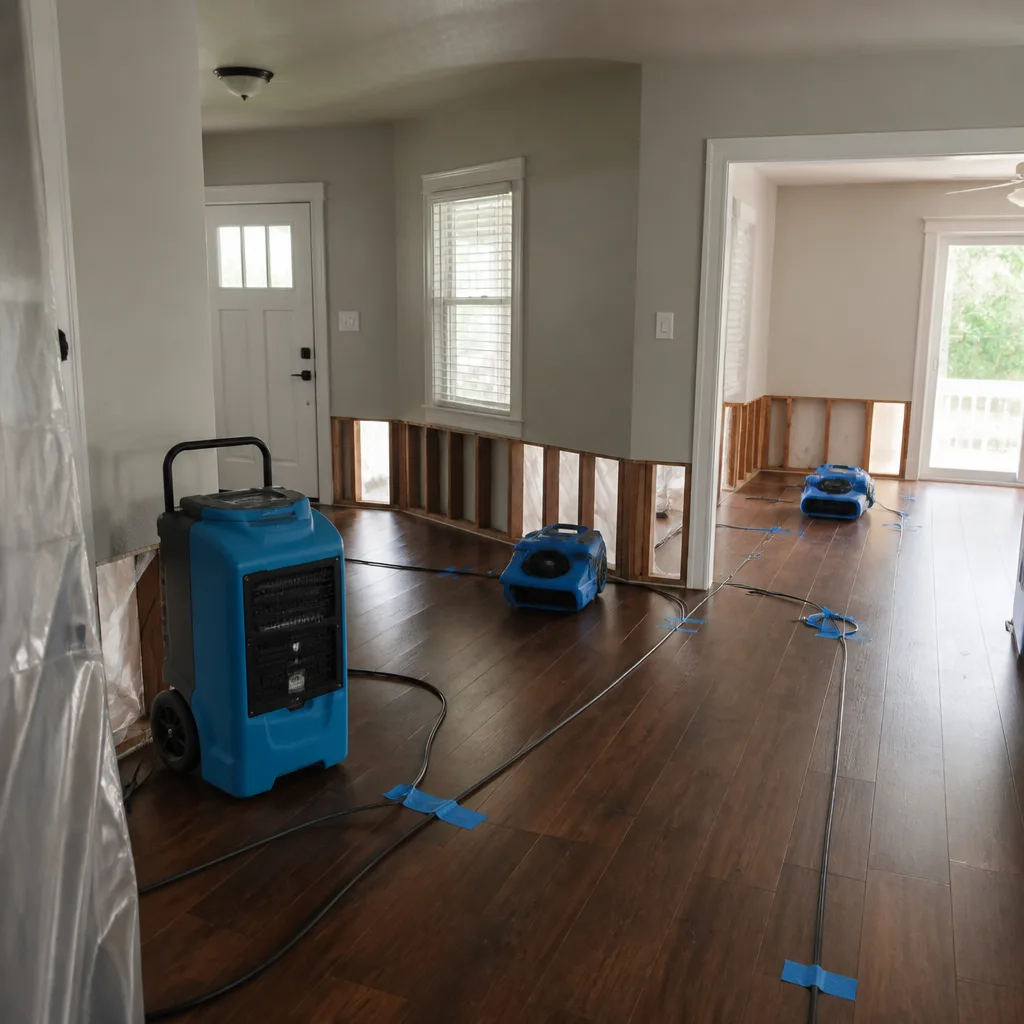
Professional-grade Dri-Eaz and Phoenix air movers plus low-grain refrigerant dehumidifiers get placed according to a calculated drying chamber, not scattered randomly. Daily hygrometer and moisture readings are logged until the dry standard is met.
Cleaning & Sanitization
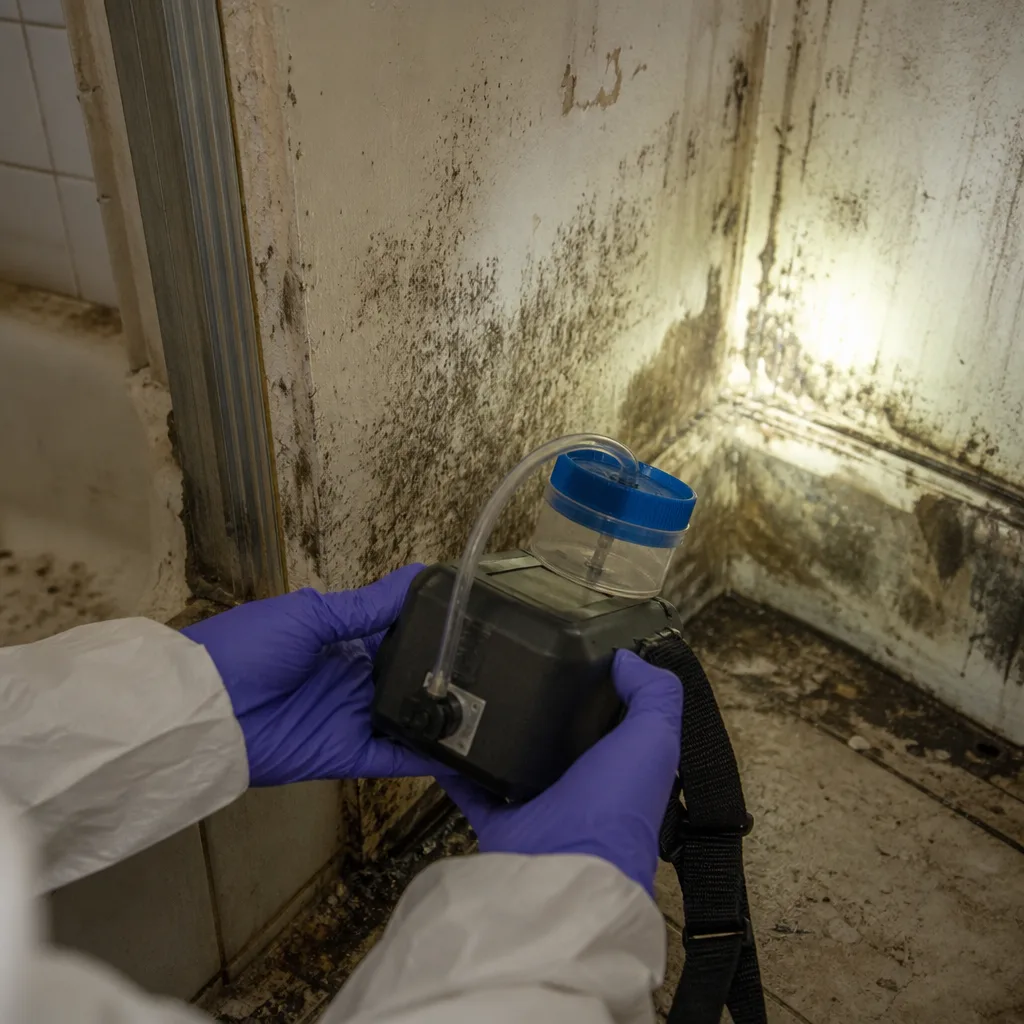
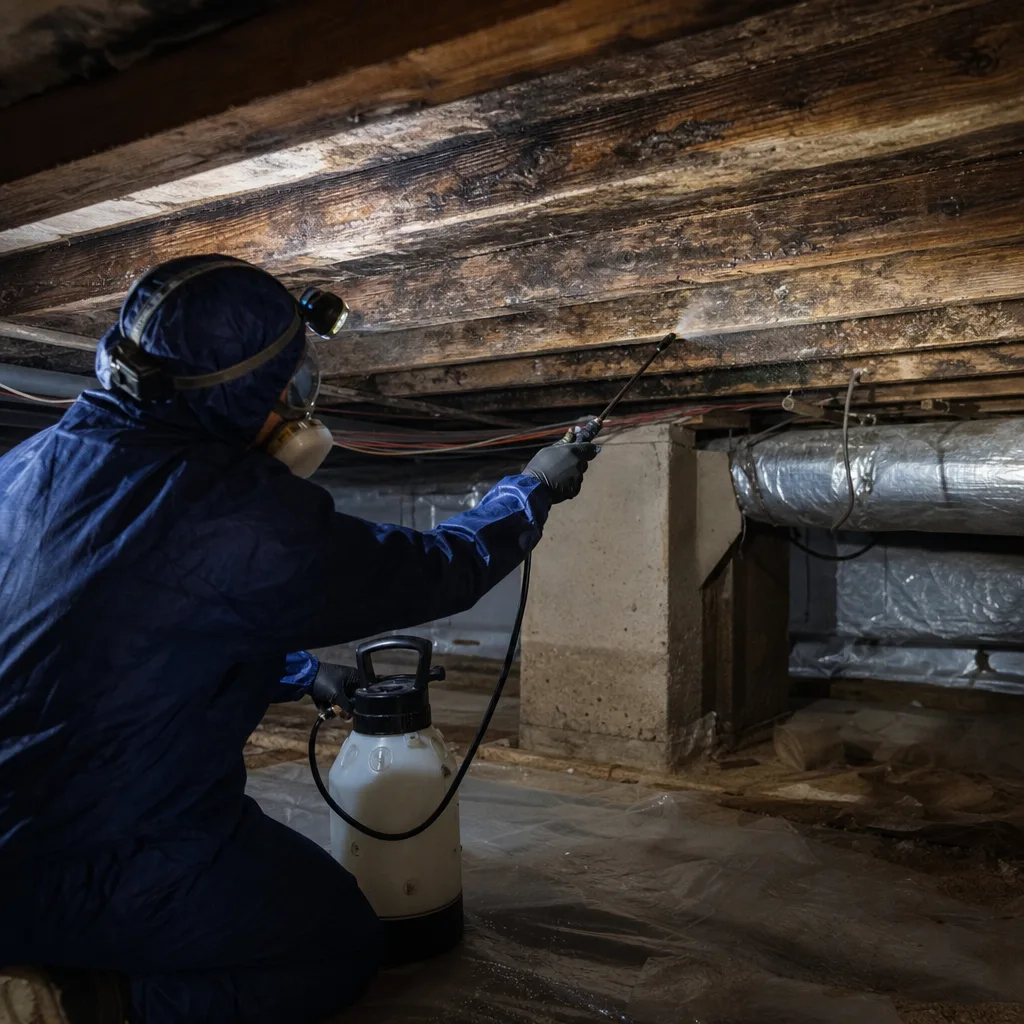
All affected surfaces get cleaned with appropriate antimicrobial treatments. Salt residue is neutralized, not just wiped away. HEPA air scrubbers run throughout to capture airborne particulates, especially in pre-war buildings with lead paint concerns.
Saltwater & Code-Specific Treatment
In Zone AE flood areas, we evaluate electrical and mechanical systems against post-Sandy Building Code requirements. If switchgear, boilers, or elevators must be relocated above Base Flood Elevation, we coordinate the DOB permit path from day one so your restoration doesn’t stall.
Repairs & Restoration
Drywall, flooring, millwork, and finishes go back in. If the scope includes rebuilding mechanical rooms, that work is permitted, inspected, and documented. Your moisture log is handed to you and your carrier at completion, along with our 90-Day Done Right Promise in writing.
Need Emergency Storm & Disaster Restoration in Lower Manhattan Now?
Crews minutes away, answering live 24 hours a day. The sooner we start, the less it costs.
Working With Your Insurance Company
Storm and flood claims in Lower Manhattan are complicated by FEMA flood-zone designations, co-op and condo board requirements, and post-Sandy code upgrades. We’ve handled hundreds of these claims and know what your carrier needs to process payment without delay. From the first hour on site, we document everything: photos of the loss room by room, moisture readings, extraction volumes, and a line-item scope of work that matches industry estimating standards. Our team communicates directly with your adjuster, answer their questions, and provide the technical detail that turns a contested claim into an approved one. You get a copy of every document we send your insurer.
What We Provide Your Insurer
- Thorough documentation of the loss
- Photos of all damage, room by room
- Moisture readings and drying logs
- A detailed, line-item scope of work
- Direct coordination with your carrier
Built for Lower Manhattan’s Loss Calendar
Storm losses in Lower Manhattan follow a pattern anyone who’s lived below Canal Street for a decade knows by heart. August through October is nor’easter and tropical storm season, when New York Harbor funnels surge directly at the Battery and the Financial District. Wind-driven rain penetrates aging curtain-wall systems along Water Street and Broadway. December through February brings coastal storms that freeze, burst supply lines in older buildings, and send water cascading through multiple floors. March and April thaw the snowpack, saturate the soil around 19th-century foundations, and reveal seepage through unreinforced brick. Summer thunderstorms overwhelm subway-adjacent drainage and flood below-grade spaces in minutes. We staff crews year-round because the loss calendar here has no quiet season.
Storm & Disaster Restoration Across Lower Manhattan’s Neighborhoods
A response route through Lower Manhattan means understanding that a loft in Tribeca and a tower in Battery Park City are two different restoration jobs. In Tribeca, we’re working around cast-iron columns, original timber framing, and party walls shared with neighbors. On Hudson Street and Beach Street, access means coordinating with building superintendents and landmark restrictions. Battery Park City properties along the esplanade fight chronic sub-grade water intrusion from a compromised landfill base; storm surges make a bad situation acute. The Financial District’s converted office towers retain basement mechanical rooms at or below the 100-year flood elevation, which changes the entire restoration calculus. Two Bridges and the South Street Seaport area deal with wind-driven rain through aging window assemblies and roofs over active retail. Each neighborhood has its own failure mode, and we’ve worked them all.
Specialized Storm & Disaster Restoration Services We Offer in Lower Manhattan
Storm Damage Cleanup
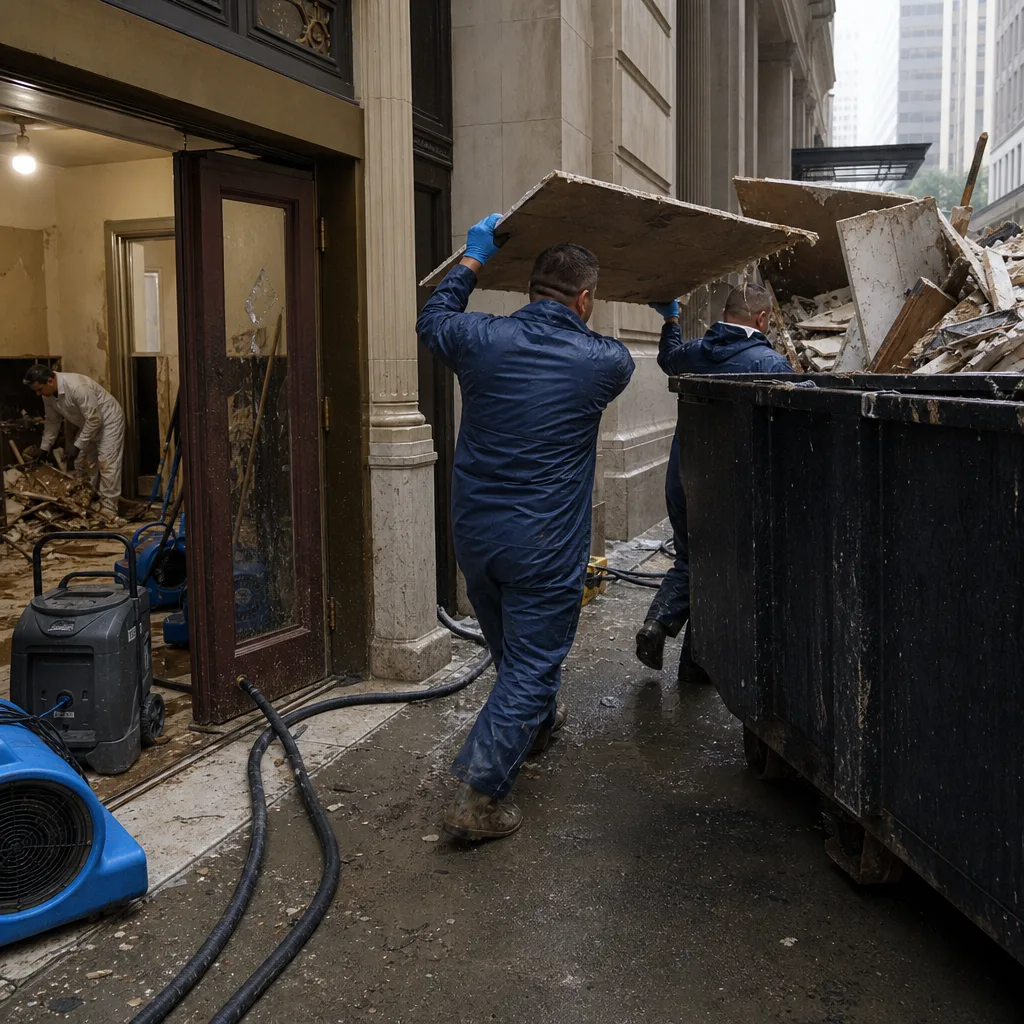
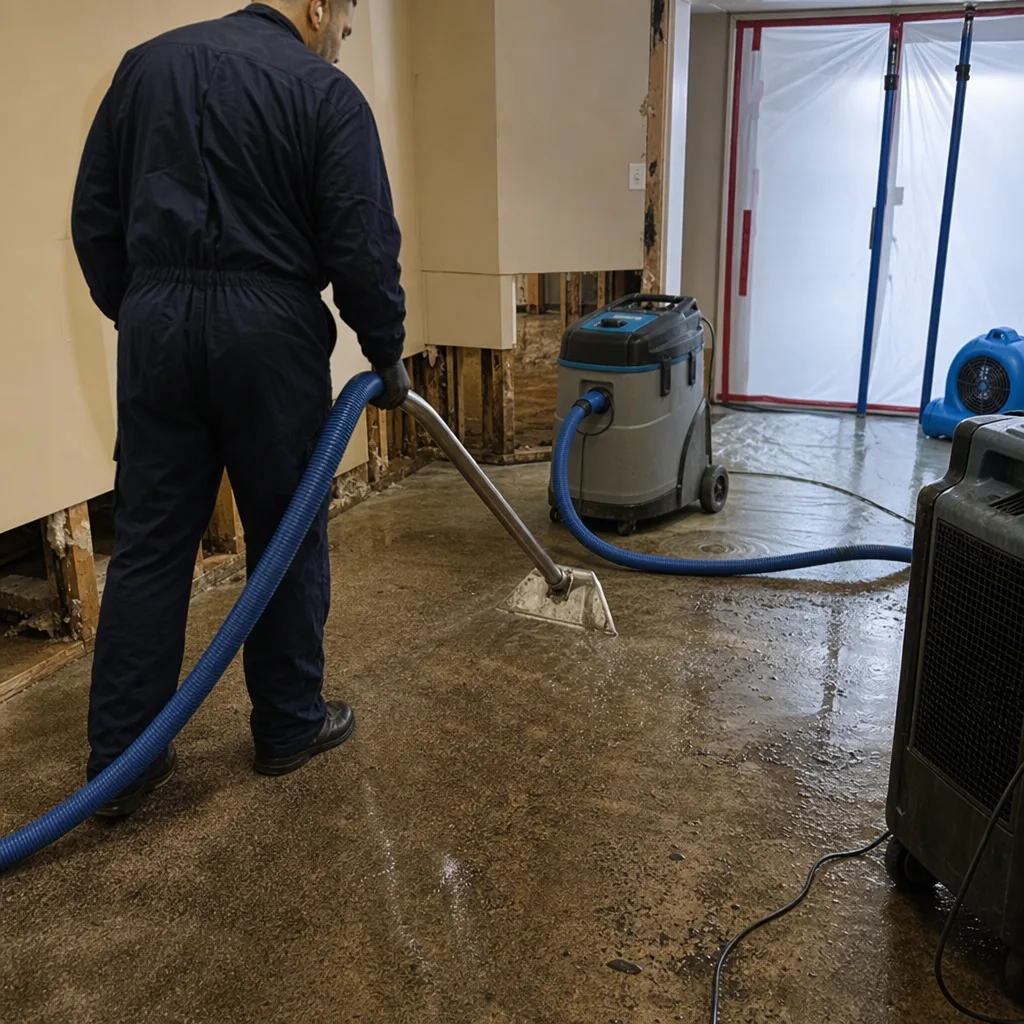
After the water recedes or the wind dies down, what remains is a hazard. Debris, contaminated water, and unstable materials get removed and disposed of properly. We treat this as the first step toward restoration, not a separate job, so cleanup flows directly into drying and rebuild without a pause.
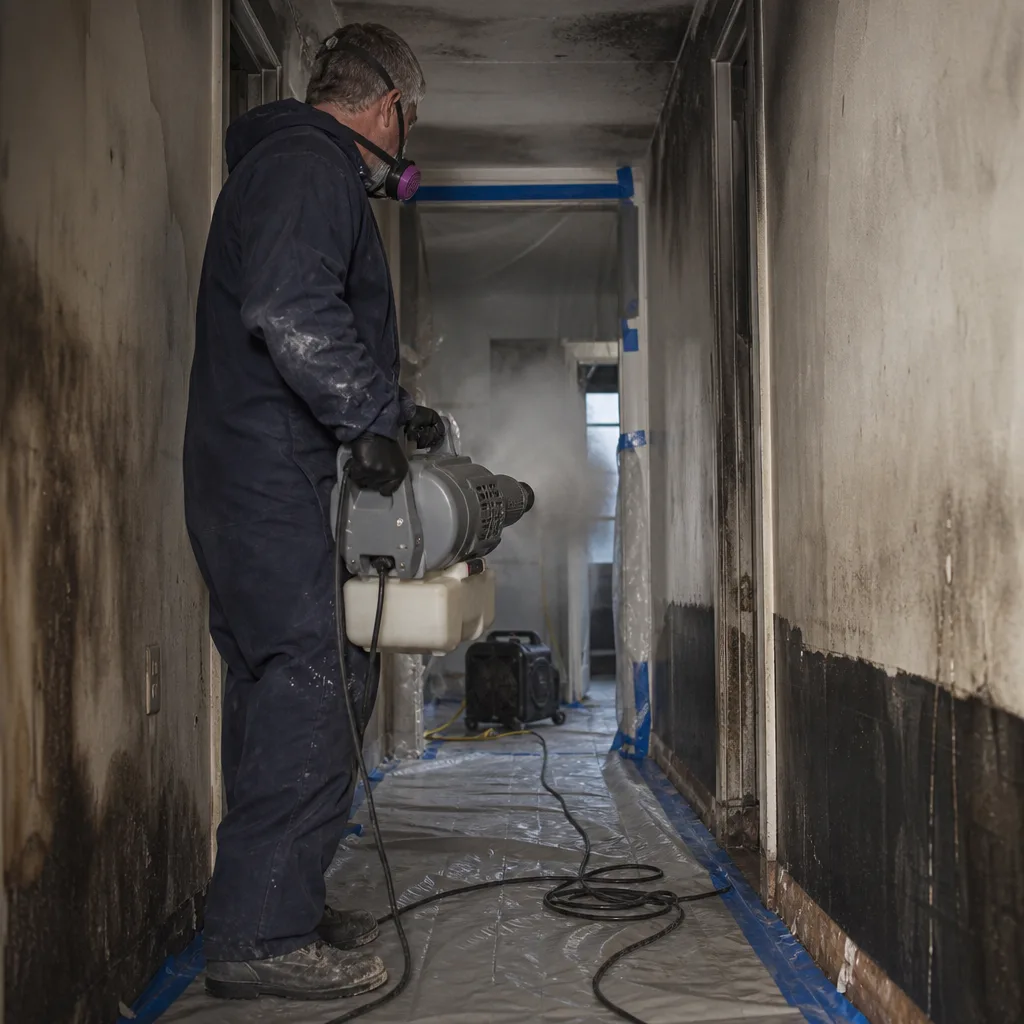
Flood Damage Restoration
Lower Manhattan floods with saltwater, which changes everything about drying protocols. We begin chloride testing early, neutralize salt residue, and build a drying plan that accounts for accelerated corrosion in electrical panels and steel. This is a Storm & Disaster Restoration specialty, and it’s the difference between a building that reclaims its value and one that fails six months later.
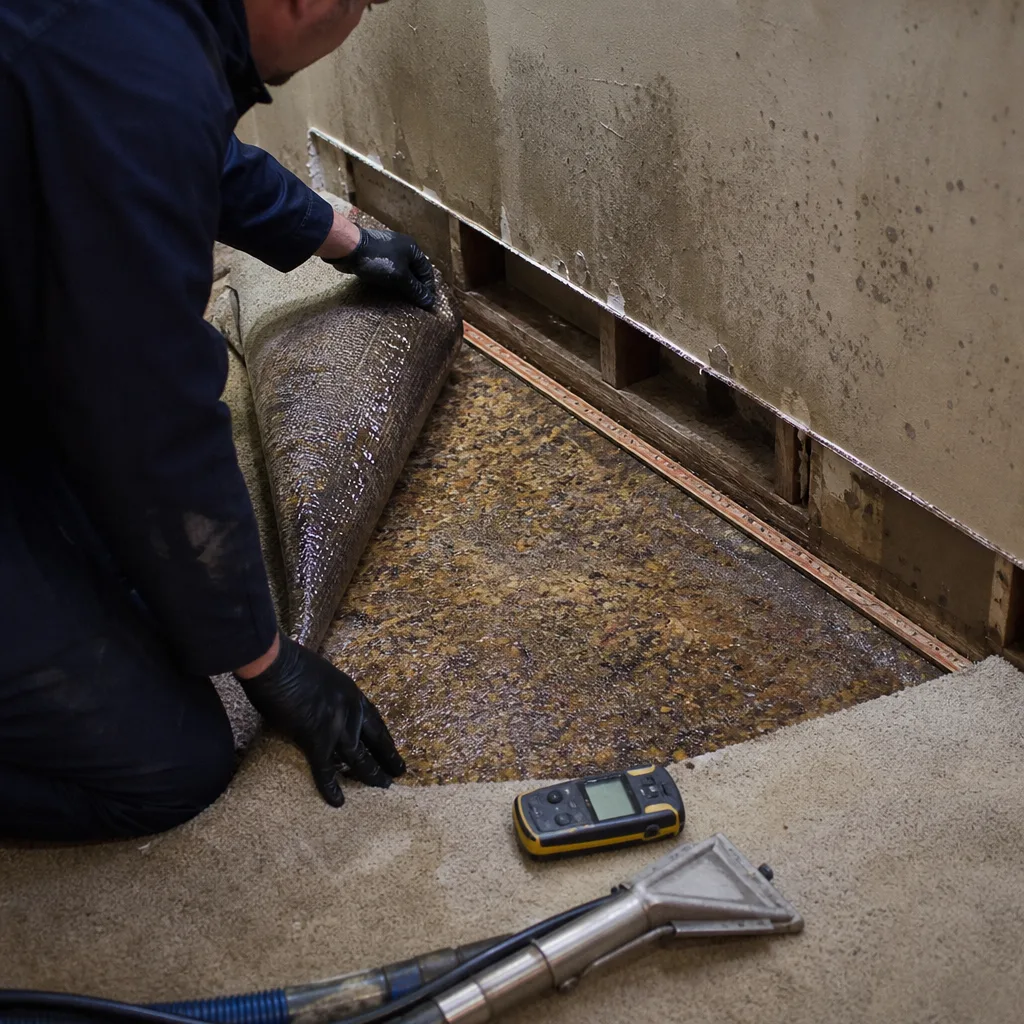
Debris Removal
Storm debris in Lower Manhattan includes everything from construction materials to flood-damaged contents to salt-soaked drywall. We haul it out fast because the clock is running on your building. Proper debris removal also clears the way for drying equipment and gives our moisture mapping a clean read.
Emergency Board-Up
When a nor’easter blows out a window on Water Street or a storefront on Fulton Street, the opening invites more damage, looting, and weather. We board up the same day we’re called, using materials that hold through the next storm while permanent repairs get scheduled.
Roof Tarping
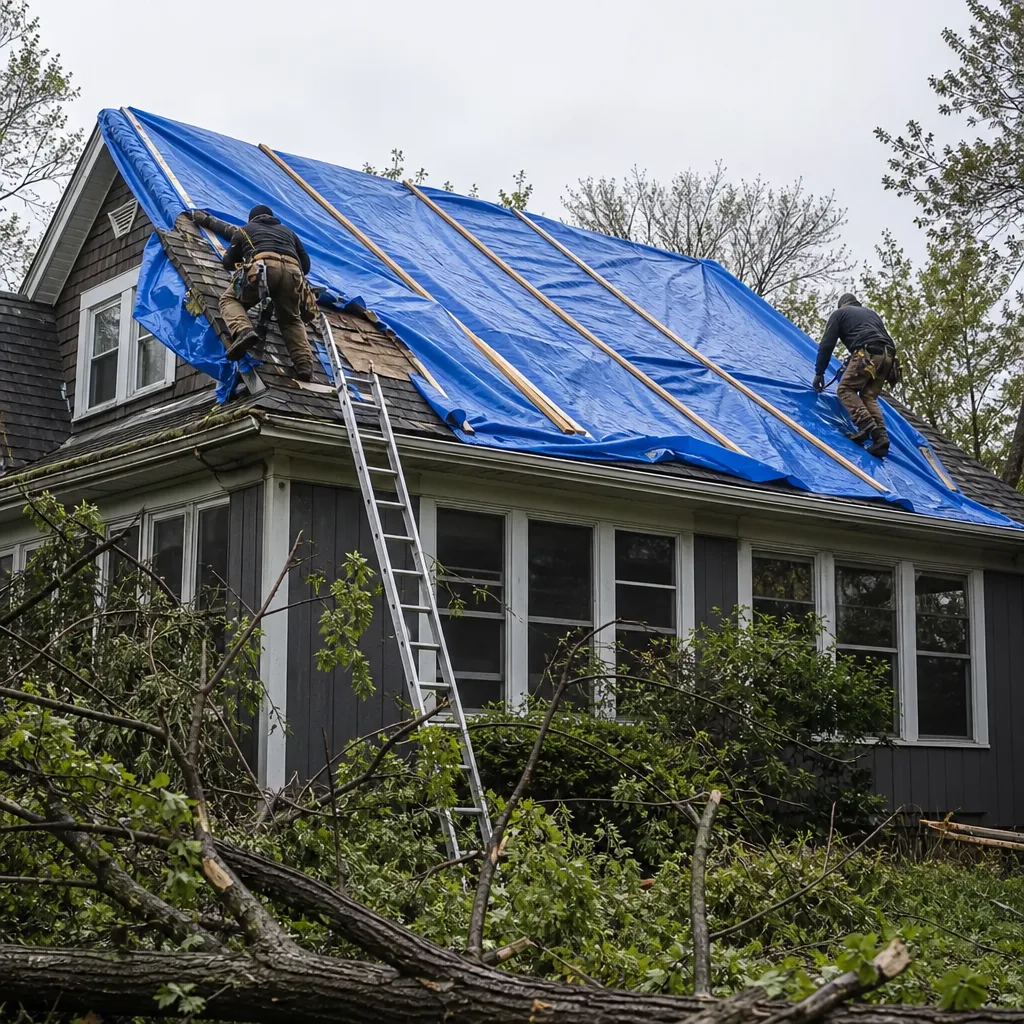
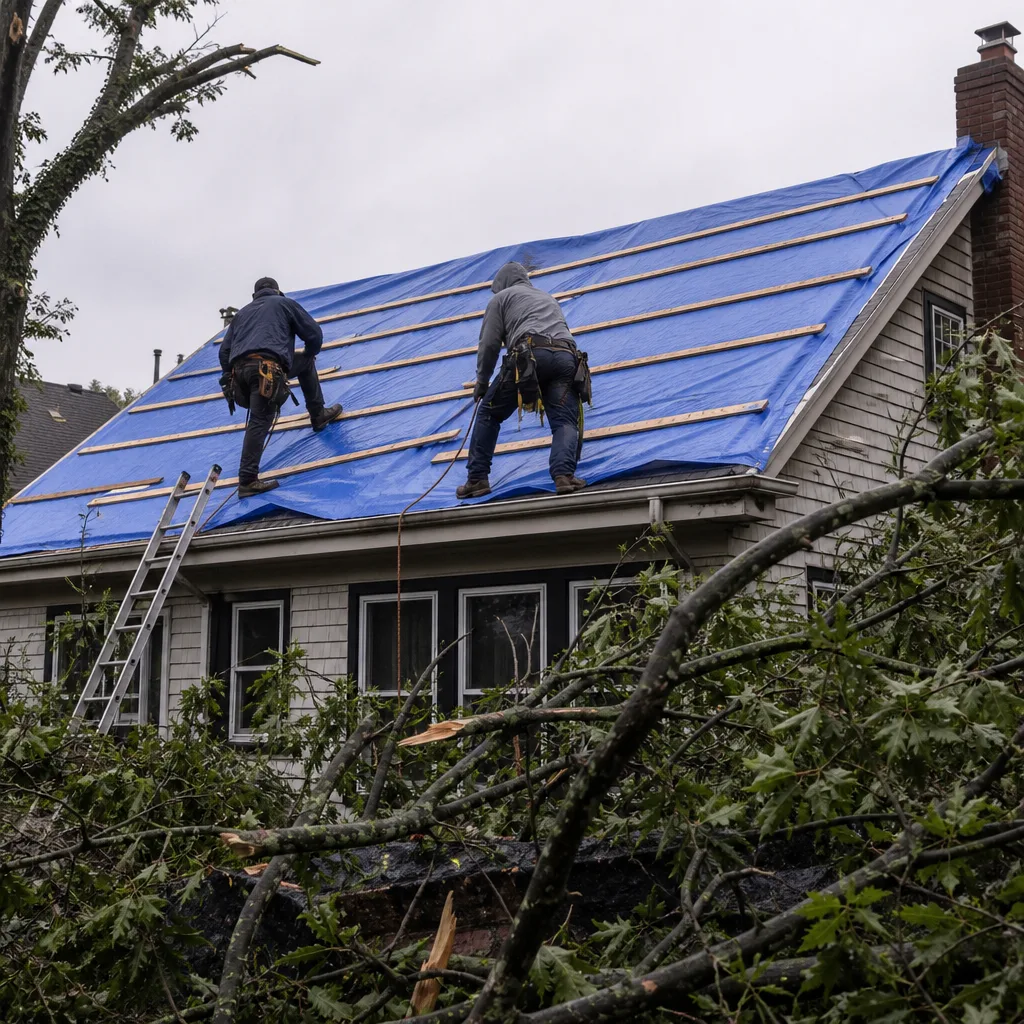
Wind-driven rain through a compromised roof is how a small leak becomes a full floor of water damage. We tarp immediately to stop the intrusion, then work the drying plan from the top down. Most storm-damaged roofs in Lower Manhattan get tarped within hours of our arrival, not days.
Wind Damage Repair
Coastal storms push water through curtain-wall joints, window frames, and roof membranes on older commercial and residential buildings. We repair the damage and document the intrusion path so your insurance claim reflects the full scope, not just the visible surface.
What happens when you call
- 1
A real person answersNo phone trees - you reach a local pro.
- 2
You get an upfront price rangeHonest numbers before anyone is dispatched.
- 3
A background-checked tech heads outLicensed & insured, dispatched right away.
- 4
You approve before work beginsNothing starts until you say go.
Storm & Disaster Restoration Costs in Lower Manhattan, NY
A straightforward storm cleanup with water extraction in a Lower Manhattan condo or loft typically runs $2,500 to $6,000 before reconstruction. Roof tarping runs $350 to $900 as a standalone emergency service. Emergency board-up runs $250 to $600 for a standard window or door opening. Full flood restoration with structural drying, sanitization, and rebuild in a pre-war building ranges from $12,000 to $45,000 depending on square footage and finish level. The big variable in Lower Manhattan is the code trigger: if storm-damaged mechanical equipment must be relocated above Base Flood Elevation, that adds $20,000 to $80,000 or more, and it’s non-negotiable under post-Sandy Building Code. We provide a free visual inspection, give you a written scope, and bill your carrier directly. Call (518) 663-6491 for an exact quote on your building.
We Also Serve Cities Near Lower Manhattan
Our crews serve the Financial District, Washington Square, Brooklyn Heights, and Williamsburg with the same 24/7 live dispatch and certified crews. If you’re across the river or a few blocks north, the response is the same: a person answers, a crew moves.
Serving Lower Manhattan, NY - Our Local Coverage Area
We’re based in the Lower Manhattan area and know this community well. Use the map below to see our service coverage - if you’re nearby, we can almost certainly help.
Lower Manhattan Storm & Disaster Restoration Questions, Answered
How long do we have to start water extraction on a Lower Manhattan brownstone or loft before mold takes hold?
You have 24 to 48 hours in a typical freshwater event, but saltwater intrusion in Lower Manhattan compresses that timeline dramatically. Salt-trapped moisture in 19th-century timber framing and behind original brick party walls creates ideal mold conditions within 48 hours, and the chlorides actively corrode electrical and steel surfaces while you wait. Call (518) 663-6491 the moment you see water; extraction starting in the first hours is the single biggest factor in how much gets saved.
Why did our restoration estimate jump from a simple flood cleanup to a DOB-permitted vertical relocation?
Post-Sandy Building Code amendments require that storm-damaged boilers, switchgear, and elevators in Zone AE flood areas be relocated above the Base Flood Elevation, not replaced in-kind. If your building’s mechanical room sits below BFE, a simple cleanup becomes a permitted vertical relocation project. This is unique to Lower Manhattan’s flood-zone geography; a Brooklyn or Queens restoration job never triggers this requirement, and it’s exactly the kind of code dynamic our team handles from day one.
We operate a residential tower in Battery Park City with chronic water intrusion through a compromised waterproofing membrane. Is that a storm restoration issue?
Yes. Battery Park City sits on Hudson River landfill, and compromised waterproofing membranes below grade let river water in continuously. A storm surge overwhelms sub-grade drainage and turns a chronic seep into an acute flood. Our restoration includes diagnosing the membrane failure, documenting the intrusion, and coordinating mitigation with the long-term waterproofing repair your building needs.
What does saltwater do differently to our electrical panels and steel columns compared to a freshwater flood?
Saltwater leaves corrosive chlorides behind after the water recedes. Those chlorides attack copper wiring, aluminum bus bars, and steel structural members continuously, causing failures weeks or months after the flood if they’re not neutralized. Freshwater drying protocols fail on saltwater jobs because they leave the chlorides in place. We test for chloride levels early and build a corrosion-control plan into every saltwater restoration in Lower Manhattan.
Are we required to bring our entire building up to current flood code just because one basement flooded during a storm?
Not automatically, but if the damage to mechanical or electrical systems triggers a substantial-improvement review under DOB rules, then yes, certain upgrades become mandatory. The specific trigger depends on the scope of damage and the building’s flood-zone designation. We evaluate this early in the restoration, explain exactly what your building faces, and coordinate with the DOB so you’re not surprised mid-project. Call (518) 663-6491 and we’ll walk your building’s situation through the code path before you commit to anything.
How fast can a crew actually get to our Lower Manhattan building?
Our 45-minute response commitment means a certified crew is dispatched the moment you call, and they’re moving toward your building while you’re still on the phone. The live dispatcher at (518) 663-6491 takes your address, asks what happened, and gets equipment loaded. In Lower Manhattan, that means a crew can typically be on site and starting extraction within an hour of your call, depending on traffic and bridge conditions.
Will our insurance cover storm damage restoration in Lower Manhattan?
Most homeowners and building policies cover storm and flood damage, but the specifics depend on your policy’s flood endorsement, deductibles, and the cause of loss. We document everything from the first hour, bill your carrier directly, and coordinate with your adjuster. The photos, moisture logs, and line-item scope we provide are built to the standards carriers expect. You’ll have a firm answer on coverage early, not a guessing game.
Can we stay in our home or building during restoration?
That depends on the extent of damage, the category of water, and whether electrical systems were compromised. In a Category 3 saltwater event, affected areas are typically not habitable until drying and sanitization are complete. We give you a straight answer during the initial inspection, and we work with your carrier to cover temporary housing if your policy includes it. Your safety comes before schedule pressure.
After a nor’easter pushed saltwater into a Tribeca cast-iron loft’s basement mechanical room on Hudson Street, we extracted 6,000 gallons of category 3 water, then had to coordinate with the DOB to relocate the building’s switchgear from three feet below BFE to the second floor. That vertical relocation turned a mitigation call into a full permitted restoration, and it’s the kind of job that separates a crew that knows Lower Manhattan from one that just pumps water. If you have storm damage now, call (518) 663-6491. A person will answer. We’ll be there when we say.
Written by Curt Bowman, Owner at Floodline Restoration Co., serving Lower Manhattan since 2010.