
Free visual inspection and a written scope of work before any mitigation begins - photos, moisture readings, and drying logs go in your claim file
The scope we write is the scope we bill. Anything new gets shown to you, in writing, before we touch it.

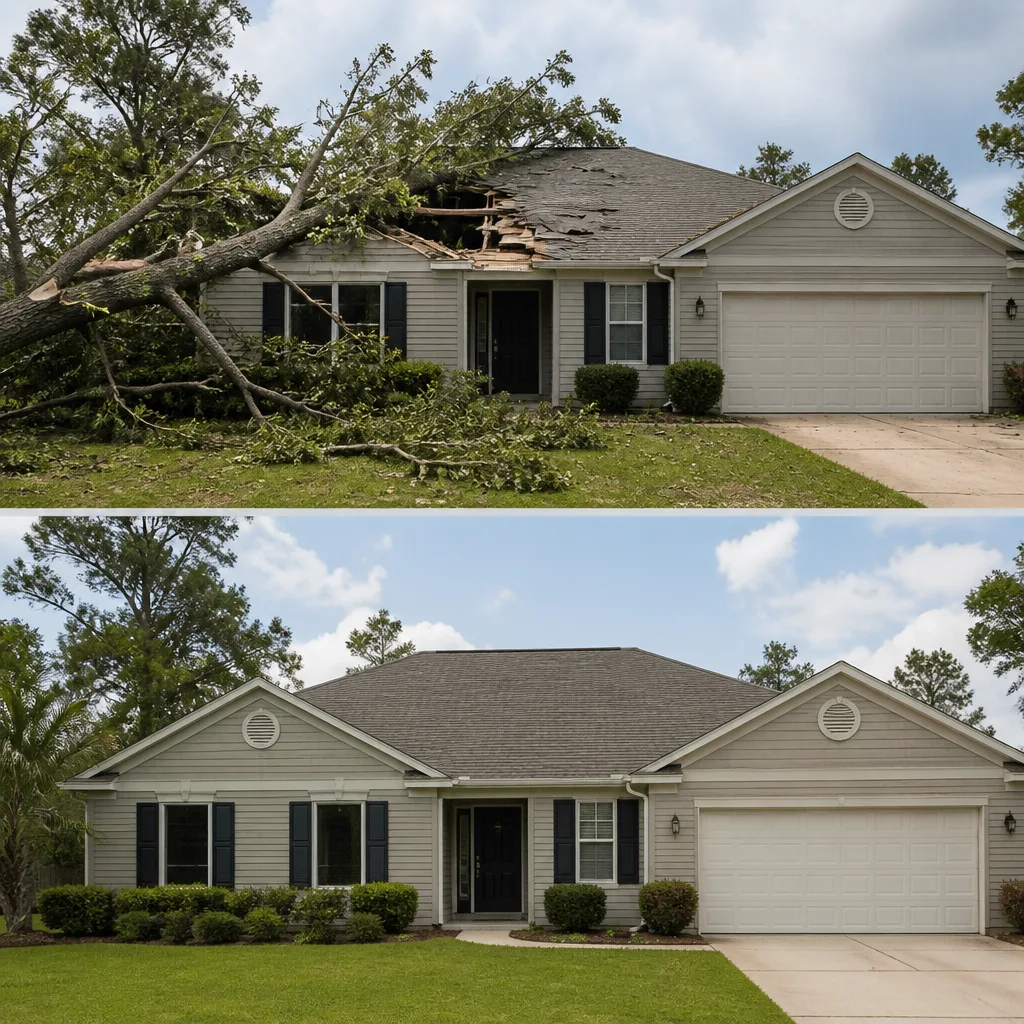


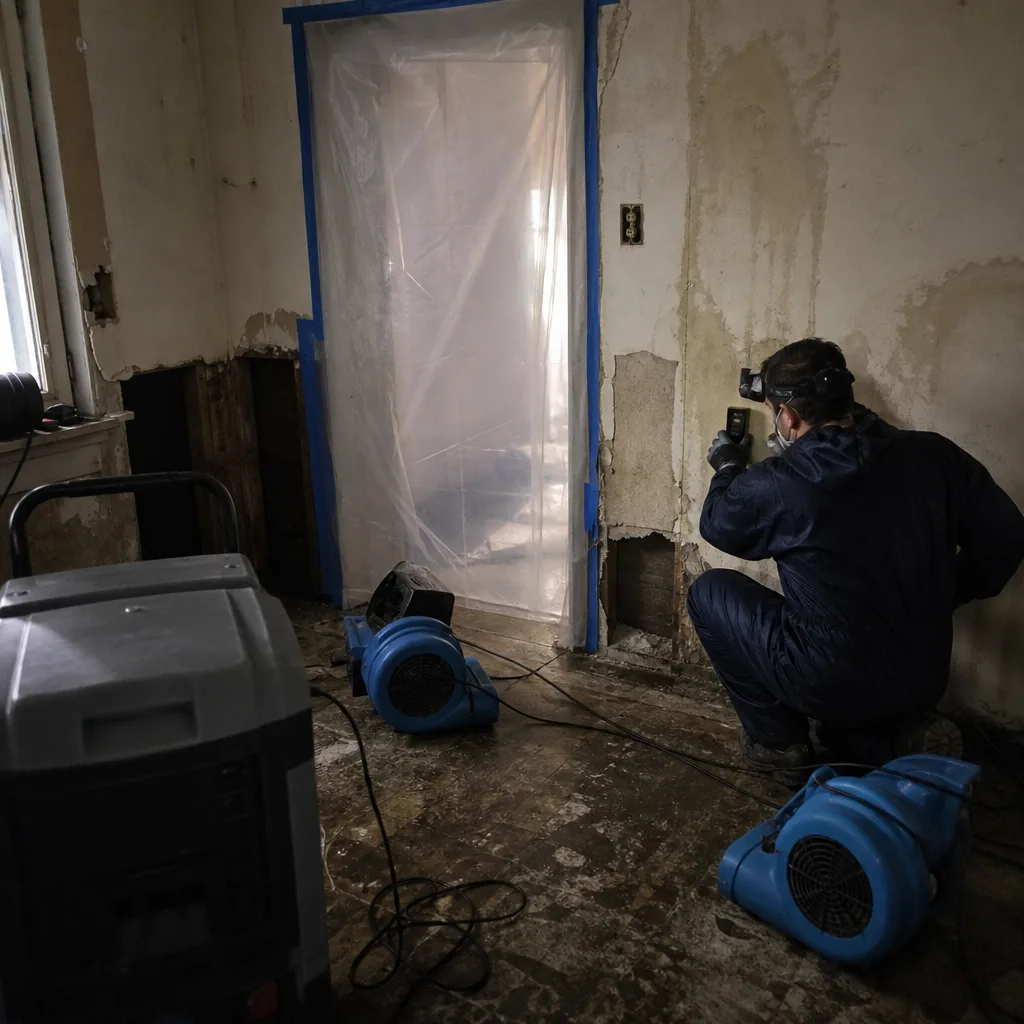 Before
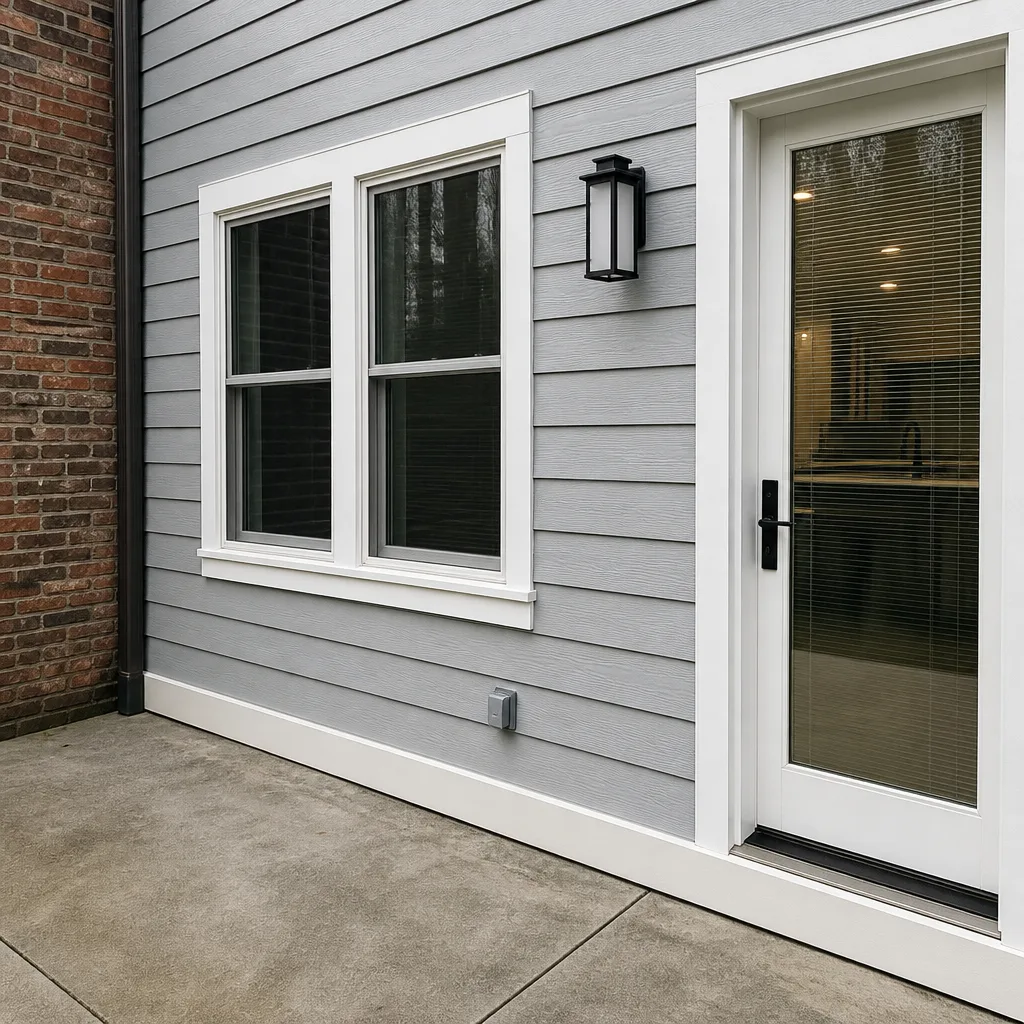 After
After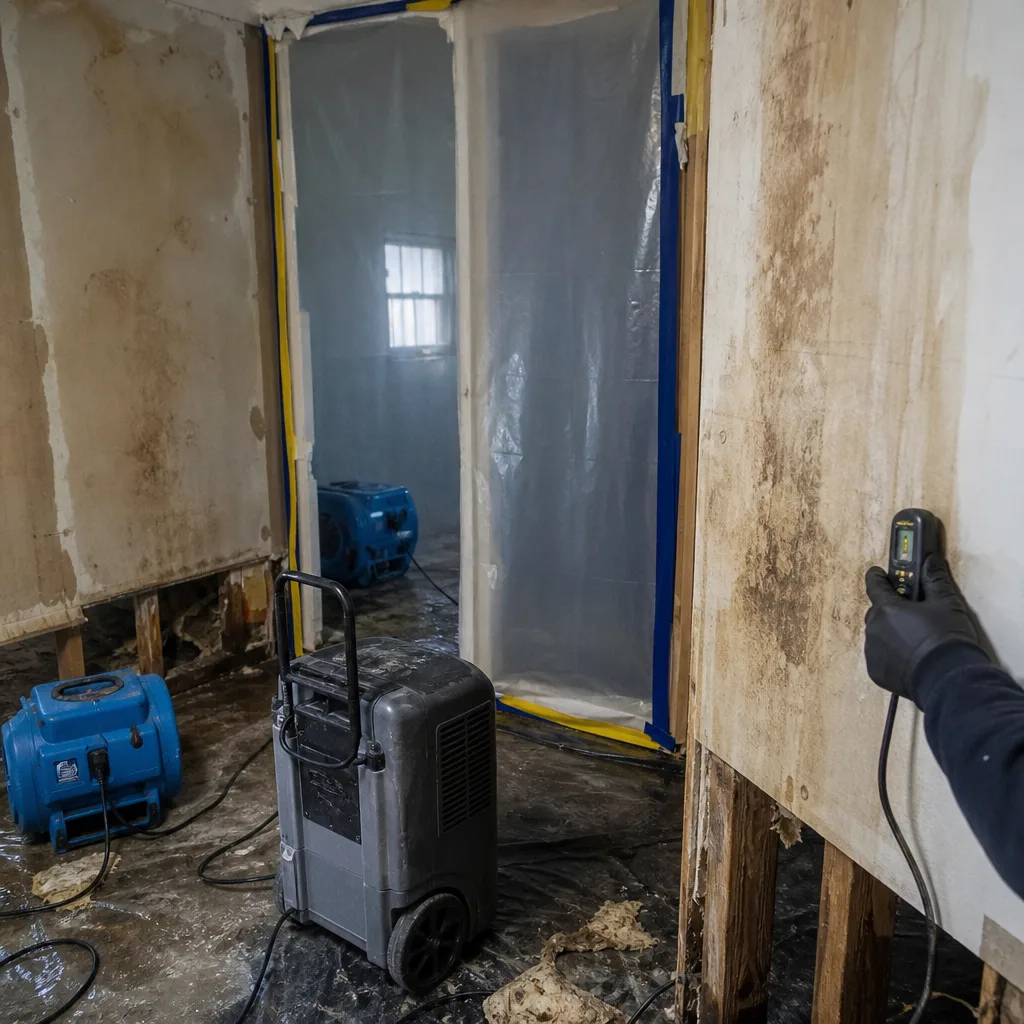 Before
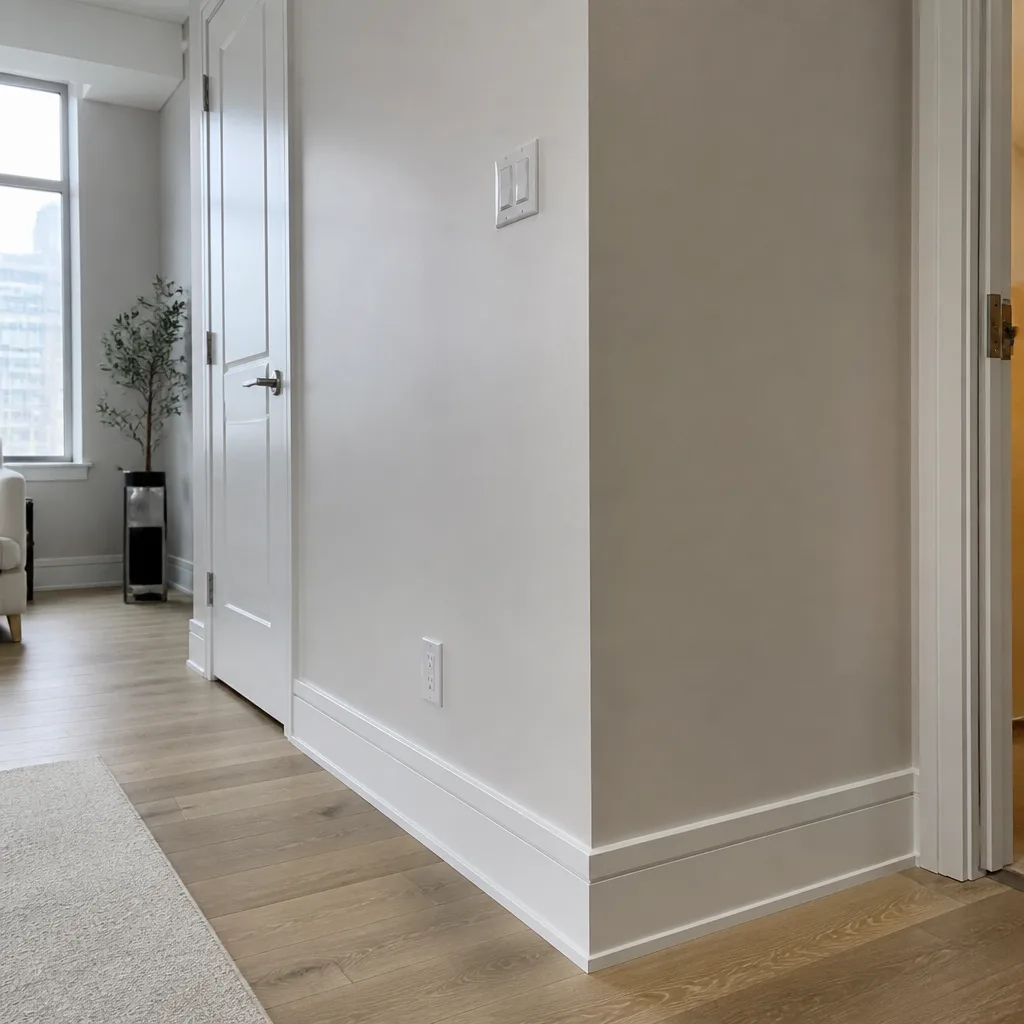 After
After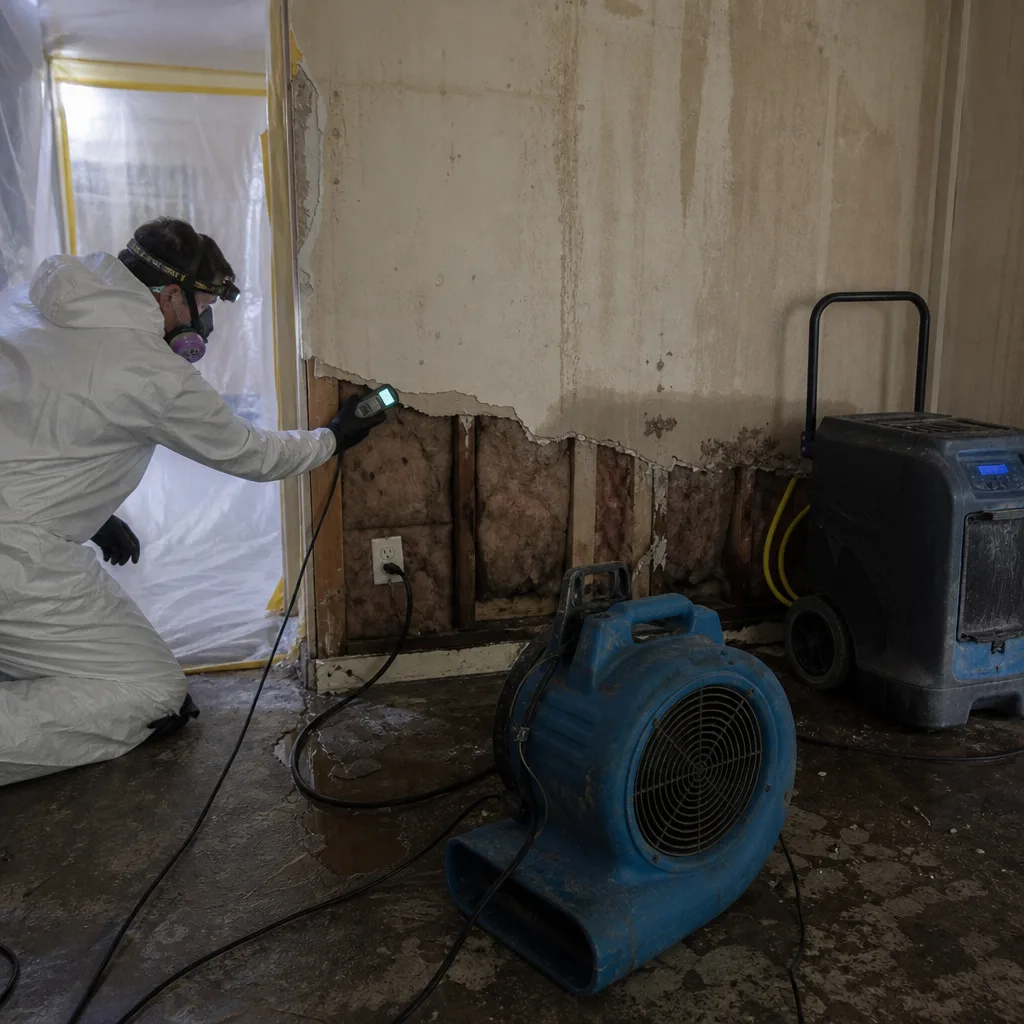 Before
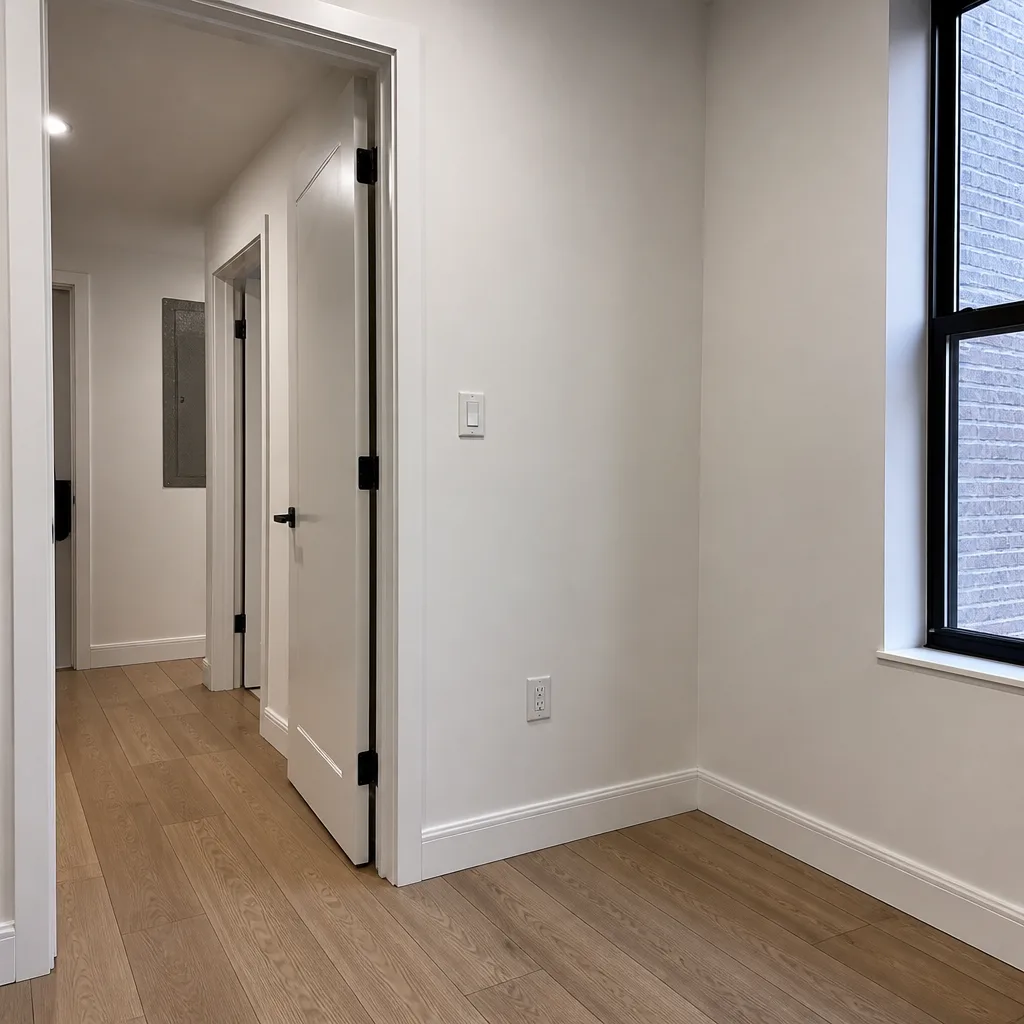 After
After24/7 Emergency Storm & Disaster Restoration in Jersey City
Storm damage in Jersey City doesn’t wait for business hours, and neither do we. Floodline Restoration Co. answers the phone with a live dispatcher at 2 a.m., not a recording, and a certified crew is dispatched to your door inside the Jersey City area within 45 minutes. Call (518) 663-6491 the moment water is rising, a tree limb has gone through a window, or a nor’easter has torn off a section of roof membrane. The first hour after a storm event is when the damage is still contained. Every hour after that, salt water from the tidal Hudson keeps moving through plaster, subfloor, and wall cavities, corroding fasteners and feeding mold. A free visual inspection costs you nothing. Waiting to make the call costs you scope, materials, and claim dollars.
Understanding Storm & Disaster Restoration Severity in Jersey City Properties
Storm damage severity is measured by water category, and in Jersey City the categories matter more than in most New Jersey markets. Category 1 is clean water from a supply line or rainwater. Category 2 carries significant contamination, including the stormwater runoff common across the paved grid of 07302. Category 3 is grossly contaminated water: sewage, Hudson River surge, or the brackish backflow that pushes up through the aging combined stormwater-sewer system in older downtown blocks. A basement flood on Steuben Street is rarely just water. It’s salt, sewage, fuel residue, and whatever the tide carried in. Our crews classify the water correctly before touching a wall cavity, because drying Category 3 with Category 1 protocols is how homes get sick months after the water is gone. In multi-family brick tenements and converted brownstones, we use thermal imaging and moisture meters to map water migration vertically through four or five stacked units, not just the unit that took the visible hit.
Saltwater adds another layer. Brackish Hudson water accelerates corrosion of steel studs, eats galvanized fasteners, and changes how drywall and plaster dry. A standard freshwater drying protocol leaves salt crystals behind, and those crystals keep pulling moisture from the air long after our air movers are gone. Jersey City storm restoration demands aggressive saltwater dehumidification and corrosion-inhibiting treatment at the source. That’s not a step every contractor remembers, and it’s the difference between a clean claim and a year-later mold call.
Why Jersey City Property Owners Choose Floodline Restoration Co.
- 45-minute response commitment. When you call during a storm event, a uniformed, background-checked crew is rolling toward your Jersey City address within 45 minutes, not tomorrow morning.
- 24/7 live answer, a real person always. Our dispatch board is staffed around the clock, every day of the year. You will never reach a voicemail during an emergency.
- IICRC-certified technicians. Our crews hold WRT, FSRT, and AMRT certifications through IICRC, plus RIA and IFA training. They know the codes and they follow them.
- Free visual inspection before any work begins. We walk your property, map the moisture, and show you exactly what we found before a single tool comes off the truck.
- Direct insurance billing. We bill your carrier directly and talk to your adjuster ourselves. You never play messenger between Floodline and the insurance company.
- One team from extraction to reconstruction. The same certified crew that pulls the water and logs daily moisture readings is the crew that rebuilds the drywall. No mid-job handoff, ever.
Our Storm & Disaster Restoration Process
Inspection & Assessment
We arrive with thermal imaging cameras and hygrometers, map every affected wall cavity and subfloor, and identify the water category before anything else. You get a written scope and a straightforward answer about what must be done now versus what can wait.
Extraction & Stabilization
Truck-mounted Dri-Eaz extraction units pull standing water fast. We tarp damaged roofs, board up broken windows, and stabilize anything structural that is now exposed to the elements.
Drying & Dehumidification
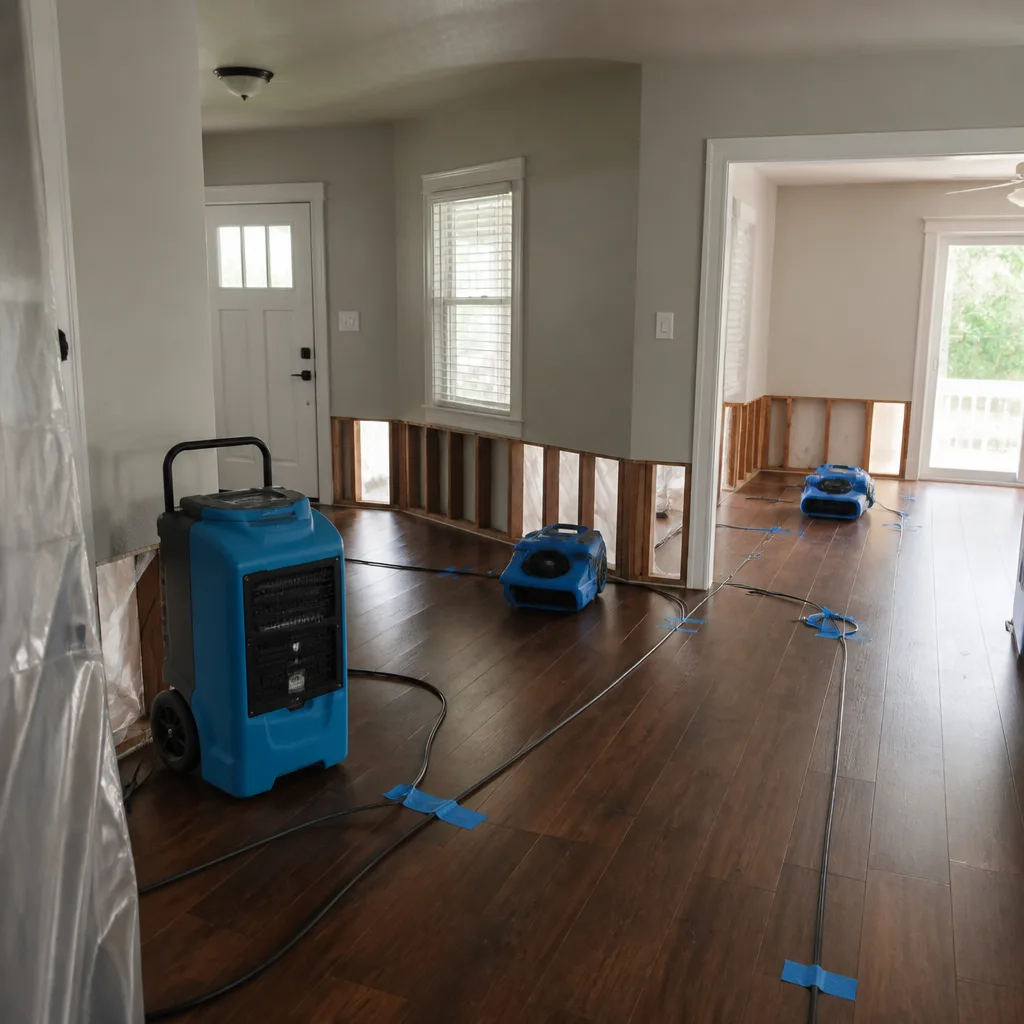
Phoenix and Dri-Eaz dehumidifiers and XPOWER air movers run on a moisture-mapped schedule. In Zone AE properties with brackish water, we run aggressive salt-specific dehumidification and daily readings until the dry standard is met and logged.
Cleaning & Sanitization
Contaminated materials come out under containment and negative air pressure. We use HEPA filtration and antimicrobial treatments appropriate to the contamination level, never a one-size-fits-all spray.
Specialty Treatment for Jersey City Storm Losses
Salt-exposed fasteners get corrosion-inhibiting treatment. Category 3 flooded cavities get full biohazard protocols. The daily moisture log is assembled for your NFIP or carrier claim, with photos, readings, and a clear timeline.
Repairs & Restoration
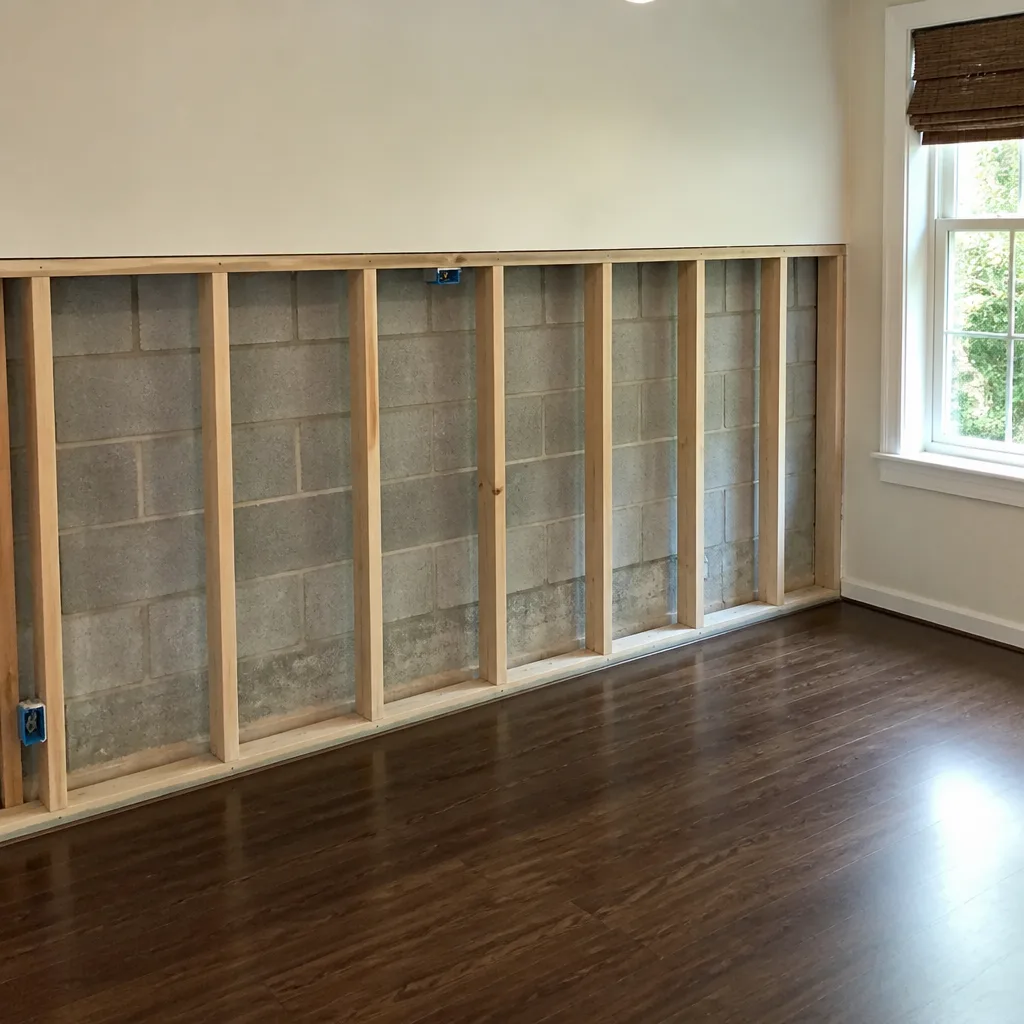
The same crew puts the property back together: drywall, trim, flooring, paint. You get a finished result and a written 90-Day Done Right Promise, our Keystone Standard, with no argument about what it covers.
Need Emergency Storm & Disaster Restoration in Jersey City Now?
Crews minutes away, answering live 24 hours a day. The sooner we start, the less it costs.
Working With Your Insurance Company
Jersey City storm claims often involve NFIP and private carrier paperwork at the same time, especially in Zone AE. We’ve been through this enough to know what adjusters look for, and we provide it from the first hour. Every job gets photo documentation room by room, moisture readings logged each day until the dry standard is met, and a line-item scope of work written in industry-standard estimating software. Our team talks to your adjuster directly, which means you are not spending your evenings relaying messages. And because we have handled brackish-water and Category 3 losses in Jersey City’s brick tenements and waterfront high-rises for years, we can explain to a carrier why a fifth-floor hallway needs drying when the visible damage started in the garden unit.
What We Provide Your Insurer
- Thorough documentation of the loss
- Photos of all damage, room by room
- Moisture readings and drying logs
- A detailed, line-item scope of work
- Direct coordination with your carrier
Built for Jersey City’s Loss Calendar
Jersey City’s storm losses follow a pattern, and knowing that pattern is half the job. January and February bring deep freezes that burst supply lines in un-insulated plumbing chases of pre-war brownstones and three-family tenements. A frozen pipe on a top floor in 07302 can send clean Category 1 water down through four stacked apartments by sunrise. Spring thaw does the same thing more slowly, as saturated ground presses against old fieldstone foundations in the Heights and water seeps into garden-level units. Summer thunderstorms hit fast and hard, overwhelming the combined sewers in downtown blocks so basement drains back up with Category 3 water during an ordinary rainstorm, not a named storm. Then comes the nor’easter season, when storm surge from Upper New York Bay pushes up the low-lying grid, across Exchange Place and Newport, and into buildings that have not seen water since Sandy. Each season has its own damage pattern. We plan for the one you’re in.
Storm & Disaster Restoration Across Jersey City’s Neighborhoods
Response routes and building types change block by block in Jersey City, and the damage pattern changes with them. In Journal Square and the surrounding 07302 blocks, we work in century-old brick tenements where a roof leak at the parapet can migrate down five stories through lath and plaster before you see a stain. Downtown and the Exchange Place waterfront put us in high-rises and converted loft buildings with modern mechanicals but NFIP-heavy exposure every time tidewater rises. The Heights sits on higher ground, which spares it from surge, but its older single-family stock and attached frame houses make wind damage from a nor’easter a real risk to roof flashing and window seals. Out toward Greenville and West Side, rows of mid-century brick and asphalt-shingle homes face drainage problems when the paved grid overloads. Running from the Newport waterfront on a call starts the same way every time: check the tide table, check the address against the FEMA Flood Map, and read the building’s age off its brickwork before we walk in.
Specialized Storm & Disaster Restoration Services We Offer in Jersey City
Flood Damage Restoration
Flood restoration in Jersey City means handling brackish Hudson water in Zone AE properties, not just pumping out a wet basement. We extract, dehumidify aggressively for salt-laden materials, treat exposed metal against corrosion, and log every reading for your NFIP or private carrier. The salt changes how drywall, plaster, and wood behave, so we run instrumentation longer and check wall cavities more often than a freshwater protocol would call for.
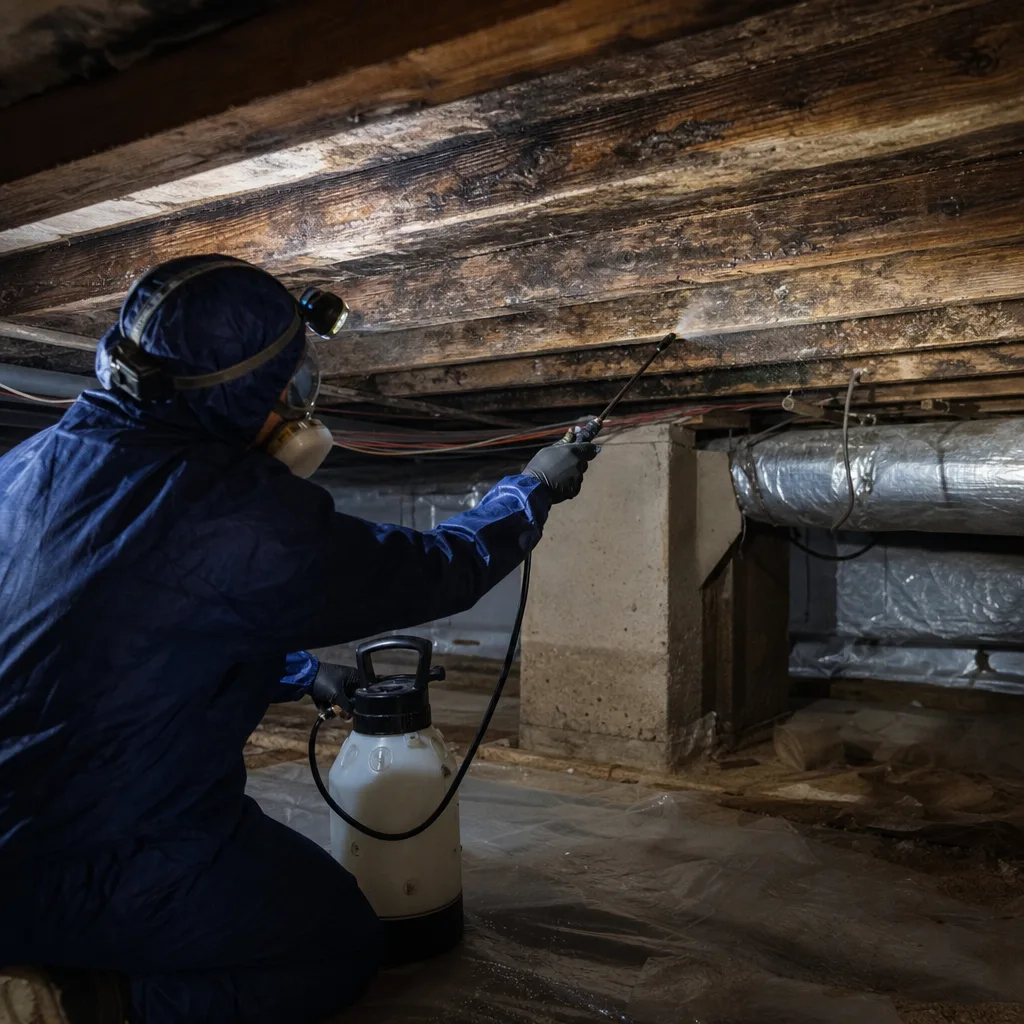
Storm Damage Cleanup
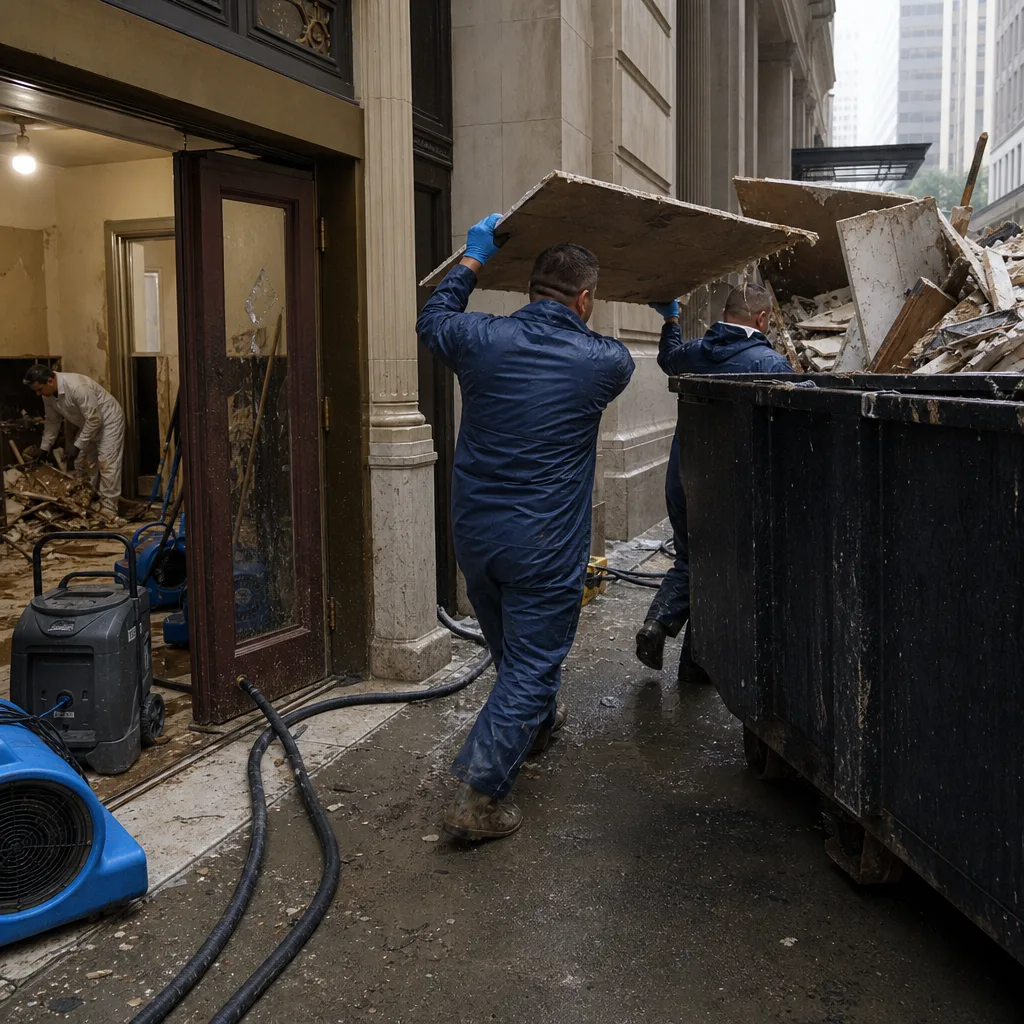
When a storm blows through, the mess it leaves behind is a hazard: broken glass, soaked insulation, downed limbs, and waterlogged debris. Our crews remove it safely, separate what can be salvaged, and prep the site for drying and repair. We haul contaminated materials under proper containment, never out the front window into a shared hallway.
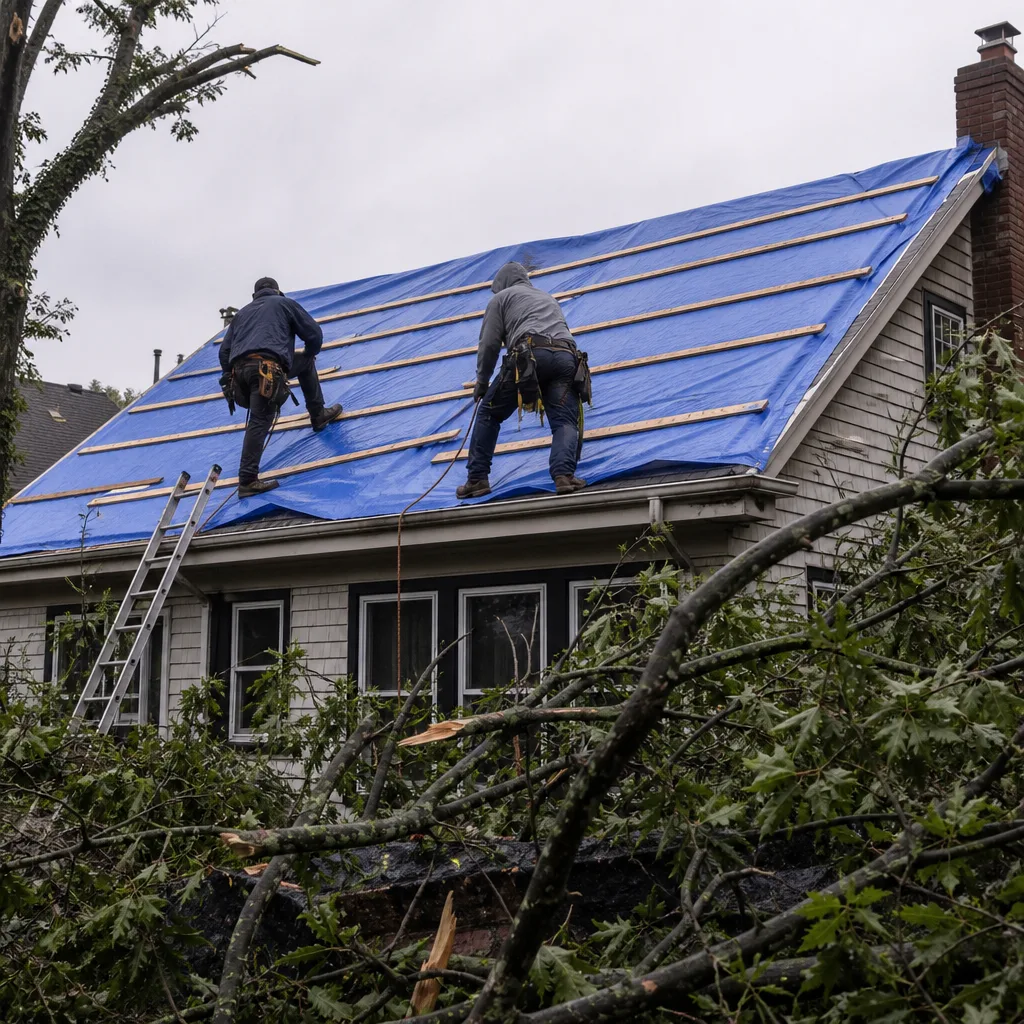
Emergency Board-Up
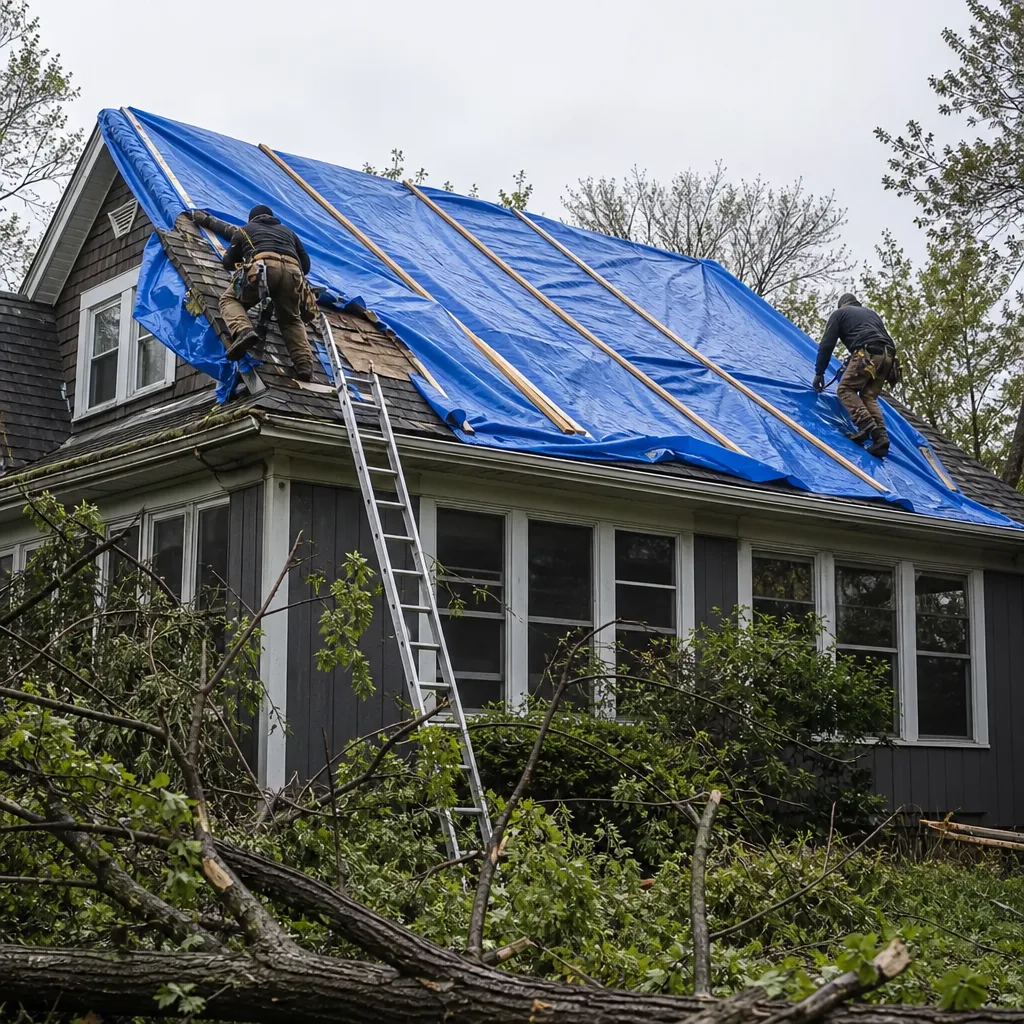
A broken window or damaged door on the first floor of a Jersey City walk-up is an open invitation, and a roof puncture on a row house means water pouring into every unit below. We board up and tarp within hours of your call, securing the building so the damage stops compounding while the claim gets filed and the drying plan goes into motion.
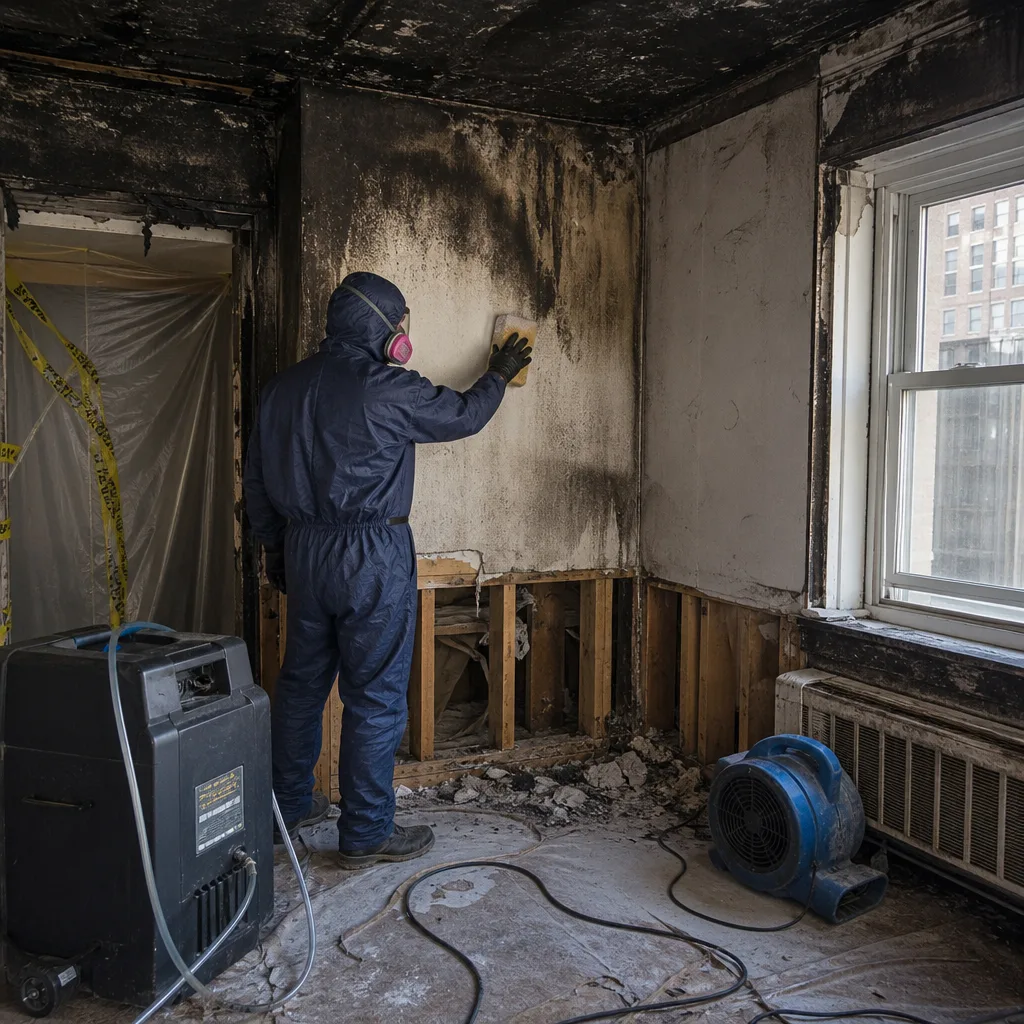
Roof Tarping
Roof membrane and flashing failures on pre-war rowhouses and converted dwellings send water sideways into party walls before it ever shows on a ceiling. We tarp the damaged area tight, water-seal exposed penetrations, and keep the interior drying on schedule while the roof itself awaits permanent repair.
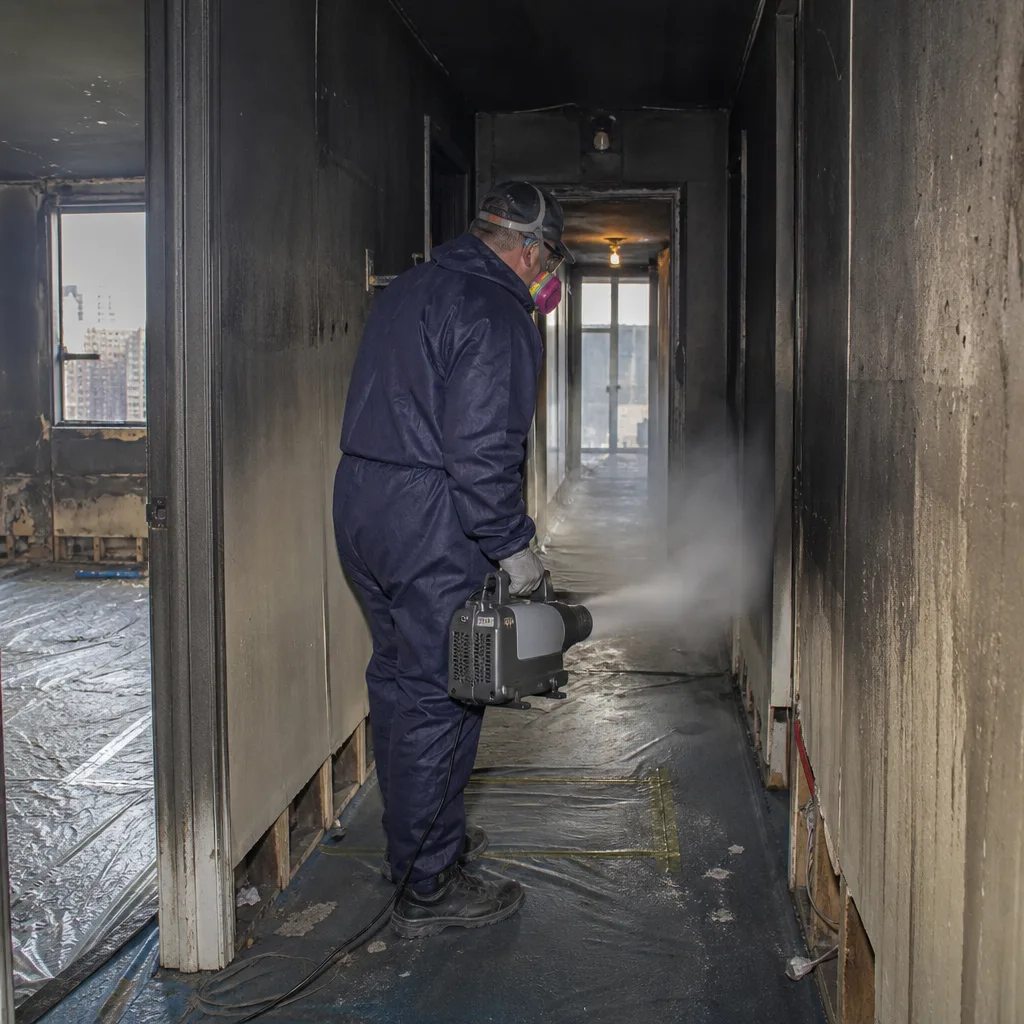
Debris Removal
Storm debris in Jersey City’s dense blocks is not always as simple as dragging branches to the curb. We remove waterlogged building materials, the contents that cannot be salvaged, and anything the storm left inside your home. What goes, stays gone. What can be restored, we dry in place.
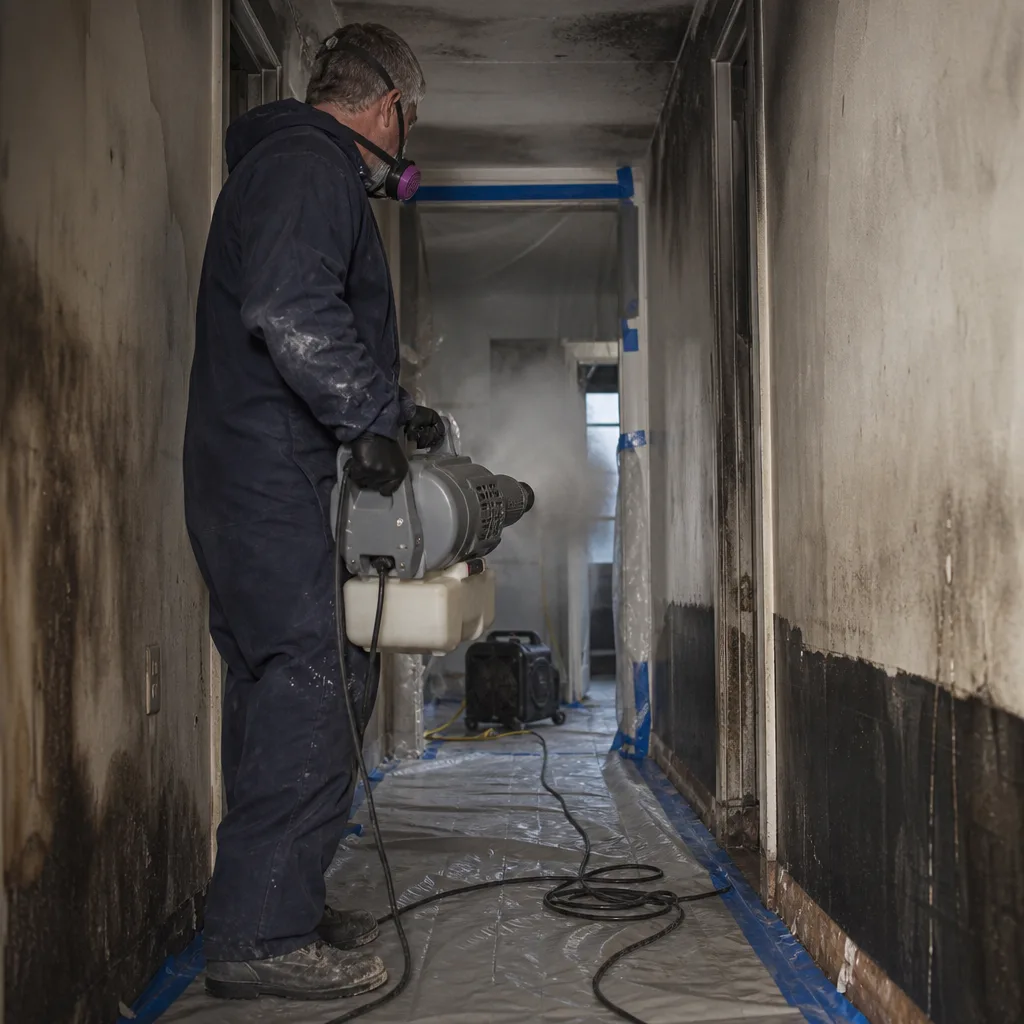
What happens when you call
- 1
A real person answersNo phone trees - you reach a local pro.
- 2
You get an upfront price rangeHonest numbers before anyone is dispatched.
- 3
A background-checked tech heads outLicensed & insured, dispatched right away.
- 4
You approve before work beginsNothing starts until you say go.
Storm & Disaster Restoration Costs in Jersey City, NJ
Storm restoration in Jersey City runs a broader range than inland New Jersey because brackish water and multi-family buildings add complexity. A small roof tarp and minimal interior drying might run $1,200 to $3,400. A Category 3 basement flood with contaminated drywall and flooring removal in 07302 typically lands between $6,000 and $18,000 depending on square footage and how far water wicked up the walls. Full restoration after a major storm event that affected multiple floors in a brick tenement commonly runs $25,000 to $70,000 and up, with reconstruction included. What moves the number: the water category, whether NFIP documentation is required, how many units are involved, and whether original plaster or hardwood must be removed versus dried in place. The free inspection gives you a firm scope in writing before we start, so there are no surprises on the bill. We also honor always-available offers: $50 off any repair over $250, an $89 seasonal tune-up, and a 5% senior and veteran discount. Call (518) 663-6491 for an exact quote.
We Also Serve Cities Near Jersey City
Our crews also respond across Jersey City and the surrounding Hudson County communities, including Hoboken, Union City, and Weehawken. The same live dispatcher answers, the same certified Storm & Disaster Restoration team arrives, and the same 90-Day Done Right Promise applies.
Jersey City Storm & Disaster Restoration Questions, Answered
Is saltwater flood damage in Jersey City any different from freshwater flooding?
Yes, and it matters more than most homeowners expect. Jersey City’s tidal Hudson floods bring brackish water that leaves salt crystals in drywall, plaster, and wood. The salt keeps pulling moisture from the air after the visible water is gone, which means standard drying stops too early and mold follows weeks later. The salt also corrodes steel studs, fasteners, and any metal hardware it touches. We run aggressive salt-specific dehumidification, treat exposed metal, and keep taking readings until the dry standard is actually met, not assumed.
If my Jersey City basement flooded from a sewer backup during a regular rainstorm, is that covered differently than storm damage?
Usually, yes. Many standard homeowners policies separate sewer backup from storm surge or wind-driven rain, and Jersey City’s combined stormwater-sewer system in 07302 makes sewer backups during ordinary rainstorms a realistic risk. The coverage depends on your endorsements and carrier. We photograph what came up, document the contamination level, and provide the paperwork your adjuster needs to determine coverage. Whatever the source, we treat it as Category 3 and clean it accordingly.
Do you handle NFIP paperwork for Jersey City homeowners after a flood?
We do. Much of Jersey City has been in FEMA Zone AE since the post-Sandy remapping, which means NFIP documentation is part of almost every flood job we handle. We provide dated photos, daily moisture logs, a line-item scope, and the drying records your NFIP claim requires. You can verify your property’s zone on the FEMA Flood Map Service Center. Bring us the data and we’ll format it the way the program expects.
My apartment is on the third floor, but the unit below had a pipe burst that affected the whole building. Should I have my unit inspected for hidden moisture?
Yes. In Jersey City’s stacked brick tenements and converted brownstones, water from a lower-floor burst travels upward through wall cavities, electrical chases, and the spaces between joists. You might not see a stain for weeks. We inspect with thermal imaging and moisture meters, find what is wet, and dry it before mold has time to establish. A free inspection now is much cheaper than opening walls later.
What do you do with contaminated drywall and plaster after a Jersey City storm flood?
Category 3 contaminated materials, including sewage- and saltwater-soaked drywall and plaster, get removed under containment with negative air pressure, bagged, and disposed of properly. Original plaster in pre-war buildings is a judgment call: if it was soaked with brackish Hudson water, it usually cannot be reliably dried and must come out. If the contamination is minor and the lath is sound, we may dry it in place and document the call. We’ll show you what we found before anything is cut.
How fast can you actually get to my Jersey City address during a storm?
We commit to a 45-minute response inside our Jersey City service area, even during named storms when every contractor in the county is busy. Our dispatch board is staffed around the clock by a live person, and crews are staged locally. When you call at 2 a.m. with water coming in, a real person answers and a truck starts moving.
Will I have to move out of my home during restoration?
Often not for a single-unit loss. For a contained flood in one area, we set up containment and run drying equipment while you stay. For multi-floor Category 3 losses or when the power and water have to come off for safety, you may need temporary housing. Your carrier usually covers that under loss-of-use coverage, and we can document the need clearly for the adjuster. We tell you honestly, before work starts, which situation you’re in.
What should I do in the first 30 minutes after storm water enters my Jersey City home?
Turn off electricity to affected areas if you can do so without standing in water. Do not enter standing water that may be in contact with outlets or appliances. Move what you can to higher ground. Then call (518) 663-6491. Do not run a shop vac on Category 2 or 3 water, and do not start pulling drywall yourself. The sooner certified crews arrive, the less material gets removed and the lower your total claim stays.
Serving Jersey City, NJ - Our Local Coverage Area
We’re based in the Jersey City area and know this community well. Use the map below to see our service coverage - if you’re nearby, we can almost certainly help.
Jersey City’s Tidal Flood Reality, and What It Means for You
Jersey City is built largely on former tidal marshland and landfill at or near sea level along the Hudson River, which makes it one of the most flood-vulnerable dense urban environments in New Jersey. Superstorm Sandy in 2012 catastrophically inundated the Exchange Place and Newport waterfront districts, and FEMA subsequently remapped enormous swaths of the city into high-risk flood zones. What that means on an ordinary rainy night is this: the water outside is brackish, the street grid is saturated, and the combined sewer under downtown has already reached its limit. When water finds its way into your building, it is not clean water, and the insurance paperwork is not standard. Our crews know the difference because they work it every week. We carry the moisture meters, the HEPA equipment, and the NFIP-format documentation that Jersey City’s particular reality demands. That’s not something a generic restoration franchise from inland New Jersey shows up knowing. It’s what we do here every day.
Written by Curt Bowman, Owner at Floodline Restoration Co., dispatching certified storm restoration crews to Jersey City 24 hours a day.