
Free visual inspection and a written scope of work before any mitigation begins - photos, moisture readings, and drying logs go in your claim file
The scope we write is the scope we bill. Anything new gets shown to you, in writing, before we touch it.

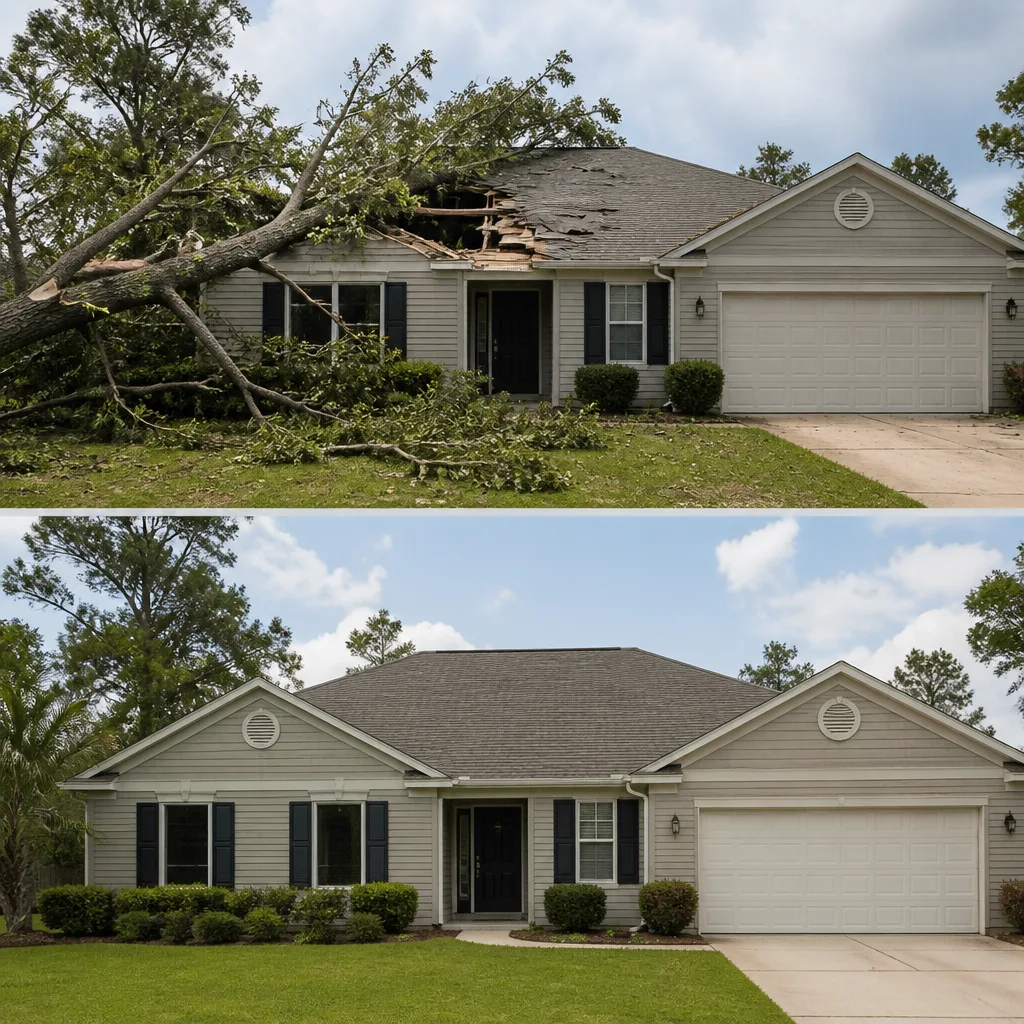


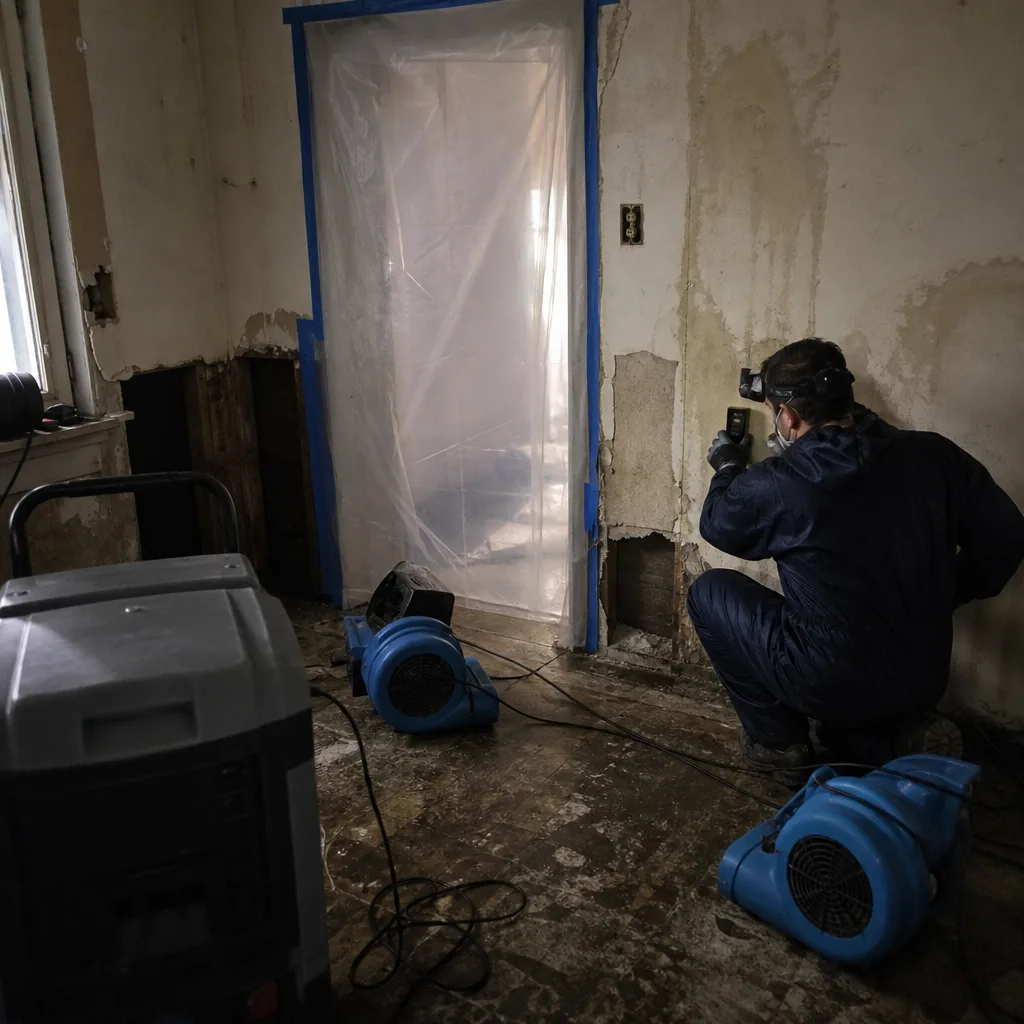 Before
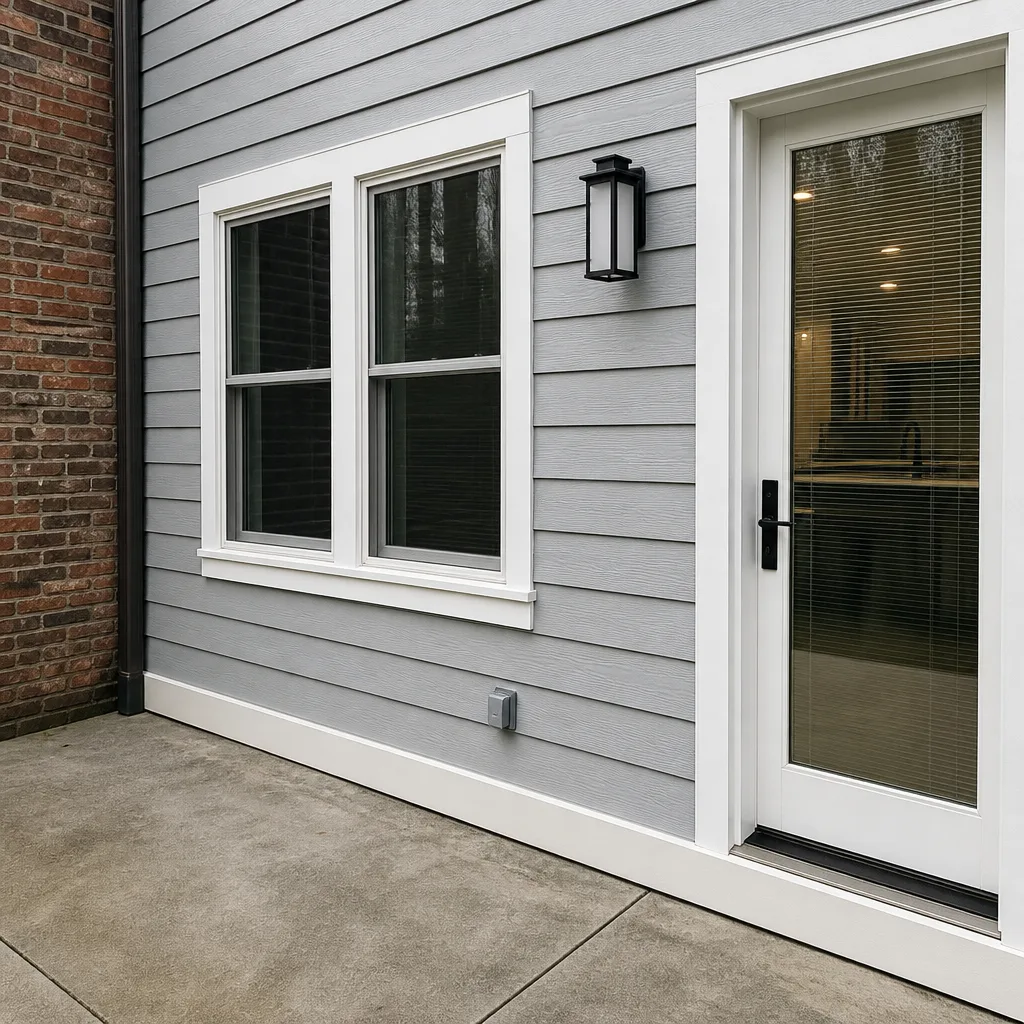 After
After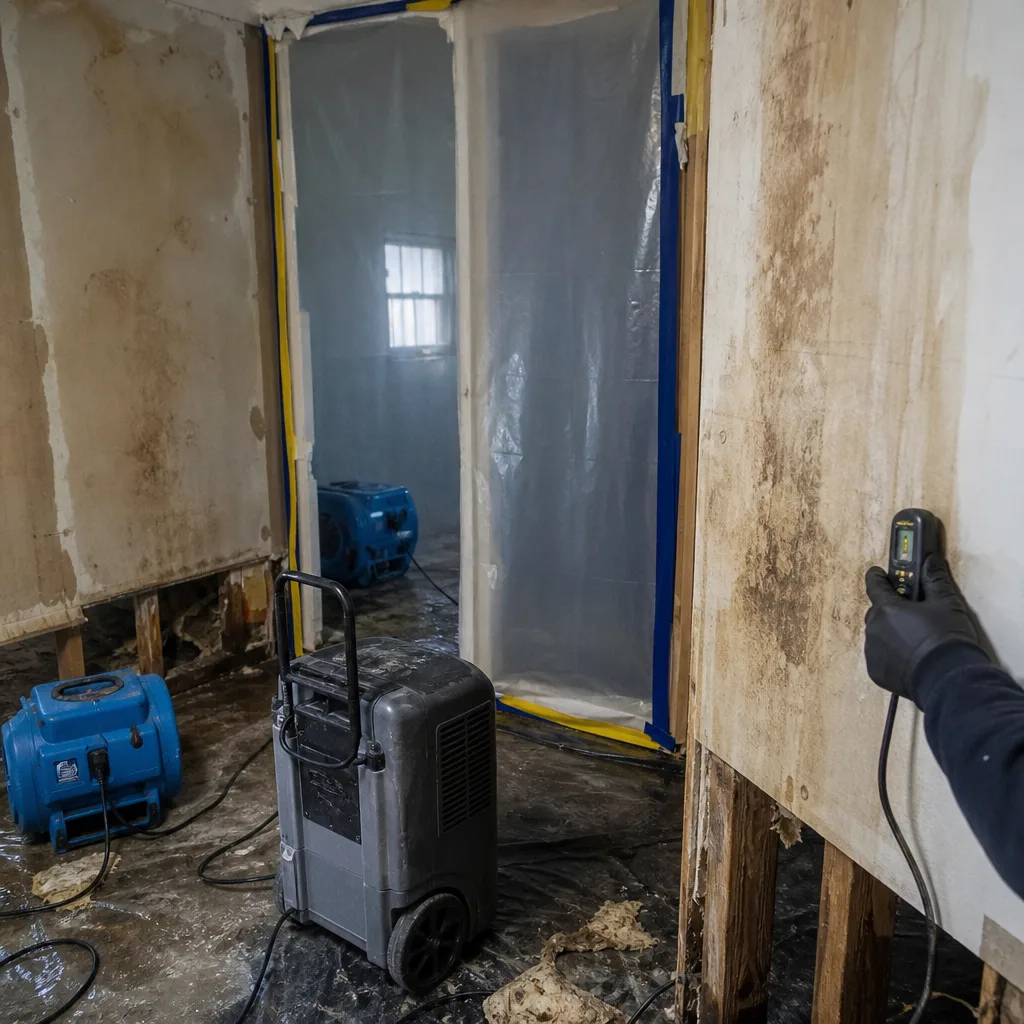 Before
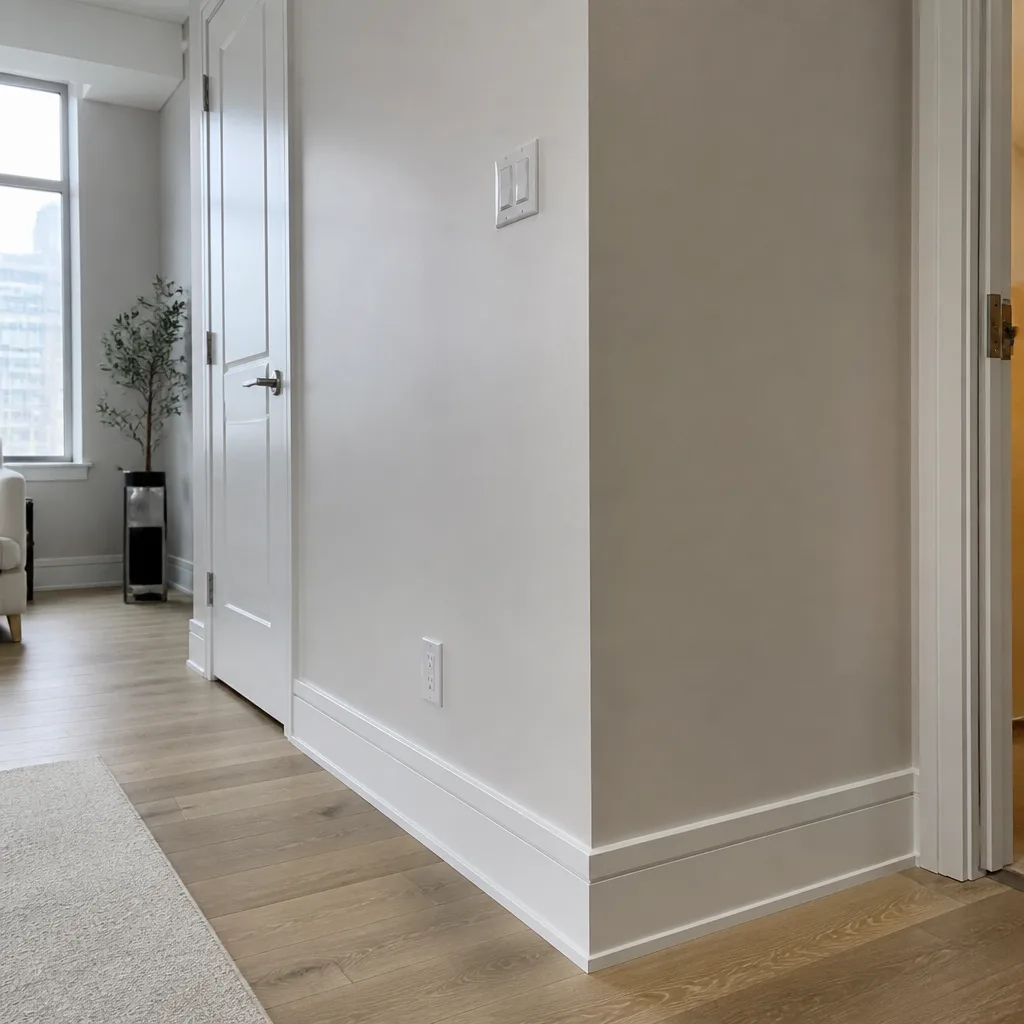 After
After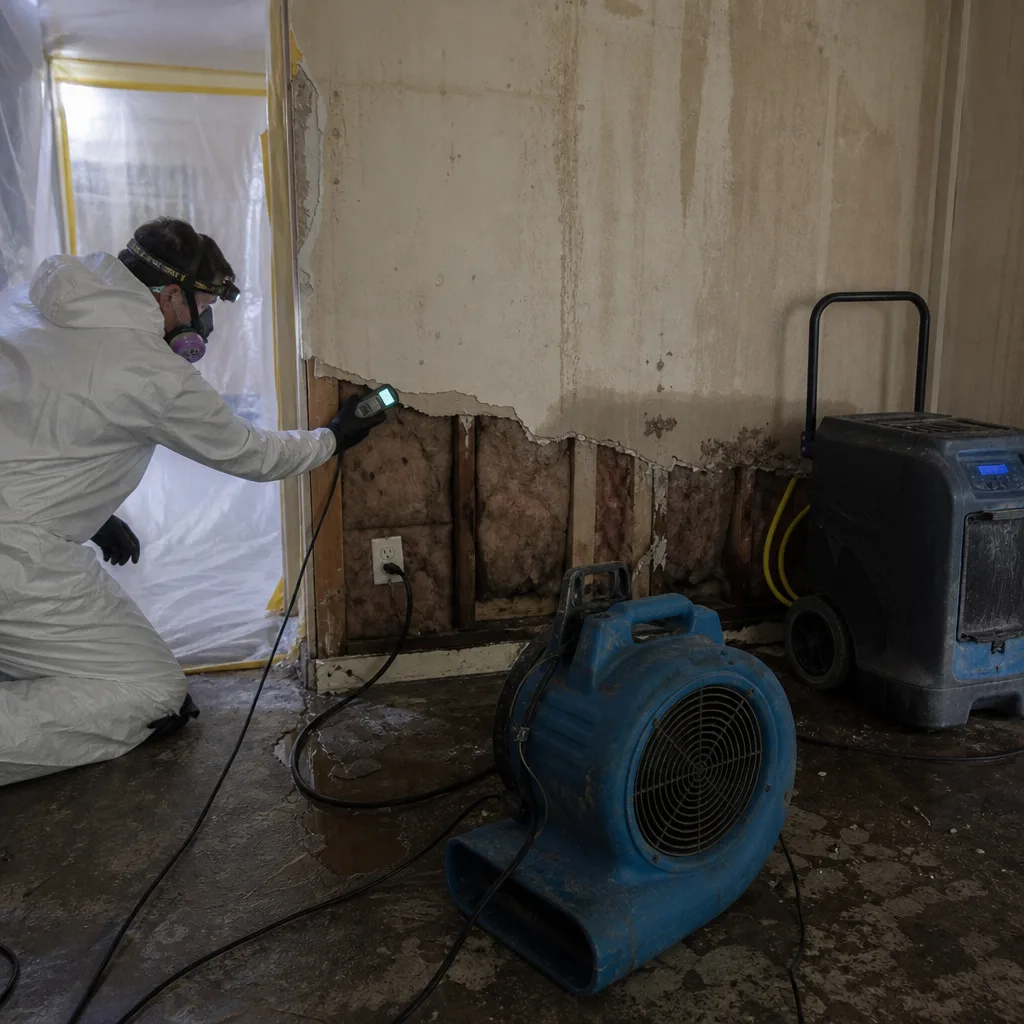 Before
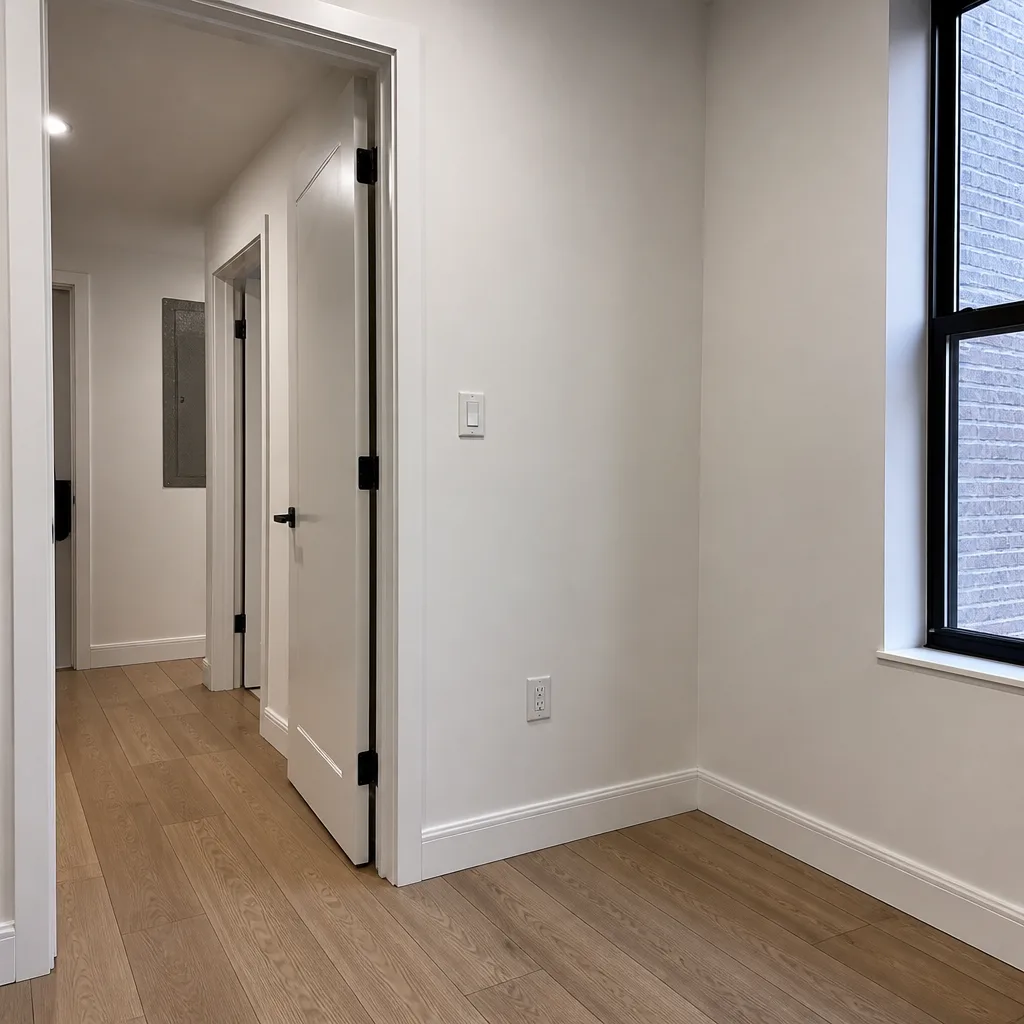 After
After24/7 Emergency Storm & Disaster Restoration in Hoboken
Storm damage in Hoboken doesn’t wait for business hours, and neither do we. When a nor’easter pushes the Hudson over its banks or a summer thunderstorm overwhelms the combined sewers along Washington Street, you need a crew on site within the hour, not a callback. Call (518) 663-6491 any time, day or night. A live dispatcher answers. A certified crew reaches your door, assesses the damage, and starts extraction on that same visit. The first hour after Category 3 water enters a Hoboken brownstone determines whether you’re drying studs or gutting walls to the brick. We’ve seen both outcomes in this city. The difference is always response time.
Understanding Storm & Disaster Restoration Severity in Hoboken Properties
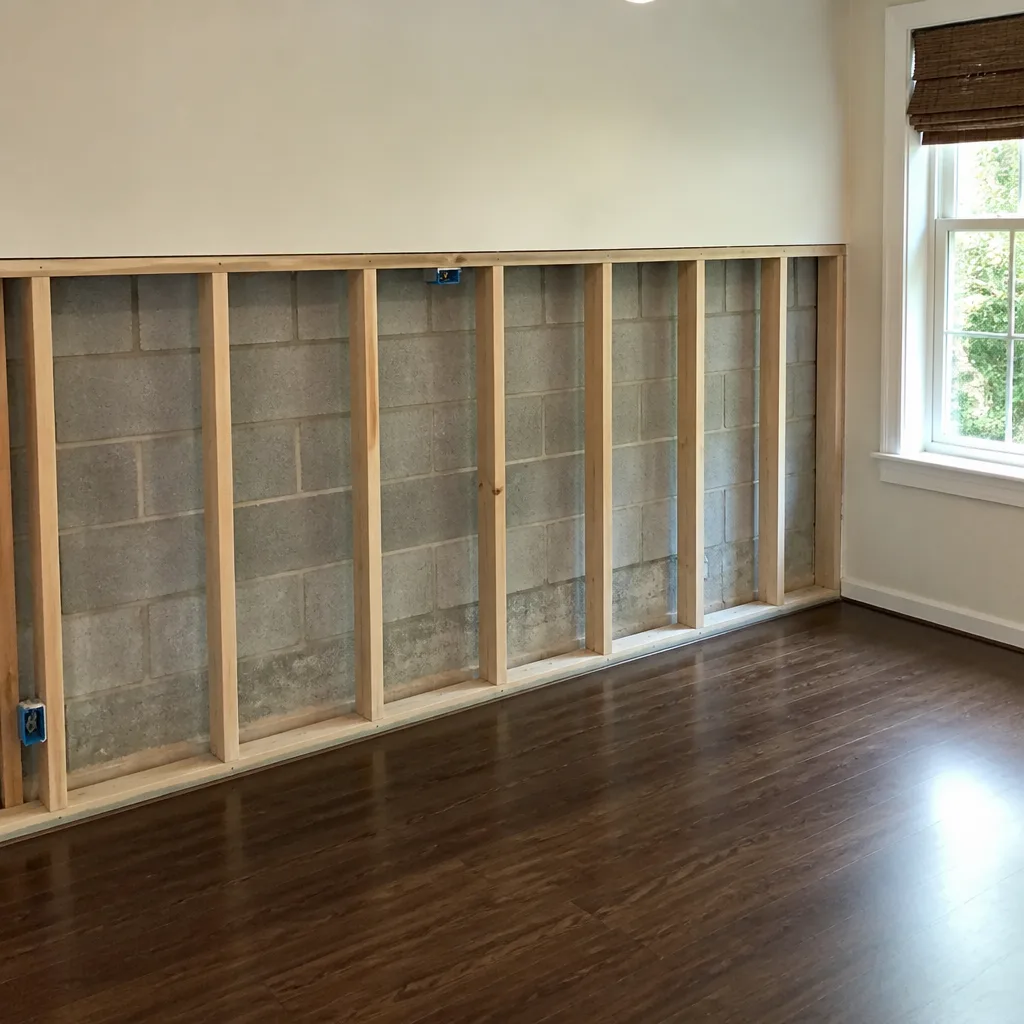
Hoboken’s building stock makes storm damage uniquely unforgiving. Most homes here are late-19th and early-20th-century brick row houses, built side by side with shared party walls and original plaster over brick. That matters because brick wicks water. When storm surge backs through a combined sewer lateral and floods a basement, the water doesn’t just pool on the floor. It climbs into the plaster, into the mortar joints, into the wooden lath behind the plaster. Moisture mapping in a Hoboken brownstone routinely reveals moisture 18 to 24 inches above the visible waterline, hidden inside the wall cavity. We classify water in three categories. Category 1 is clean, from a supply line. Category 2 is contaminated, from a sump failure or washing machine overflow. Category 3 is grossly contaminated: river water, seawater, or sewage. In Hoboken, any storm surge event that touches the combined sewer system is Category 3 by definition. That changes everything about the scope. You don’t dry Category 3 materials. You remove them, sanitize the structure, and rebuild.
Why Hoboken Property Owners Choose Floodline Restoration Co.
- 45-minute response commitment for Hoboken jobs. Our dispatch board runs on local geography, not a call center script. Crews are staged across the metro area so someone reaches your door fast.
- 24/7 live answer, every single time. You won’t get a recording at 2 a.m. A real person picks up, takes your address, and dispatches. Founded in 2010 by Curt Bowman, Floodline was built around a dispatch board, not a sales desk.
- IICRC-certified crews trained to WRT and ASD standards. Background-checked, uniformed technicians trained to IICRC, RIA, and IFA standards handle every job. We use Dri-Eaz, Phoenix, XPOWER, B-Air, and Injectidry equipment.
- Free visual inspection, no obligation. We walk the property, map the moisture, and give you a straight answer about the scope. No pressure, no upsell.
- Direct insurance billing. We bill your carrier directly and handle the adjuster communication, so you’re never the messenger between us and the insurance company.
- One team from first extraction to final rebuild. The same certified crew that reads the moisture map on day one handles daily readings, hands the log to you and your carrier, and rebuilds what needs rebuilding. No mid-job handoff to a subcontractor you’ve never met.
Our Storm & Disaster Restoration Process
Inspection & Assessment
We arrive with thermal imaging and hygrometers, map the moisture across floors, walls, and ceilings, and trace how far water has traveled. In attached row houses, we check the neighboring units. Scope assessments in Hoboken almost always need to include adjacent addresses because water moves through shared brick party walls.
Extraction & Stabilization
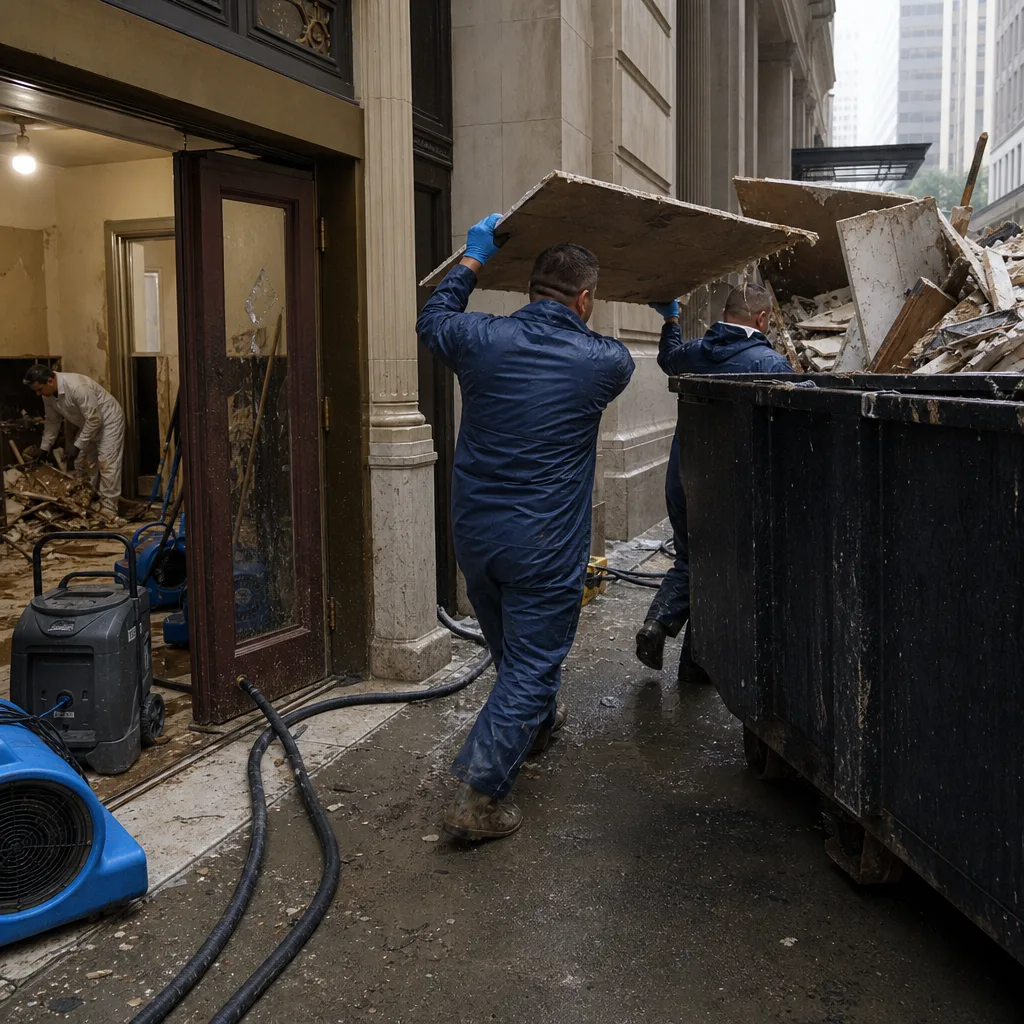
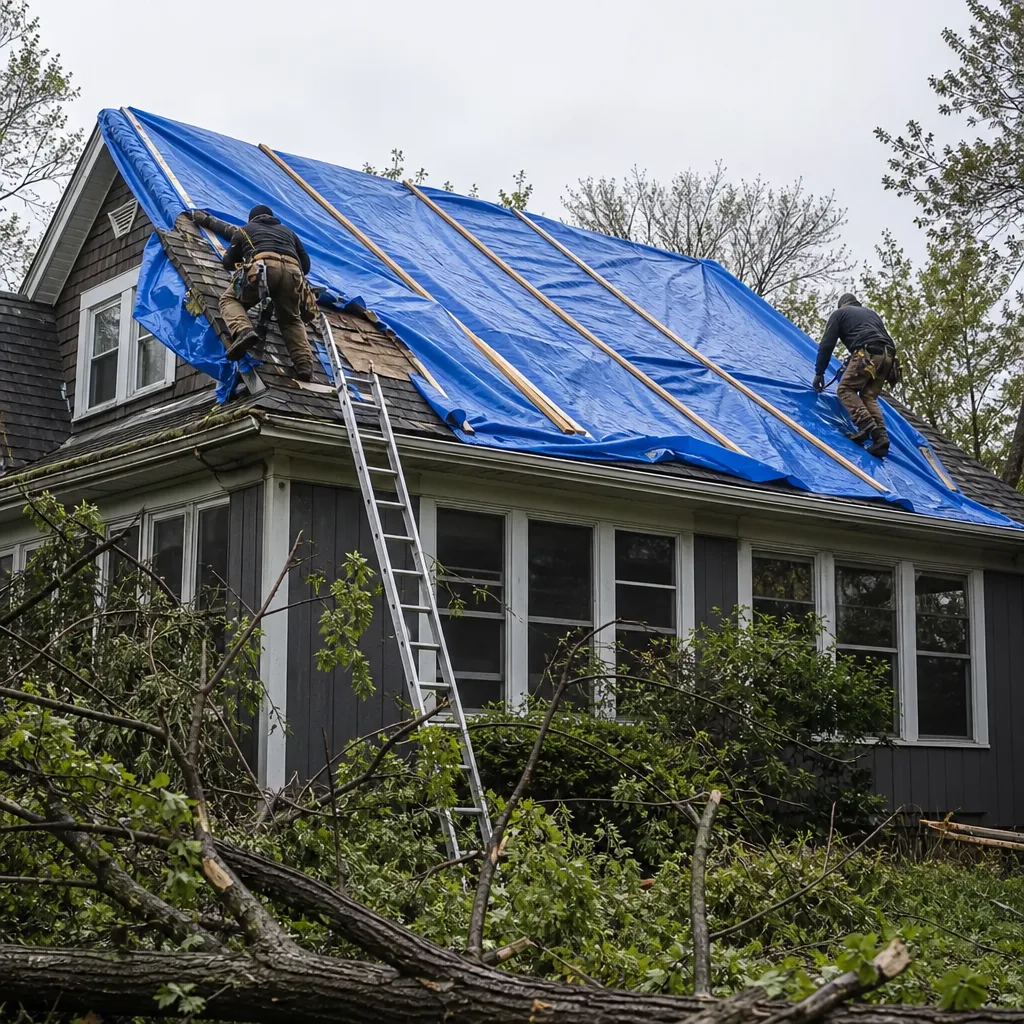
Standing water comes out first, using truck-mounted and portable extraction units. Then we stabilize: emergency board-up, roof tarping, and containment where needed. For Category 3 events, we remove saturated materials to expose the structure.
Drying & Dehumidification
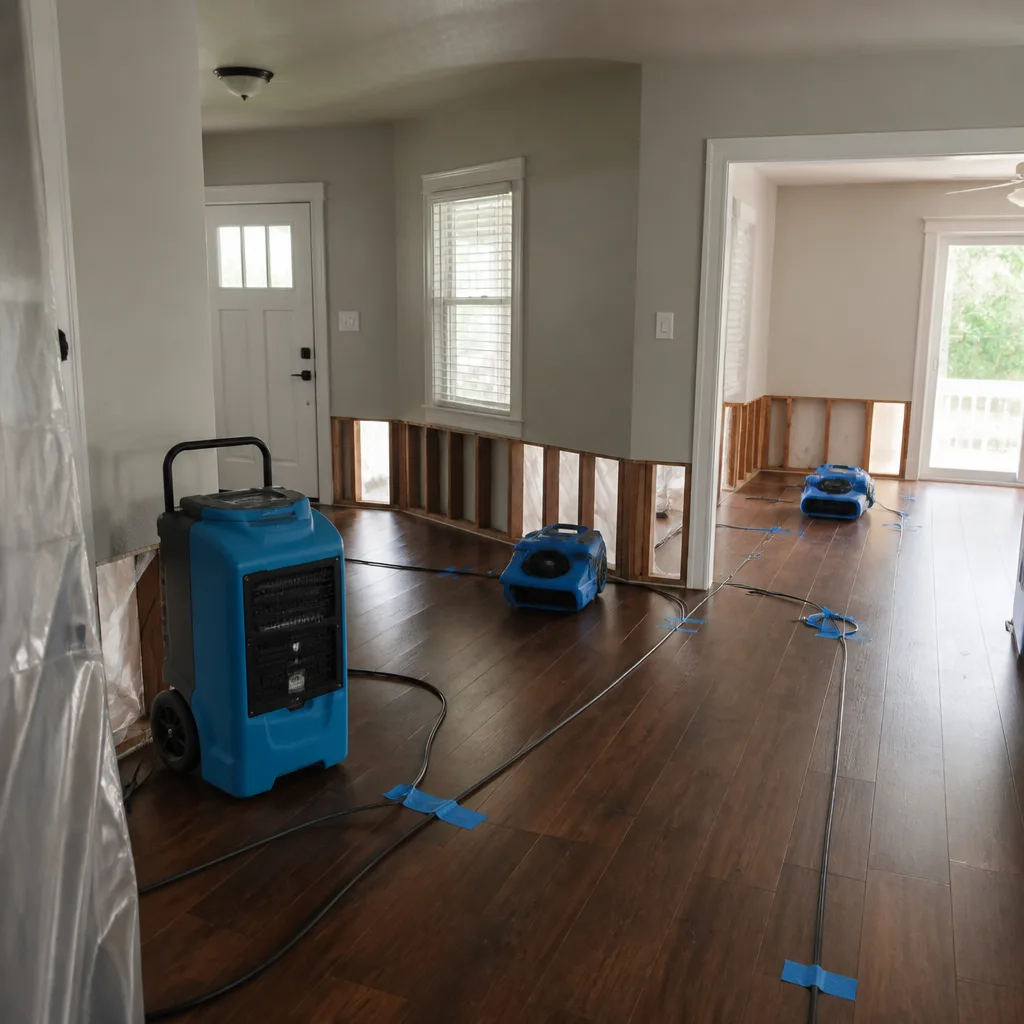
Dri-Eaz air movers and Phoenix dehumidifiers bring air movement and moisture removal to bear on every wet surface. Daily readings get logged. In Hoboken’s plaster-over-brick construction, drying extends beyond the visible waterline because brick holds moisture far longer than drywall.
Cleaning & Sanitization
Category 2 and 3 water require antimicrobial treatment. We clean, sanitize, and deodorize every affected surface. HEPA air scrubbers run during and after the work to capture airborne particulates.
Coastal Corrosion Assessment
Hoboken sits on the Hudson, and salt air attacks metal hardware year-round. We inspect garage-door springs, tracks, hinges, opener chains, and fasteners for corrosion. Salt-air exposure along Hudson Street can seize a garage door within two to three years, which is exactly when you need it open for emergency board-up after a storm.
Repairs & Restoration
We rebuild what was removed: drywall, flooring, trim, paint. Garage doors get galvanized or coated springs, stainless hardware, and nylon rollers where corrosion was found. The 90-Day Done Right Promise, our Keystone Standard, goes in writing with every job. Done right, and backed in writing.
Need Emergency Storm & Disaster Restoration in Hoboken Now?
Crews minutes away, answering live 24 hours a day. The sooner we start, the less it costs.
Working With Your Insurance Company
Storm and flood claims in Hoboken are complicated. Many homeowners carry separate flood policies through the NFIP, while wind damage falls under standard homeowners coverage. Sewer backup often requires a separate endorsement. We document everything from the first hour so your claim is built on evidence, not estimates from memory. Our technicians photograph all damage room by room, record moisture readings and drying logs daily, and prepare a detailed line-item scope of work that insurance adjusters recognize. We coordinate directly with your carrier and send documentation straight to them. You stay informed. You don’t play messenger.
What We Provide Your Insurer
- Thorough documentation of the loss
- Photos of all damage, room by room
- Moisture readings and drying logs
- A detailed, line-item scope of work
- Direct coordination with your carrier
Built for Hoboken’s Loss Calendar
Hoboken’s storm losses follow a calendar as regular as the tides. January and February bring deep freezes that burst supply lines in unheated basements and behind uninsulated exterior walls in older row houses. Spring brings rain on saturated ground, and because Hoboken sits at or below sea level, there is nowhere for that water to drain. Basement seepage rises through foundation cracks and floor joints. Summer thunderstorms drop an inch of rain in an hour, and the city’s flat, below-grade topography means stormwater pours into the combined sewers faster than they can carry it away. The result is backflow into ground-floor units and basements along Washington Street and the low blocks near the PATH station. Autumn brings nor’easters, which push tidal surge up the Hudson while dropping heavy rain, producing multi-source flooding: river water from the east, stormwater from the west, and sewage from below. This is why our Storm & Disaster Restoration team keeps crews staged for rapid dispatch to Hoboken year-round, not just during hurricane season.
Storm & Disaster Restoration Across Hoboken’s Neighborhoods
Hoboken’s neighborhoods each have their own storm damage fingerprint, and our crews read them the way a local reads a tide chart. Downtown near the waterfront and along Hudson Street, salt air works on metal constantly. Garage door springs and opener chains corrode within two to three years, and when a storm hits, that seized door blocks emergency access exactly when you need it open for board-up. Uptown near Washington Street, the city’s spine of bars, restaurants, and ground-floor retail, combined sewer backflow is the dominant threat. Any heavy rain event can send Category 3 water into basements and first floors. The blocks between Willow Avenue and Park Avenue, with their dense rows of attached brownstones, are where shared party walls turn a single-unit flood into a three-unit loss. Water migrates laterally through brick, and by the time the first truck arrives, the moisture may have already crossed two property lines. Near Columbus Park and the PATH station, the city is at its lowest elevation, and stormwater pools there first. Every neighborhood responds differently to the same storm, and a restoration company that doesn’t know the difference will miss hidden damage. We know the difference.
Specialized Storm & Disaster Restoration Services We Offer in Hoboken
Flood Damage Restoration
Flood water in Hoboken is almost never clean. The city’s combined sewer system means river surge, stormwater, and sewage converge in the same event. We classify it immediately, remove what cannot be saved, and dry the structure to the standard for your building type. Plaster over brick dries differently than modern drywall, and our drying logs reflect that.
Emergency Board-Up
When wind or debris breaks windows or doors, your home is open to weather, animals, and people. We secure the structure fast with board-up, and we pay attention to what the boards are attached to. Salt air and moisture have often weakened frames and fasteners in ways that make standard board-up methods inadequate in Hoboken’s older buildings.
Storm Damage Cleanup
Debris removal, muck-out, and clearing of storm-damaged materials come first. Then the moisture assessment begins. The line the water left is where we start. In Hoboken, that line often runs higher on one wall than another because water entered through a shared party wall from the building next door.
Roof Tarping
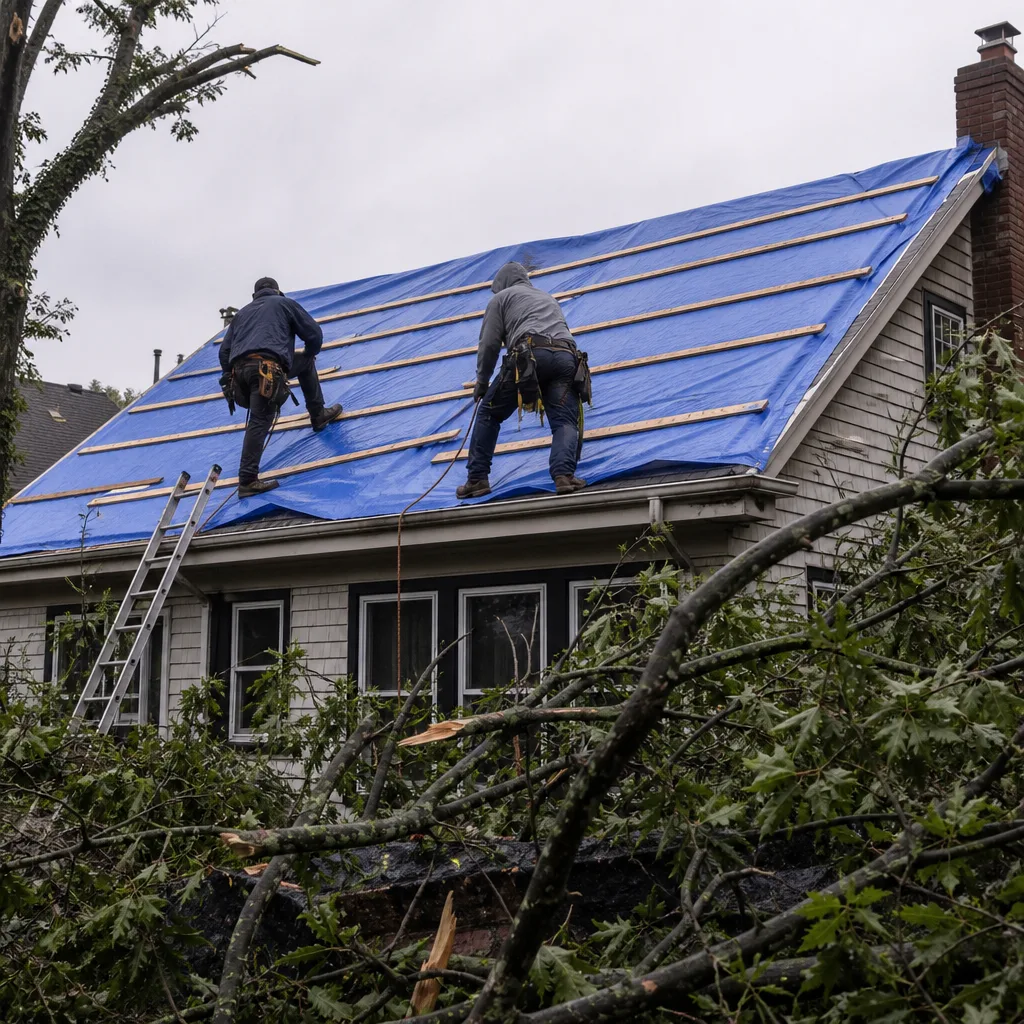
A damaged roof in a Hoboken row house is a race against the next rain. We tarp quickly and securely, and we check the roof deck and flashing while we are up there. If storm damage exposed seams or lifted flashing, water will find it long after the storm passes.
Debris Removal
Storm debris in Hoboken is not just branches and leaves. The city’s dense streets trap blown materials, broken glass, and displaced construction debris from neighboring buildings. We clear it, haul it, and document everything for your claim.
What happens when you call
- 1
A real person answersNo phone trees - you reach a local pro.
- 2
You get an upfront price rangeHonest numbers before anyone is dispatched.
- 3
A background-checked tech heads outLicensed & insured, dispatched right away.
- 4
You approve before work beginsNothing starts until you say go.
Storm & Disaster Restoration Costs in Hoboken, NJ
Storm restoration costs in Hoboken run higher than in neighboring communities, and there’s a reason. A typical Category 3 flood in a brownstone basement runs $8,000 to $20,000 depending on how far water traveled and whether neighboring units are involved. Emergency board-up after wind damage runs $400 to $1,200. Roof tarping runs $300 to $800. Basic storm cleanup and debris removal runs $500 to $2,500. Full storm damage restoration, where we are gutting, drying, sanitizing, and rebuilding a ground-floor unit on Washington Street, runs $15,000 to $45,000. What moves the price: whether sewage is involved, how many addresses share the damage, whether plaster needs removal to the brick, and how much corrosion has compromised hardware. Insurance covers most storm-related damage under homeowners policies, flood policies, and sewer backup endorsements. The smartest first step is a free visual inspection with a written scope. You’ll know exactly what needs doing and what it costs before any work starts. Square deal, no surprises on the bill. Call (518) 663-6491 for a free estimate.
We Also Serve Cities Near Hoboken
Our service area extends beyond Hoboken. We serve Storm & Disaster Restoration in Hoboken and also Union City, Weehawken, and Jersey City. If you’re in a neighboring municipality and watching water rise, call us. Same live dispatch, same certified crews, same standard.
Serving Hoboken, NJ - Our Local Coverage Area
We’re based in the Hoboken area and know this community well. Use the map below to see our service coverage - if you’re nearby, we can almost certainly help.
Hoboken Storm & Disaster Restoration Questions, Answered
How does salt air from the Hudson River affect storm damage restoration in Hoboken row houses?
Salt air accelerates corrosion on metal components throughout a Hoboken home, but it hits garage-door hardware hardest: springs, hinges, rollers, tracks, fasteners, and opener chains. Within two to three years of exposure along Hudson Street, a standard garage-door spring can be so corroded that the door seizes shut, and that always seems to happen right when a storm is coming and you need the door for board-up access. We replace corroded hardware with galvanized or coated springs, stainless fasteners, and nylon rollers during restoration, because the salt air will not stop.
Why do Hoboken flood jobs almost always involve multiple addresses on the same block?
Hoboken’s housing stock is overwhelmingly attached brick row houses with shared party walls. When floodwater enters one unit, it migrates laterally through the brick and mortar into the adjacent units. We have opened walls in units that looked dry from the front room and found moisture 18 inches above the floor in the party wall. Contractors who scope only the reported address will miss hidden damage in the neighboring building, and that missed moisture becomes mold within 48 hours. Our assessments include the adjacent units as a matter of course.
What does ‘Category 3 water’ mean for a Hoboken storm backup, and why does it force full gut-out?
Category 3 water is grossly contaminated: river water, seawater, or sewage. In Hoboken, any storm event that touches the combined sewer system is Category 3 by definition because stormwater and raw sewage back up together. You cannot dry and keep materials that have absorbed Category 3 water. Drywall, insulation, carpet, pad, and often base cabinetry and lower wall sections must be removed, the structure sanitized, and then rebuilt. It is a bigger job than drying, but it is the only job that keeps your family safe. Call (518) 663-6491 and we’ll tell you straight what scope you’re facing.
How long does structural drying actually take in a Hoboken brownstone after a flood?
Three to seven days is typical for a modern drywall-and-frame structure. A Hoboken brownstone with original plaster over brick takes longer, often seven to ten days, because brick holds moisture far longer than modern building materials. We use Dri-Eaz air movers and Phoenix dehumidifiers, and we run daily moisture readings until the dry standard is met. On a row house off Willow Avenue near the PATH tracks, we extended the drying logs an extra 72 hours because moisture mapping showed lateral wicking into original plaster-over-brick that was invisible from the surface. You’ll get the full moisture log, and so will your carrier.
Can you really restore a garage door after a Hoboken storm, or does it usually need full replacement?
It depends on what the storm did and what the salt air had already done before the storm. If the door is structurally sound but the springs and hardware are corroded, we can replace those components and restore the door. If salt-air corrosion has eaten through the tracks or the door panels themselves are compromised, replacement is the honest answer. We will show you the corrosion and the measurements, and you decide. No oversell.
How fast can you actually get to my Hoboken address?
We commit to a 45-minute response for Hoboken jobs. That is a real dispatch commitment, not marketing language. A live dispatcher takes your call, a crew is assigned immediately, and they head to you. If storm conditions are actively flooding streets, we adjust routes accordingly, but the commitment stands. We’ll be there when we say.
Will my insurance cover storm and flood damage in Hoboken?
Most storm-related wind damage is covered under standard homeowners policies. Flood damage requires a separate flood policy, typically through the NFIP. Sewer backup requires a separate endorsement on most policies. We document everything and bill your carrier directly. You do not have to interpret your policy for us. We handle the claim paperwork and the adjuster communication.
What should I do in the first 30 minutes after storm water enters my Hoboken home?
Call us at (518) 663-6491. Then shut off the electricity at the breaker if water is near outlets or the panel and you can do so safely without standing in water. Do not enter standing water. Do not use any electrical appliances in wet areas. Take photos if you can do so safely. The clock is running on how much material can be saved, and every minute of delay in Hoboken’s brick construction means water wicking further into the walls. A live person answers our line 24/7.
Written by Curt Bowman, Owner at Floodline Restoration Co., serving Hoboken since 2010.