
Free visual inspection and a written scope of work before any mitigation begins - photos, moisture readings, and drying logs go in your claim file
The scope we write is the scope we bill. Anything new gets shown to you, in writing, before we touch it.
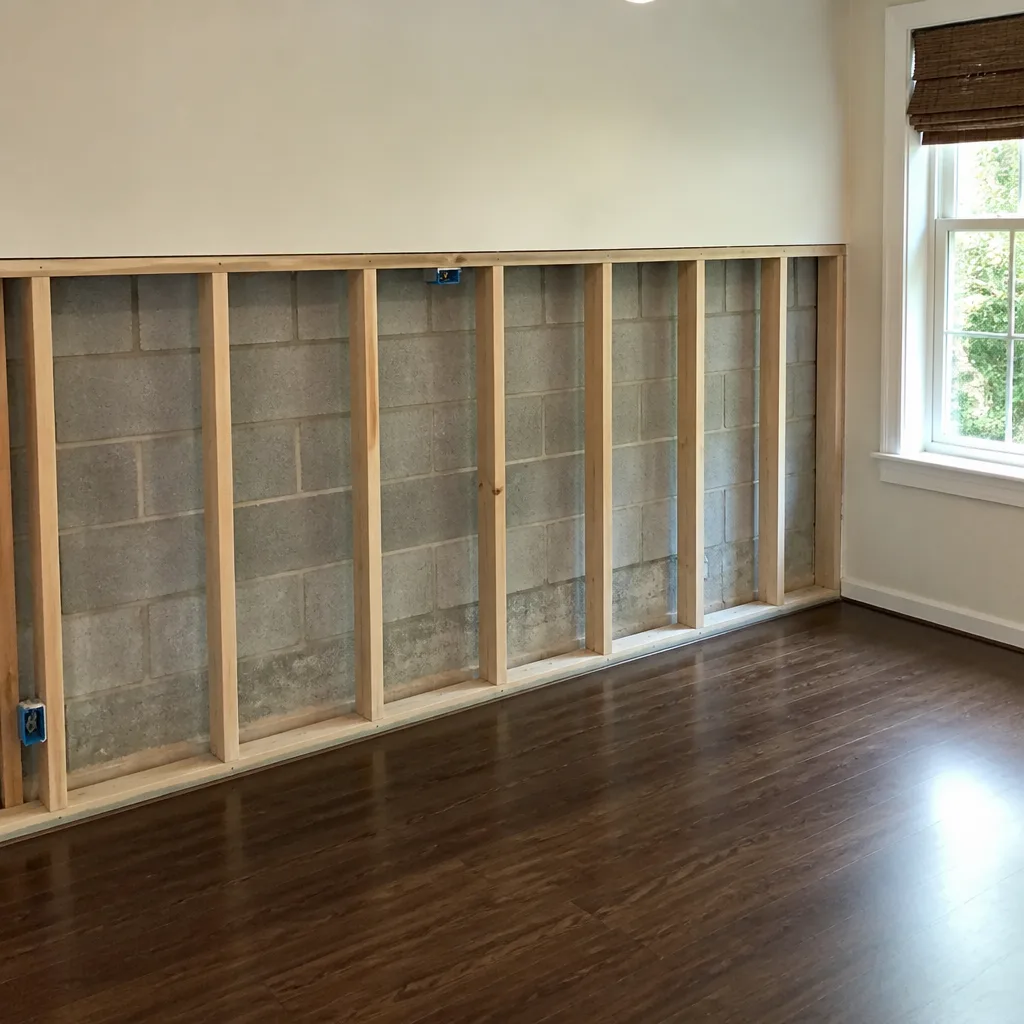
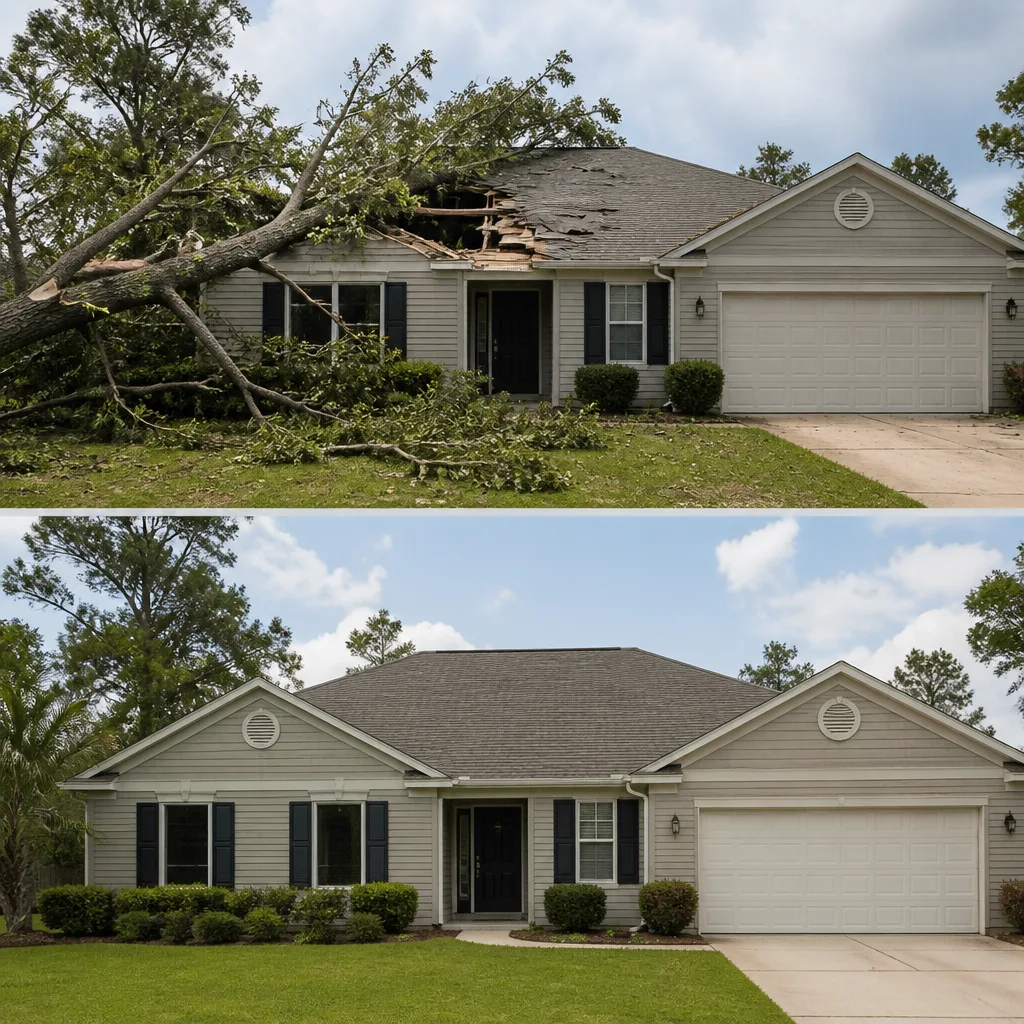
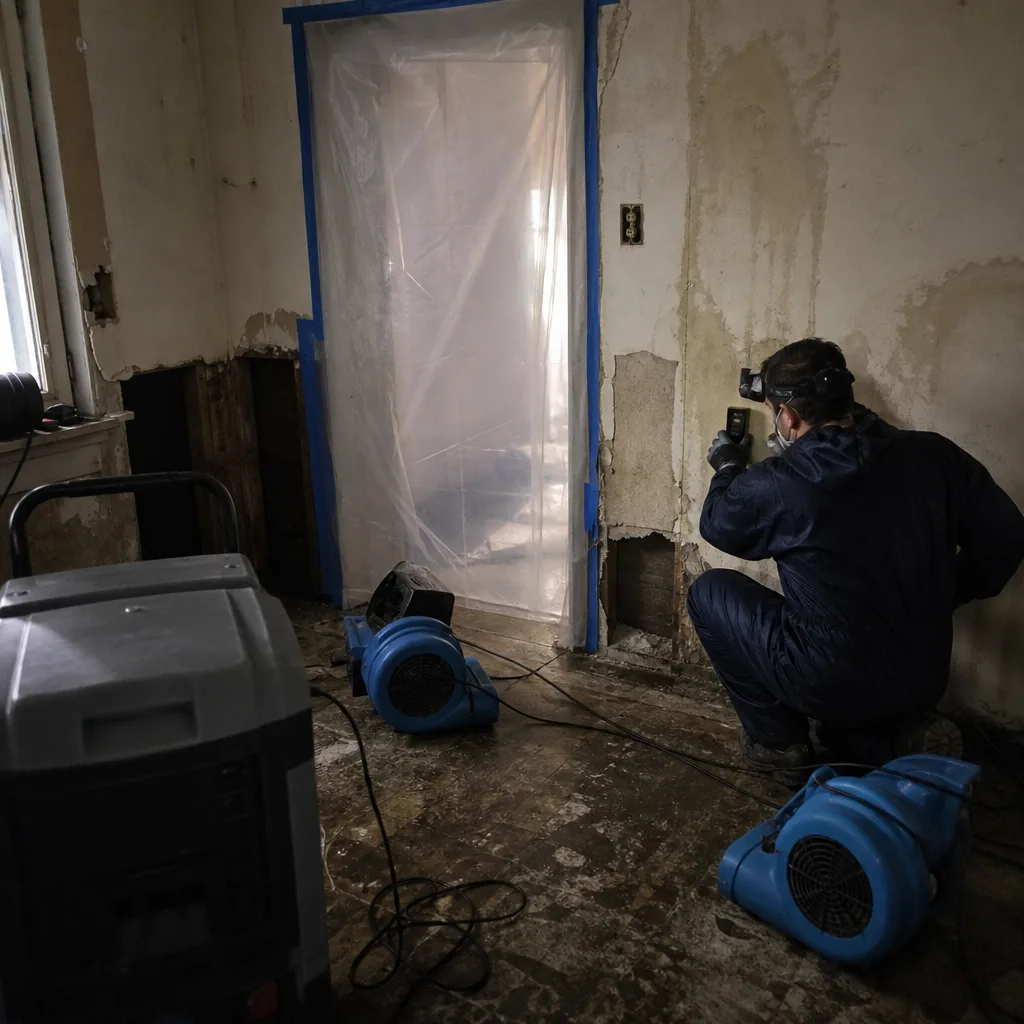 Before
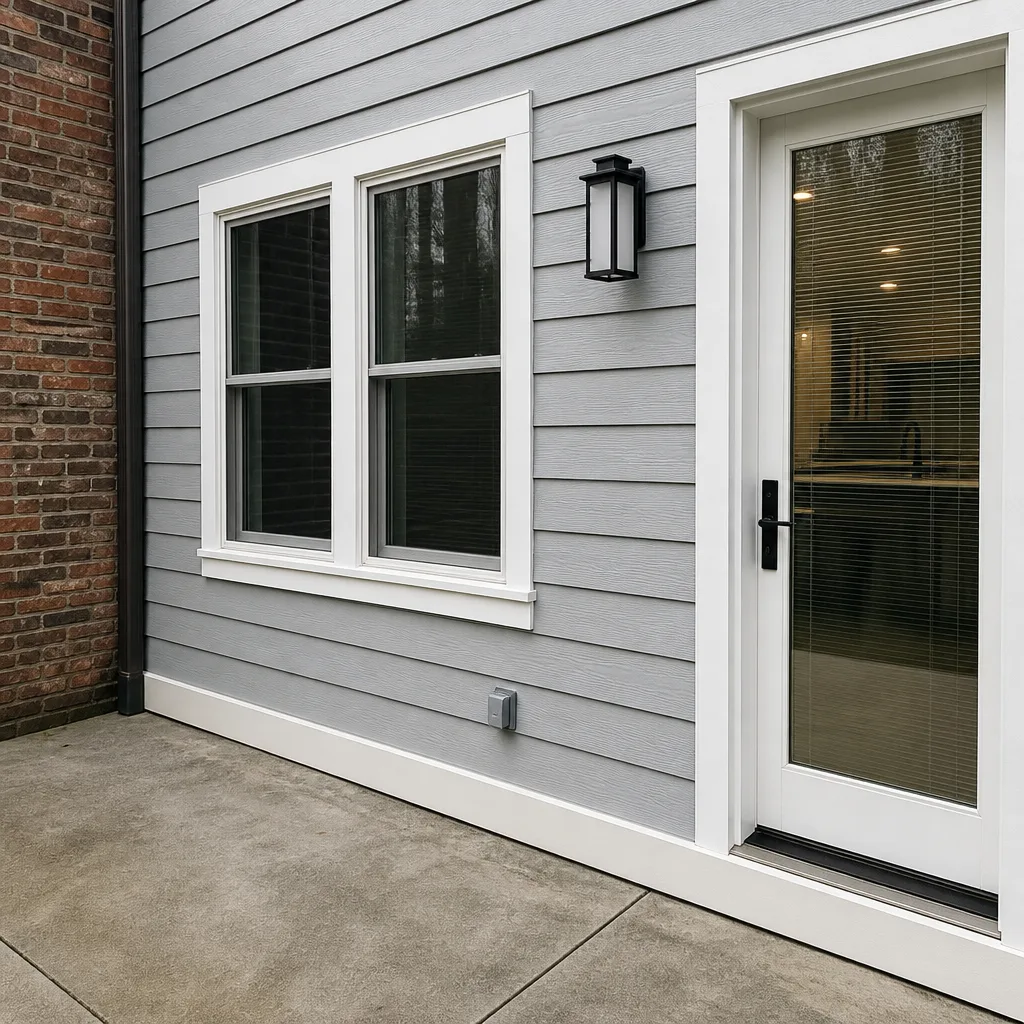 After
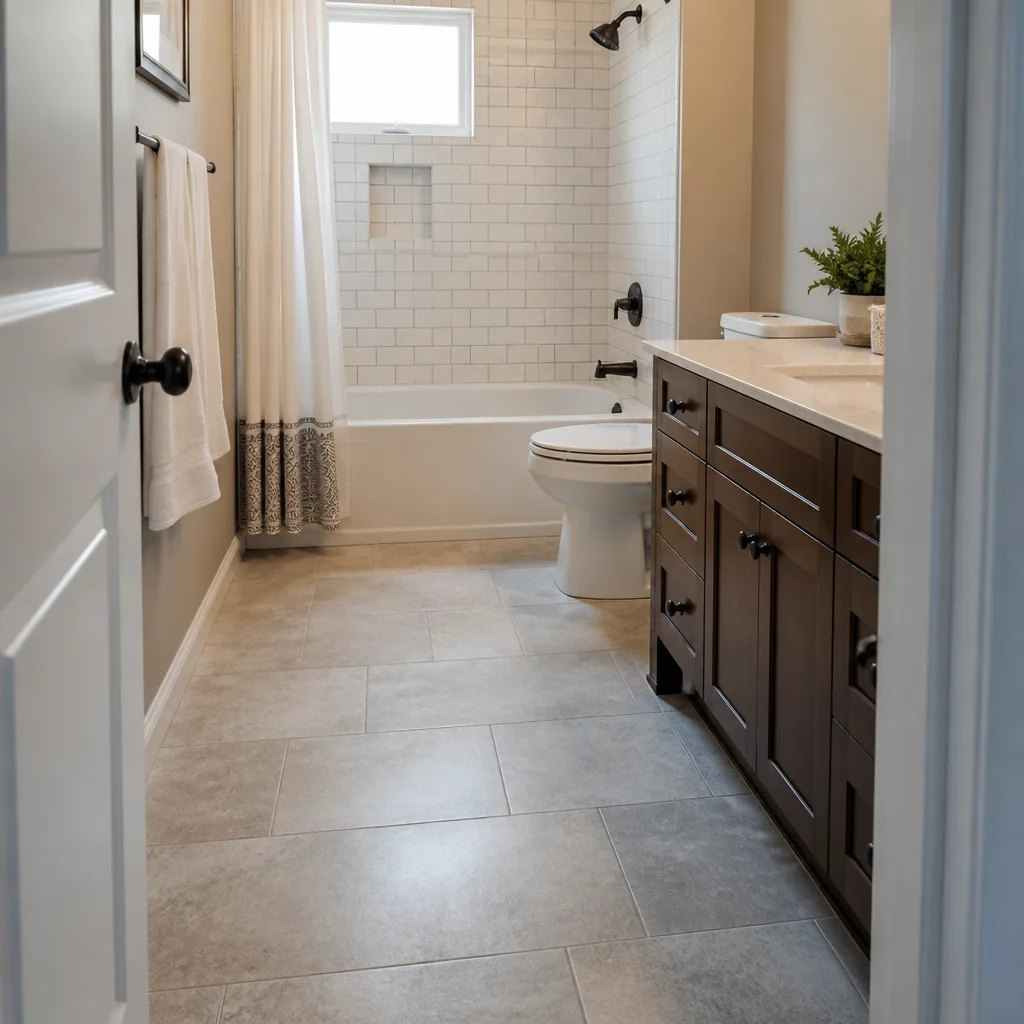
After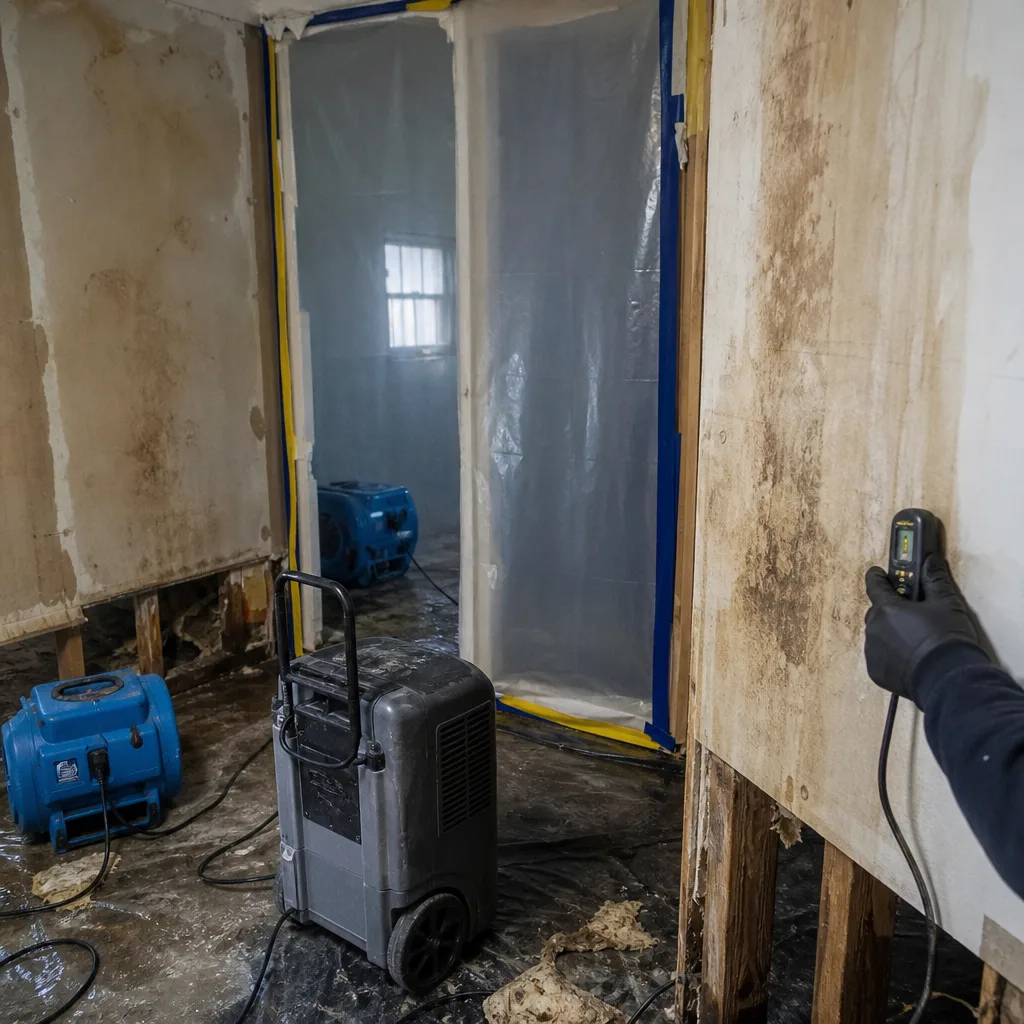 Before
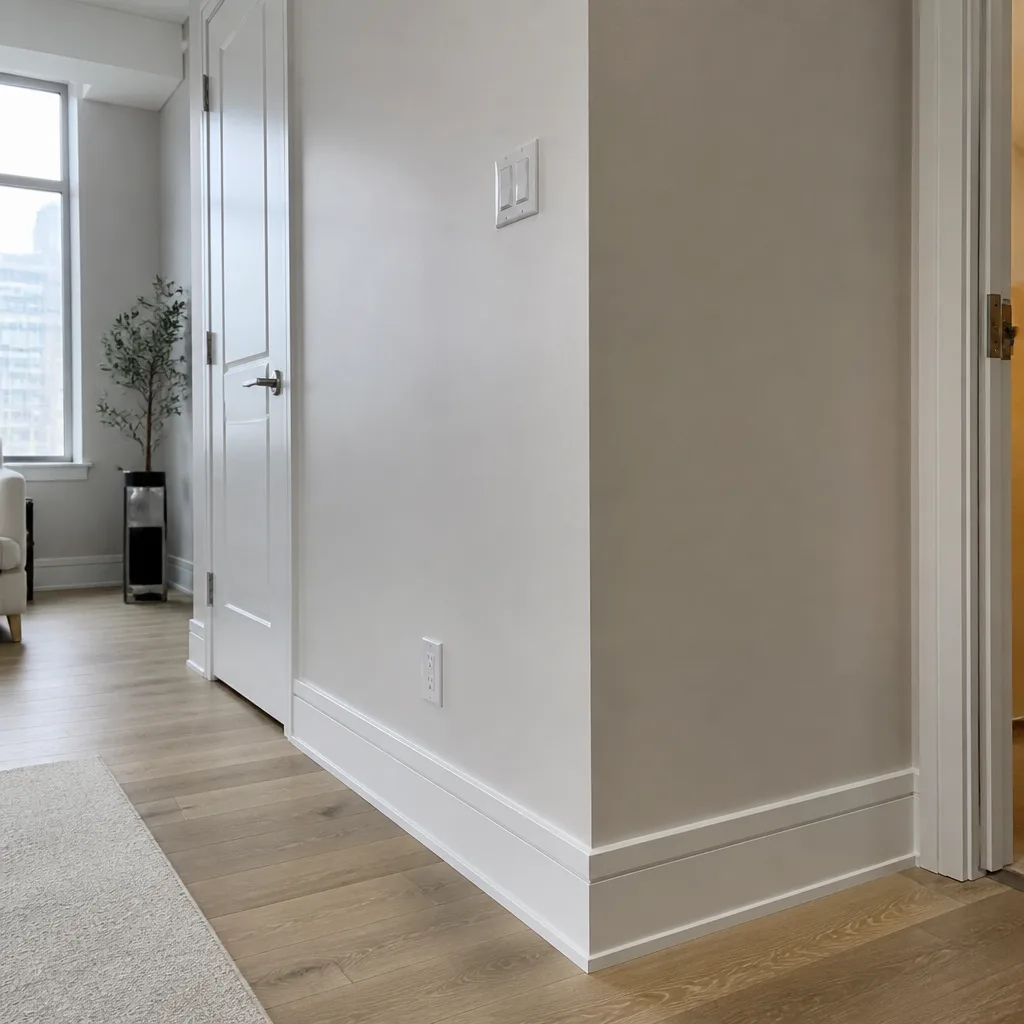 After
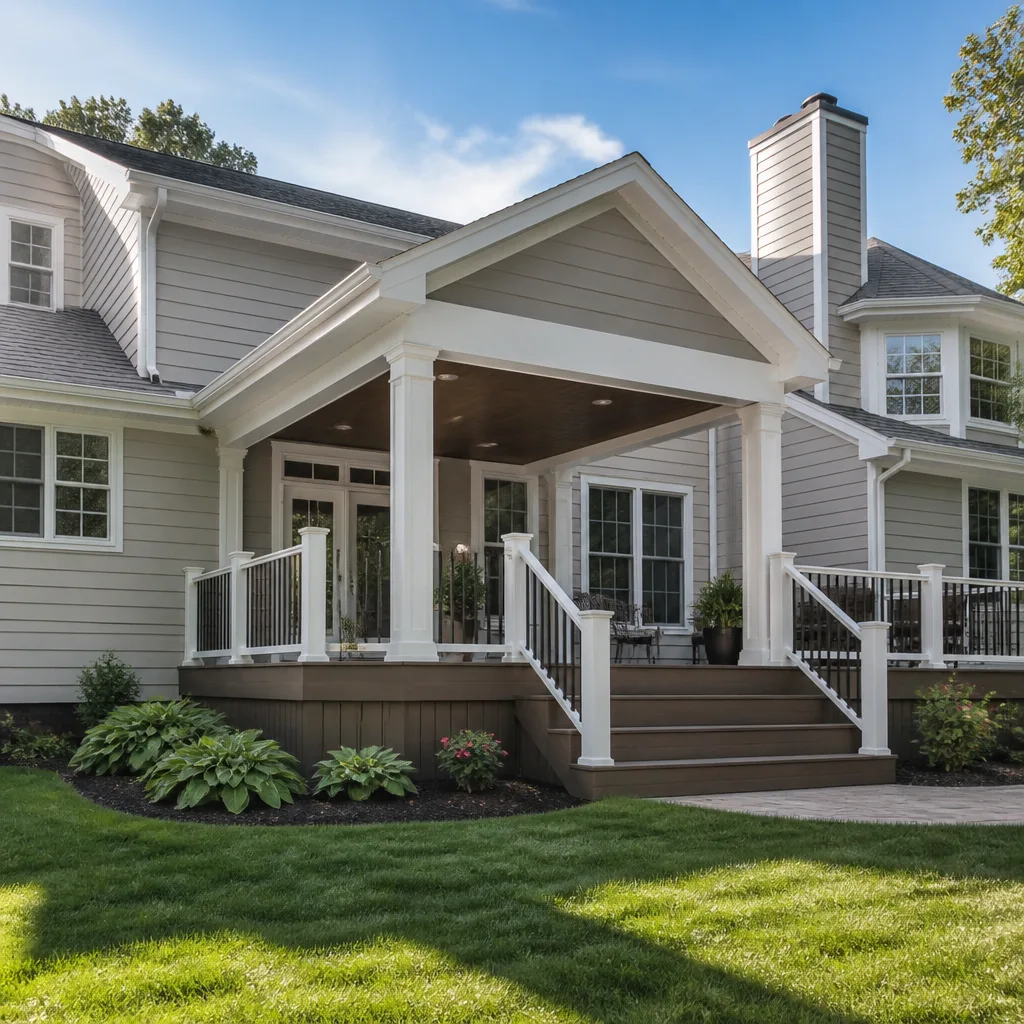
After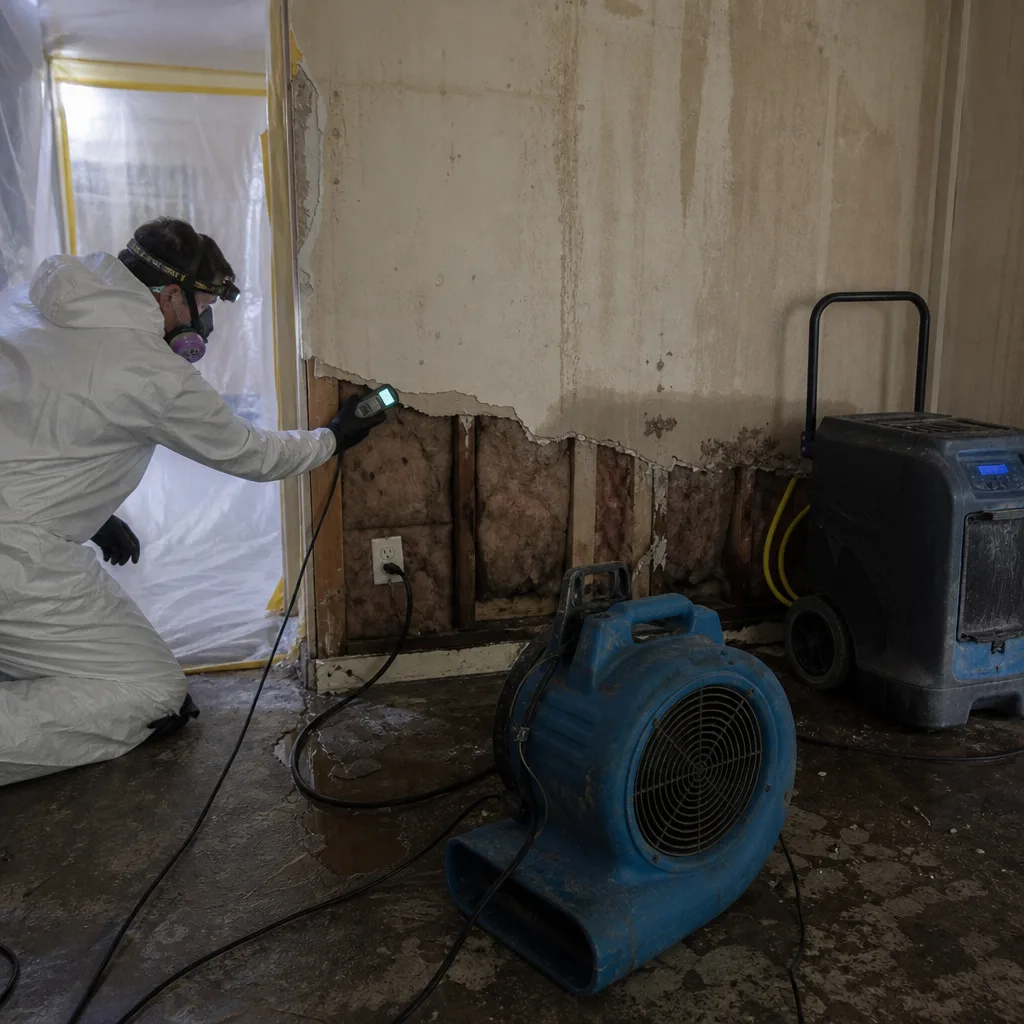 Before
 After
After24/7 Emergency Reconstruction & Cleanup in Williamsburg
When water, fire, or storm damage hits a Williamsburg property, the first call should reach a live person who can dispatch a crew immediately. Floodline Restoration Co. answers the phone 24 hours a day, seven days a week with a real dispatcher, not a recording, and our certified technicians in Williamsburg begin the assessment and stabilization work the same visit. Call (518) 663-6491 now for a free visual inspection. The first hour after a loss determines whether you’re facing a cleanup or a full reconstruction, and in Williamsburg’s converted lofts and pre-war tenements, water and smoke move through building assemblies faster than most homeowners expect. A Category 3 water loss in a North 4th Street loft doesn’t stay contained to one unit. Lateral migration through unreinforced brick party walls spreads saturation into adjacent units within hours. We start extraction immediately because every hour of standing water extends drying time and multiplies the scope of rebuild work. Our uniformed, background-checked crews arrive with Dri-Eaz air movers, Phoenix dehumidifiers, and thermal imaging cameras ready to run. We don’t ask you to wait for a callback. We show up.
Understanding Reconstruction & Cleanup Severity in Williamsburg Properties
Not all damage is equal, and Williamsburg’s housing stock makes severity assessment more demanding than in any newer suburb. Water losses are classified Category 1 (clean supply water), Category 2 (gray water from washing machines or sump failures), and Category 3 (sewage, storm surge, or standing water that has absorbed contaminants). In a converted loft along North 1st through North 7th Streets, a Category 2 leak can behave like a more severe loss because water migrates laterally through unreinforced brick party walls, carrying contamination into concealed cavities that standard moisture mapping for wood-frame buildings would never identify. Lathe-and-plaster walls in late-19th-century tenements near Bedford Avenue wick and hold moisture far longer than modern drywall. Masonry walls, concrete slab floors, and old cast-iron waste lines change the drying equation entirely. Fire and smoke losses in Williamsburg present their own complexity. Soot residue types vary: dry soot from fast-burning synthetic materials, protein-based soot from kitchen fires that requires specialized chemical cleaning, and oily soot from slow-smoldering fires that smears into porous brick and plaster. Smoke migrates through ductwork, elevator shafts, and gaps between brick masonry and joist pockets. Accurate moisture mapping, thermal imaging, and hygrometer readings drive every scope decision. This is why our IICRC-certified technicians treat Williamsburg buildings as structural systems, not boxes.
Why Williamsburg Property Owners Choose Floodline Restoration Co.
- 45-minute response commitment – from the moment you call, a certified crew is en route to Williamsburg, with live dispatch tracking every step.
- 24/7 live answer – a real person picks up at 2 a.m., not an automated system or answering service, and that person can dispatch a crew.
- IICRC-certified crews – technicians certified in WRT (Water Damage Restoration), FSRT (Fire & Smoke Restoration), and AMRT (Applied Microbial Remediation), plus RIA and IFA training standards.
- Free visual inspection – we assess the damage, run initial moisture readings, and give you a written scope before any work begins.
- Direct insurance billing – we communicate with your adjuster, provide line-item documentation, and bill the carrier directly. You don’t play messenger.
- One team from extraction to reconstruction – the same certified crew that reads the moisture map on day one handles daily readings and rebuilds what needs rebuilding. No mid-job handoff.
Our Reconstruction & Cleanup Process
1. Inspection & Assessment
We arrive at your Williamsburg property and conduct a full visual inspection plus moisture mapping using thermal imaging and hygrometers. For converted lofts, we map lateral moisture migration through brick party walls, not just top-down ceiling stains. You receive a written scope of work before anything moves forward.
2. Extraction / Stabilization
Standing water comes out first using truck-mounted extraction units and submersible pumps. We stabilize the structure by removing wet materials that can’t be saved, setting containment barriers where contamination has spread, and shutting down electrical circuits in affected areas.
3. Drying & Dehumidification
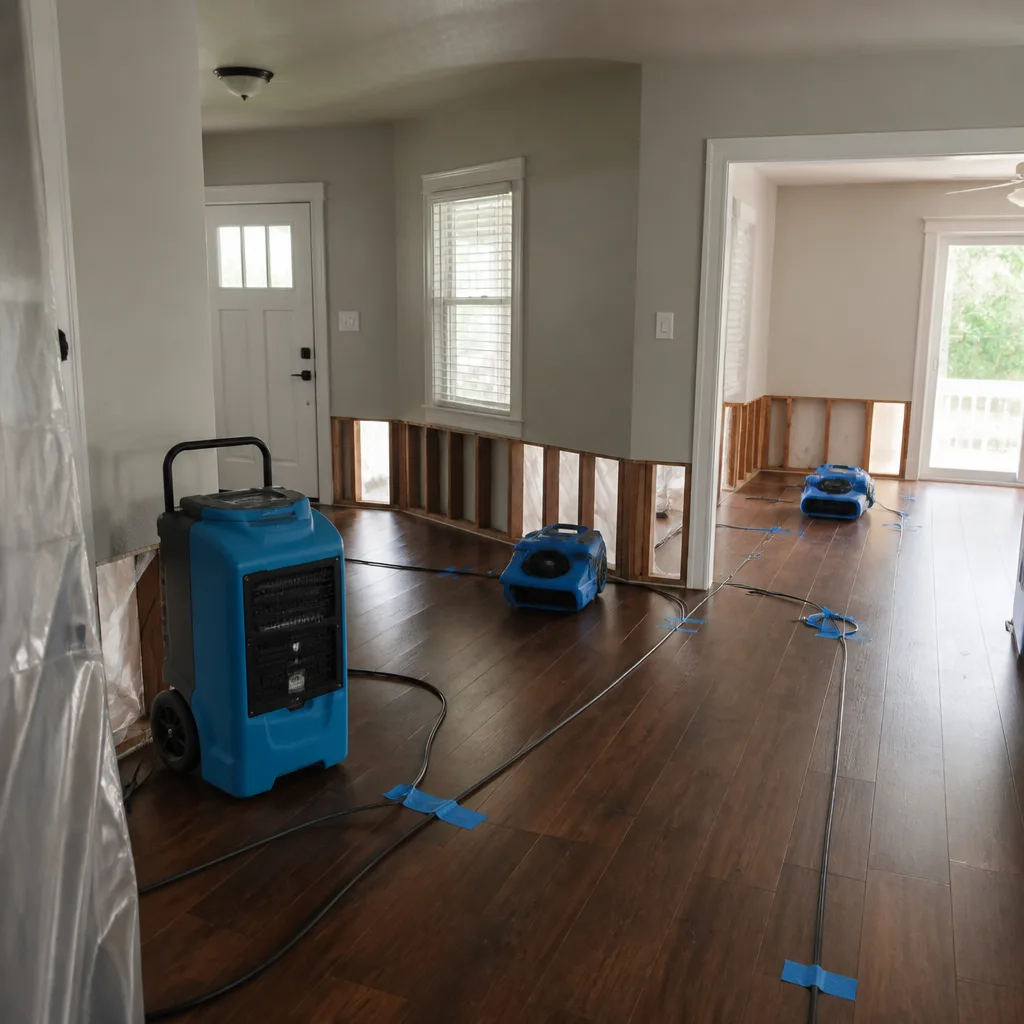
Dri-Eaz air movers and Phoenix dehumidifiers run continuously, with daily moisture readings logged until the dry standard is met. For lathe-and-plaster walls in pre-war buildings, drying takes longer than modern drywall, and we don’t pull equipment early. Each drying log is shared with you and your carrier.
4. Cleaning & Sanitization
HEPA air scrubbers run throughout the affected zones to capture airborne particulates. Hard surfaces are cleaned with antimicrobial solutions appropriate to the material. Contents that can be restored are cleaned; unsalvageable items are documented for your claim before disposal.
5. Specialty Treatment
For Williamsburg’s converted lofts, this step includes exposure of unreinforced brick party walls, antimicrobial treatment of concealed cavities, and replacement of any cast-iron waste lines that were compromised. For smoke losses, we use soda blasting and chemical sponges suited to the soot type present.
6. Repairs & Restoration
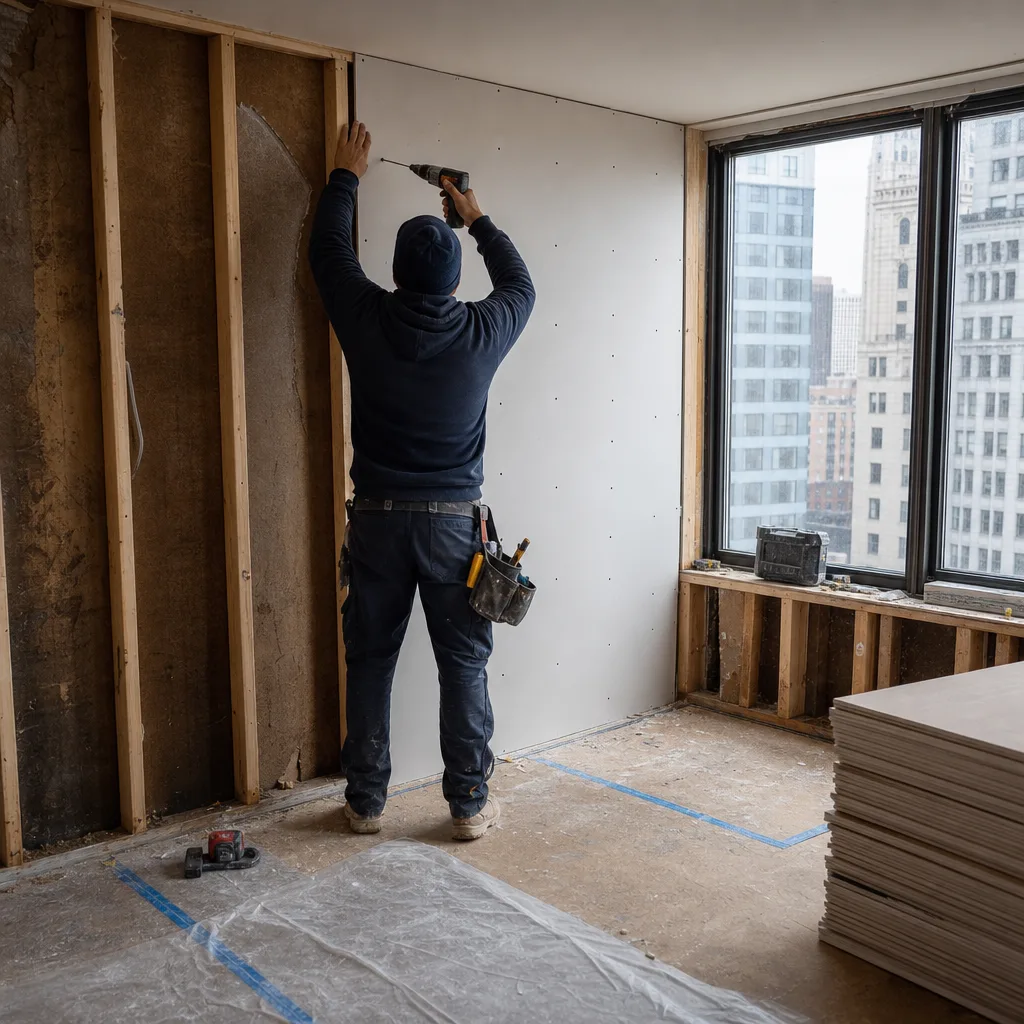
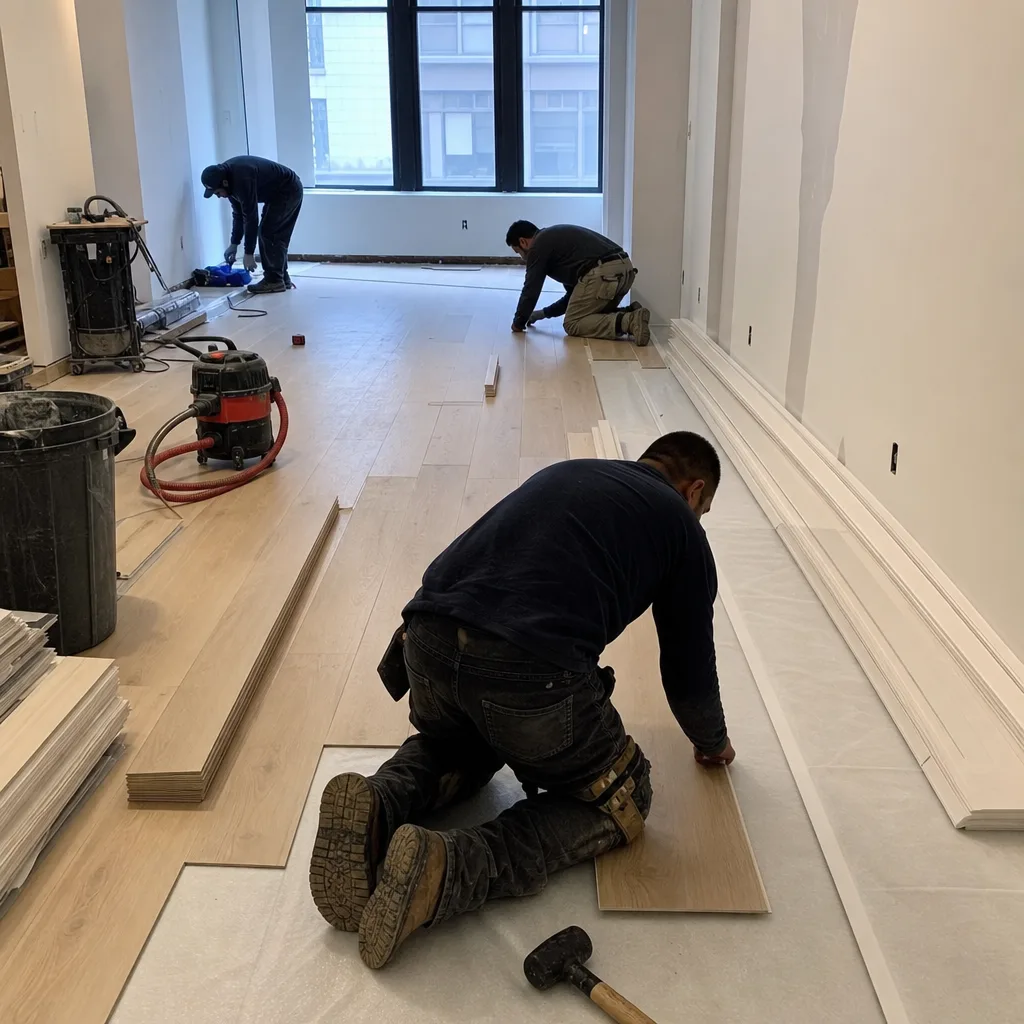
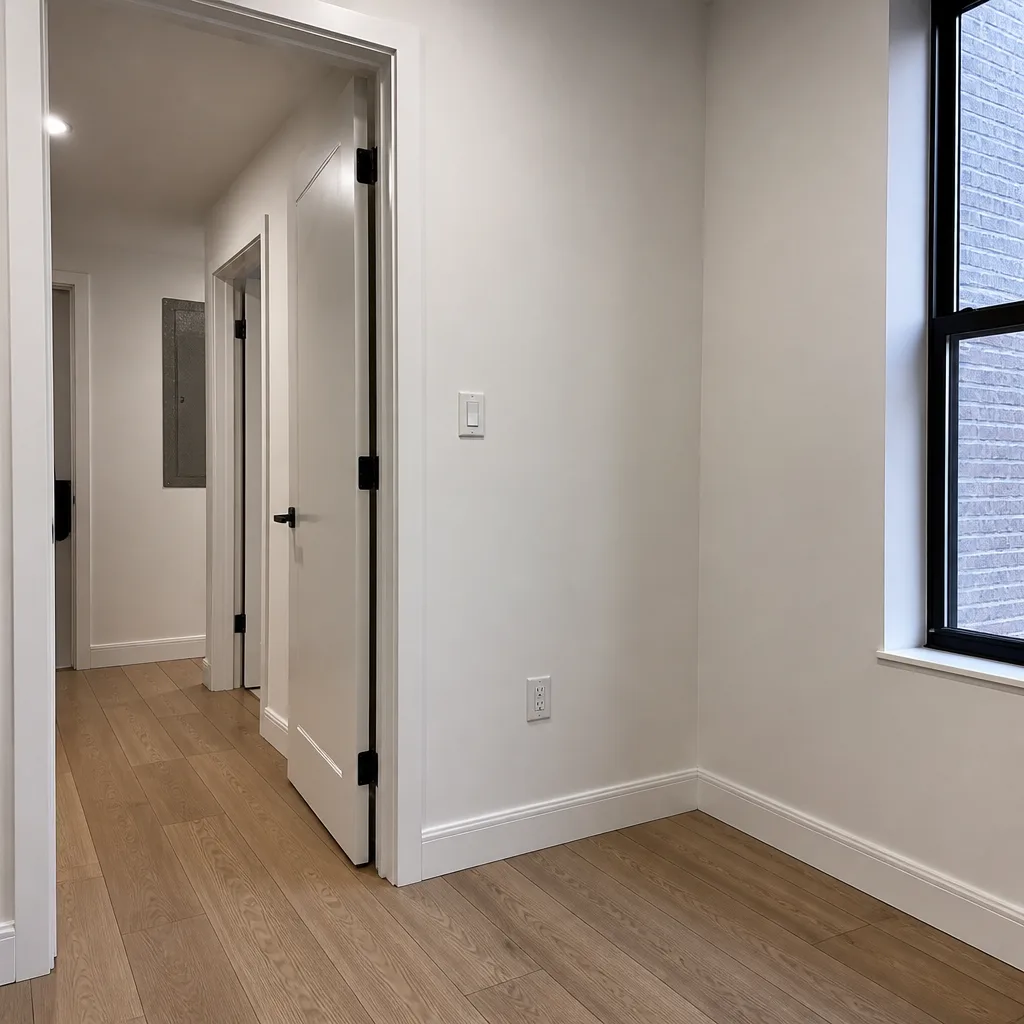
Drywall replacement, flooring repair, trim work, painting, and full reconstruction happen under the same crew that performed mitigation. Your home is returned to pre-loss condition, and the 90-Day Done Right Promise is in your hands in writing before we consider the job complete.
Need Emergency Reconstruction & Cleanup in Williamsburg Now?
Crews minutes away, answering live 24 hours a day. The sooner we start, the less it costs.
Working With Your Insurance Company
Most Williamsburg homeowners have never filed a water or fire claim, and the process feels unfamiliar, especially when the damage keeps spreading while you wait. Floodline Restoration Co. handles claim documentation from the first hour. We photograph every affected area room by room before any material is removed. We run moisture readings and produce drying logs that show exactly when each wall cavity reached the dry standard. We write a detailed, line-item scope of work in industry-standard estimating formats your adjuster recognizes. And we communicate directly with your carrier so you’re not stuck relaying questions between an adjuster and a contractor. For losses involving lateral water migration through shared brick party walls in Williamsburg condos, this documentation is critical because liability often crosses unit lines. We know what to capture so your claim reflects the actual structural spread, not just a visible ceiling stain.
What We Provide Your Insurer
- Thorough documentation of the loss
- Photos of all damage, room by room
- Moisture readings and drying logs
- A detailed, line-item scope of work
- Direct coordination with your carrier
Built for Williamsburg’s Loss Calendar
Williamsburg’s damage seasons follow a pattern any longtime resident recognizes. January and February bring deep freezes that burst supply lines in older buildings where pipes run through uninsulated exterior walls and unheated basements. A single burst pipe in a Bedford Avenue tenement can release 400 gallons an hour into a structure with lathe-and-plaster walls that soak up water like a sponge. Spring thaw and heavy rain push groundwater into rubble-stone basements and below-grade units that were never waterproofed. The summer thunderstorm season brings flash flooding to low-lying blocks near the East River, where FEMA’s post-Sandy Zone AE designation covers much of the waterfront. Nor’easters from October through April drive storm surge into parking garages and garden-level units in converted warehouse buildings. Each season produces different damage profiles, and our crews in Williamsburg read the calendar as carefully as the moisture meter. Reconstruction & Cleanup here means knowing what failure mode to expect before we arrive.
Reconstruction & Cleanup Across Williamsburg’s Neighborhoods
The Northside waterfront, where converted factory lofts and new high-rises line the East River, sees the most storm surge intrusion and below-grade flooding. These buildings sit on concrete slab foundations with drainage systems never engineered for residential occupancy, so a moderate storm surge can overwhelm sump pumps and push Category 3 water into parking levels and garden units. Along Bedford Avenue and the side streets running east, the late-19th-century brick tenements present a different set of problems: cast-iron waste lines corroded after a century of use, rubble-stone foundations with no waterproofing membrane, and lathe-and-plaster walls that hide moisture for weeks before staining becomes visible. The industrial blocks south of the BQE and along the old manufacturing corridors still house working warehouses and studios where post-construction cleanup after renovations creates dust and debris that settles into every mechanical system. The newer luxury high-rises on the Northside waterfront have modern building envelopes but complex mechanical rooms and shared-system infrastructure that make post-fire smoke migration and water damage in stacked units a building-wide problem, not a unit-level one. No two blocks in Williamsburg respond to mitigation the same way.
Specialized Reconstruction & Cleanup Services We Offer in Williamsburg
Full-Service Reconstruction
Reconstruction in Williamsburg means respecting the original building while restoring function. We rebuild lathe-and-plaster walls with period-appropriate materials where historic fabric matters, replace modern drywall where it doesn’t, and bring electrical systems in pre-war buildings up to current code as part of the scope. The same crew that performed mitigation handles the rebuild, so there’s no gap between drying completion and reconstruction start. A converted loft on North 3rd Street that lost a brick party wall to water damage gets rebuilt as a brick party wall, with proper moisture barriers and the original character intact.
Drywall & Flooring Repair
Waterlogged drywall gets cut out to the flood line, with the cut line extending four feet beyond visible damage in Williamsburg’s masonry buildings because moisture travels vertically through brick and plaster far past the visible stain. Flooring repair spans the range: solid hardwood in tenements that can sometimes be saved with Injectidry vacuum-drying panels, engineered wood in newer lofts that usually gets replaced, and concrete slab floors in waterfront buildings that need moisture testing before any new flooring goes down. We don’t install flooring over a slab still releasing moisture. The drying logs have to show the slab is dry first.
Contents Restoration & Pack-Out
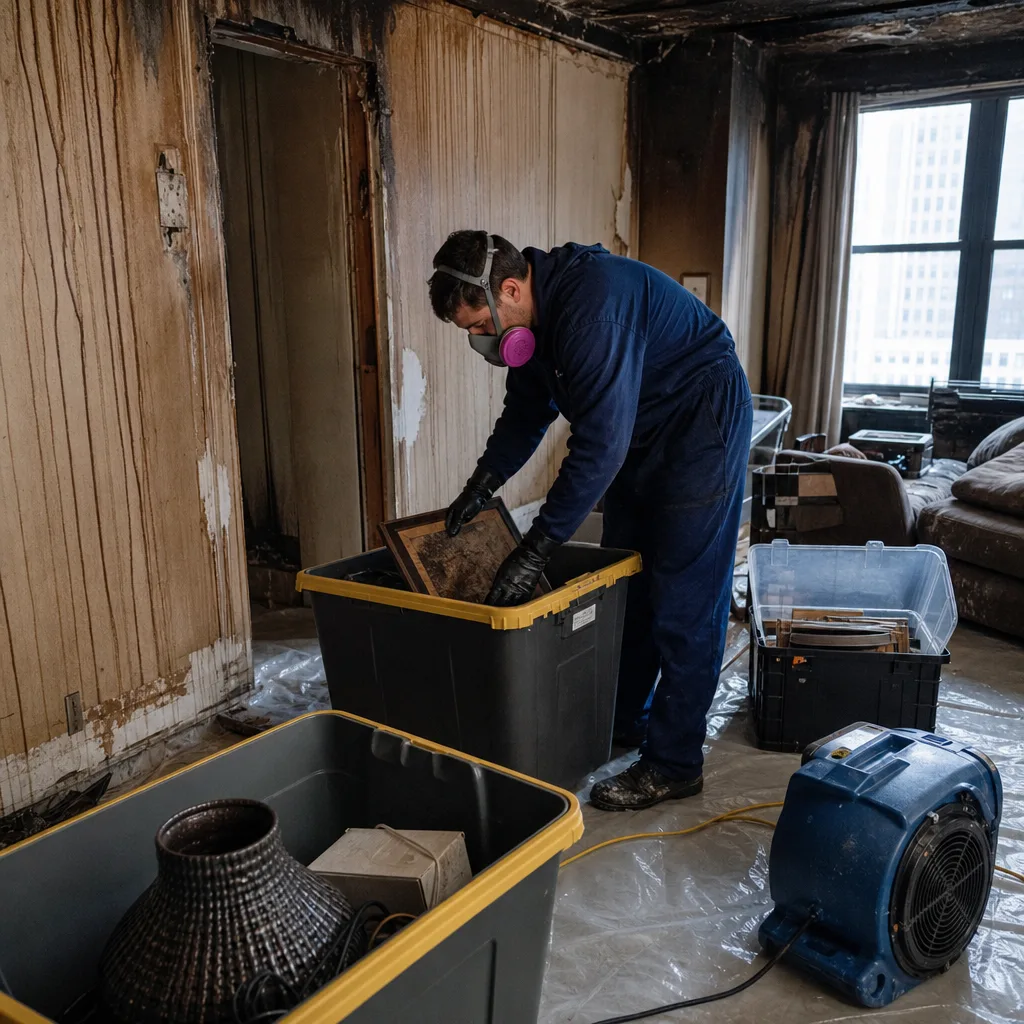
When a Williamsburg apartment needs major reconstruction, we pack out contents to our secure facility for cleaning, drying, and storage. Furniture, rugs, clothing, artwork, books. Electronics get evaluated for corrosion. Documents get freeze-dried or desiccant-dried when water damaged. We photograph and inventory everything with a contents list your adjuster can process line by line. What can be restored gets restored. What can’t gets documented for the claim. For condo owners in converted warehouses, we coordinate with building management to protect common areas during pack-out so your neighbors aren’t affected.
Carpet & Upholstery Cleaning
After water extraction and drying, carpets and upholstery need professional cleaning, and not all fabric survives a Category 2 or 3 loss. Wool rugs in a Williamsburg loft may respond well to cleaning if water was clean and extraction happened fast. Synthetic carpet padding that absorbed gray water gets replaced. We test fabrics before cleaning, run HEPA filtration in the space while we work, and dry everything thoroughly before returning furniture to the room. A carpet that feels dry on the surface can still be holding moisture at the pad level, which is how mold starts weeks after the loss.
Post-Construction Cleanup
Williamsburg’s constant wave of renovations means many homeowners move into a space after contractors leave dust in ductwork, on window tracks, and trapped in brick mortar lines. Post-construction cleanup from Floodline Restoration Co. removes that dust thoroughly: HEPA vacuuming of all surfaces, air scrubbing to clear suspended particles, cleaning of mechanical systems and registers, and final detail cleaning of trim, glass, and fixtures. For older buildings, this includes lead-safe work practices appropriate to pre-1978 construction.
Insurance Claim Documentation
For Williamsburg property owners, especially condo owners in converted lofts where water crosses shared brick party walls, the documentation phase determines whether a claim pays the full rebuild or a fraction of it. We photograph before, during, and after. We log moisture readings daily. We map the actual spread of saturation using thermal imaging, which shows exactly how far water traveled through masonry. When an adjuster questions whether ceiling damage on North 5th Street came from your unit or the one next door, the documentation answers. Our team provides the carrier with everything in a format they can process without kicking it back for clarification.
What happens when you call
- 1
A real person answersNo phone trees - you reach a local pro.
- 2
You get an upfront price rangeHonest numbers before anyone is dispatched.
- 3
A background-checked tech heads outLicensed & insured, dispatched right away.
- 4
You approve before work beginsNothing starts until you say go.
Reconstruction & Cleanup Costs in Williamsburg, NY
Honest numbers, because a square deal means no surprises on the bill. A Category 1 water cleanup in a Williamsburg apartment, involving extraction and drying of a single room with no reconstruction, typically runs $2,800 to $4,500. A Category 2 loss that requires wall cavity drying, containment, and drywall replacement in a lathe-and-plaster tenement runs $6,000 to $12,000 because plaster removal and restoration costs more than drywall. A Category 3 loss involving sewage or storm surge, with full remediation and rebuild of a below-grade unit, runs $15,000 to $40,000 or more depending on square footage and whether brick party walls needed exposure and antimicrobial treatment. Full post-fire reconstruction in a converted loft with smoke damage throughout runs $30,000 to $80,000. Drywall and flooring repair alone runs $1,800 to $6,000 per room. Carpet and upholstery cleaning runs $300 to $1,200 depending on volume. Post-construction cleanup for a typical two-bedroom loft runs $600 to $1,800. Most Williamsburg losses are covered by insurance, and we bill the carrier directly. The free visual inspection gives you a written scope with exact line items before you commit to anything.
We Also Serve Cities Near Williamsburg
Floodline Restoration Co. crews serve Williamsburg and the surrounding areas, including Reconstruction & Cleanup coverage for the Financial District, Lower Manhattan, Washington Square, and Brooklyn Heights. If you’re in one of those neighborhoods and need emergency response, the same live dispatch line connects you to a crew that knows the building stock. We also serve all of Reconstruction & Cleanup in Williamsburg and the broader waterfront.
Williamsburg Reconstruction & Cleanup Questions, Answered
Why does water damage in a Williamsburg loft on North 5th Street spread sideways through brick instead of down through the ceiling?
Unreinforced brick party walls in converted loft buildings act as water channels. When water enters one unit, it saturates the brick and mortar where the wall meets the ceiling assembly, then migrates laterally through the masonry to adjacent units. Thermal imaging and moisture readings taken along the shared wall show saturation extending many feet from the visible stain, which is why standard top-down leak tracing misses the actual source. Call (518) 663-6491 for a free inspection and moisture map.
How do you handle concrete slab floors in Williamsburg waterfront high-rises after a storm surge?
Concrete slab floors in waterfront buildings absorb water slowly and release it even slower. We use moisture probes and relative humidity testing to determine how deep the slab is saturated, then run low-grain refrigerant dehumidifiers and targeted air movement for as long as the logs show moisture above the dry standard. We never install new flooring over a slab that hasn’t dried, because trapped moisture guarantees mold and adhesive failure.
What does FEMA Zone AE mean for reconstruction in low-lying Williamsburg blocks near the East River?
Zone AE means FEMA’s flood maps designate those blocks as having a 1% annual chance of flooding with a defined base flood elevation. For reconstruction work, this means any rebuild in a Zone AE structure has to meet flood-resistant construction standards, including elevated utilities, flood vents in foundation walls, and materials rated for water contact. We plan every rebuild in low-lying Williamsburg blocks with those requirements in the scope.
Why do old tenements on Bedford Avenue take so much longer to dry than newer buildings?
Lathe-and-plaster walls in pre-war tenements hold moisture in the plaster keys behind the lathe strips, and rubble-stone foundations wick groundwater upward continuously. A modern drywall wall might reach dry standard in three to five days. A saturated lathe-and-plaster wall in a Bedford Avenue tenement can take nine to fourteen days, even with professional-grade Dri-Eaz air movers and Phoenix dehumidifiers running continuously. Pulling equipment early leaves hidden saturation that guarantees recurring mold.
What should a condo owner in a converted Williamsburg warehouse do about liability when water crosses a shared brick party wall?
Document the spread before any repair work begins. Thermal imaging that shows saturation extending into the shared wall from your unit, or from a neighbor’s unit into yours, is the evidence that settles insurance liability disputes. Then call Floodline Restoration Co. at (518) 663-6491. We provide the moisture maps, photos, and written scope your adjuster and the neighbor’s adjuster both need to assign responsibility correctly.
How fast can you actually get to a Williamsburg property?
Our crews are dispatched from the New York City office and respond to Williamsburg calls within 45 minutes, every day of the year. A live dispatcher answers the phone immediately, and the certified technician arrives with extraction equipment, moisture mapping tools, and containment materials ready to run the same visit. Call (518) 663-6491 any time.
Will my insurance cover reconstruction and cleanup after water damage in Williamsburg?
Most homeowners and condo policies cover sudden and accidental water damage, including reconstruction and cleanup, provided the damage wasn’t caused by lack of maintenance. Sewage backup and storm surge may require specific endorsements. We document everything from the first hour and bill your carrier directly, so you’re not out of pocket while the claim processes. We handle adjuster communication and line-item estimates in their preferred format.
Do I need full reconstruction or just cleanup after water damage?
The answer depends on what the moisture mapping shows. If water stayed within drywall or plaster that can dry to the standard without delamination, cleanup and drying may be enough. If saturation reached structural framing, brick party walls, or subflooring, those materials need removal and replacement, which raises the scope to reconstruction. The free visual inspection at your Williamsburg property gives you a definitive answer in writing.
Serving Williamsburg, NY - Our Local Coverage Area
We’re based in the Williamsburg area and know this community well. Use the map below to see our service coverage - if you’re nearby, we can almost certainly help.
Call Floodline Restoration Co. for Williamsburg Reconstruction & Cleanup
When water has already crossed from an adjacent loft’s party wall into yours, or a tenement wall is holding moisture you can’t see, the wrong containment line lets the damage keep spreading. Our crews know Williamsburg’s brick lofts, lathe-and-plaster tenements, and waterfront slabs better than any national franchise. Call (518) 663-6491 now, and a live dispatcher gets a certified technician headed your way. The free inspection takes thirty minutes. The written scope tells you exactly what we’ll do and what it costs. And the 90-Day Done Right Promise is in your hands before we consider the job finished.
Written by Curt Bowman, Owner at Floodline Restoration Co., serving Williamsburg and the surrounding New York City area.