
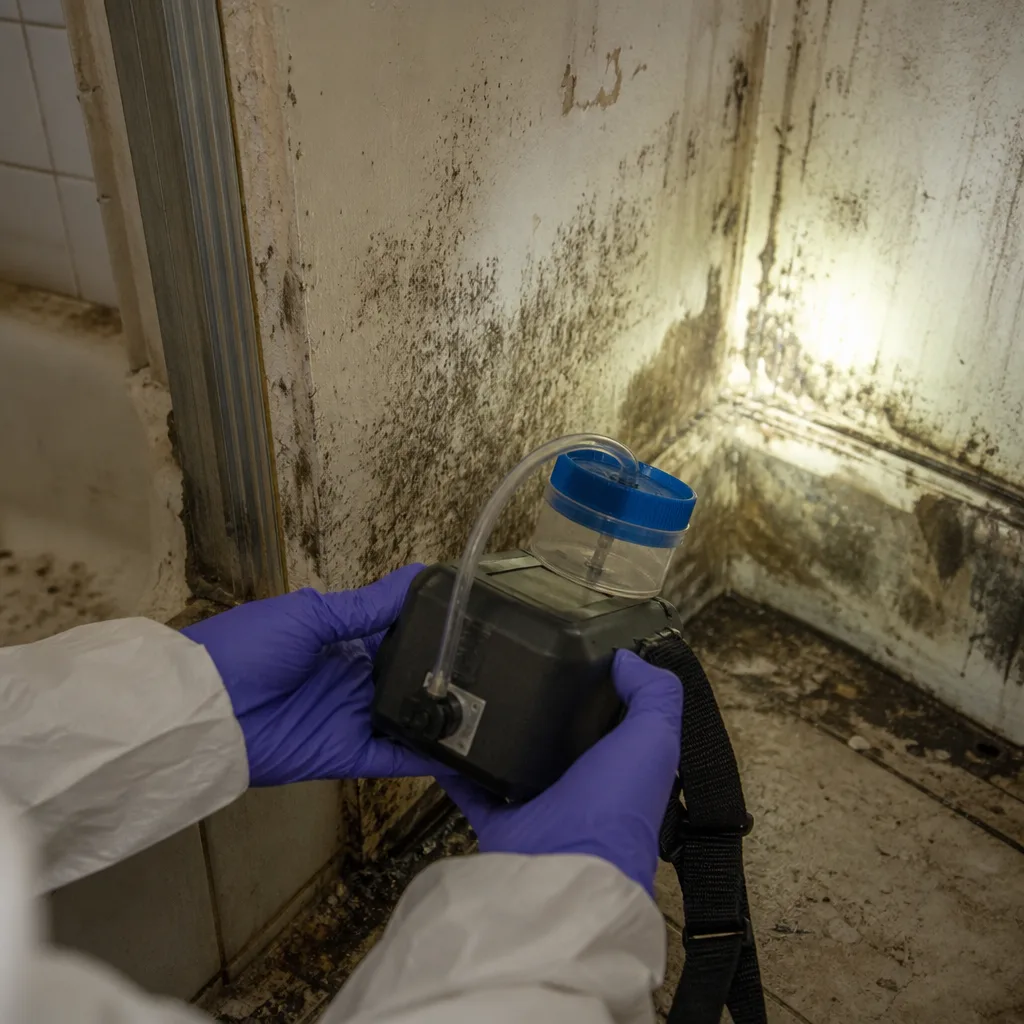
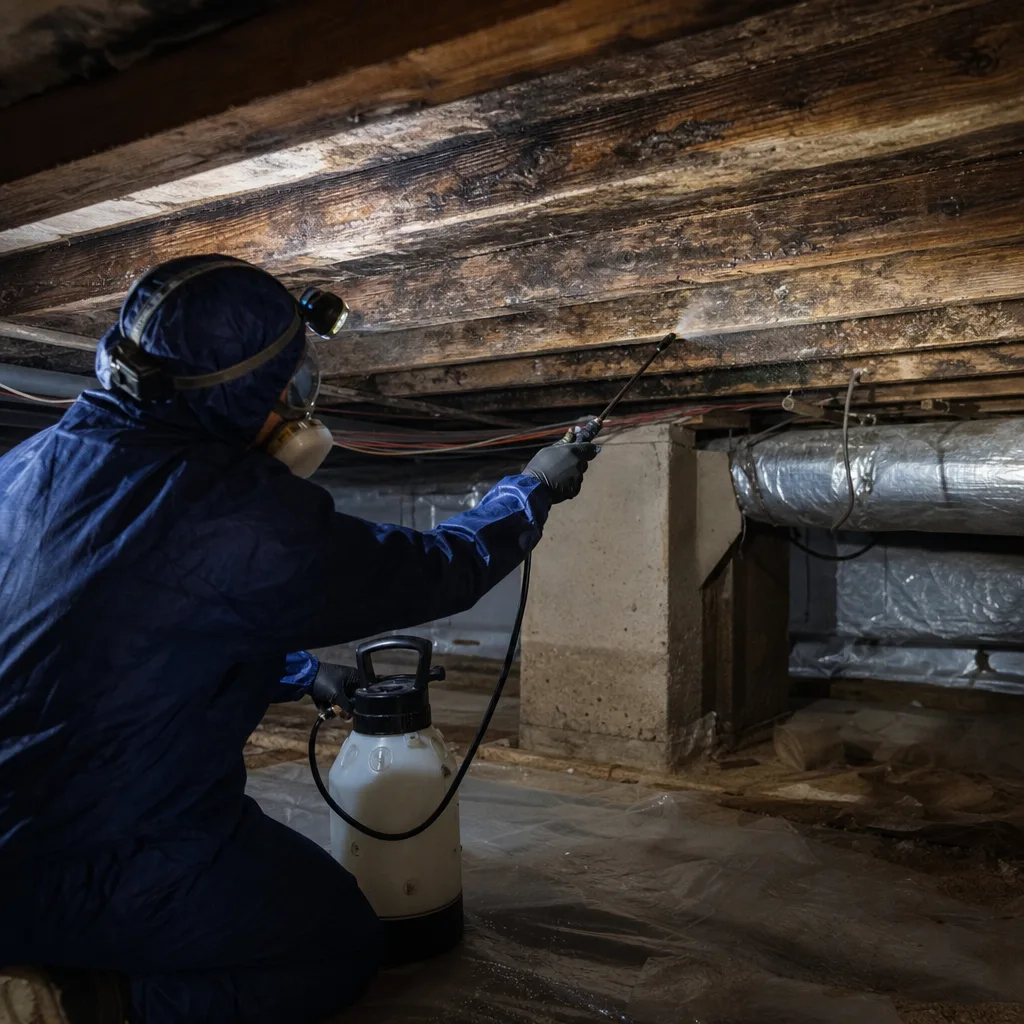
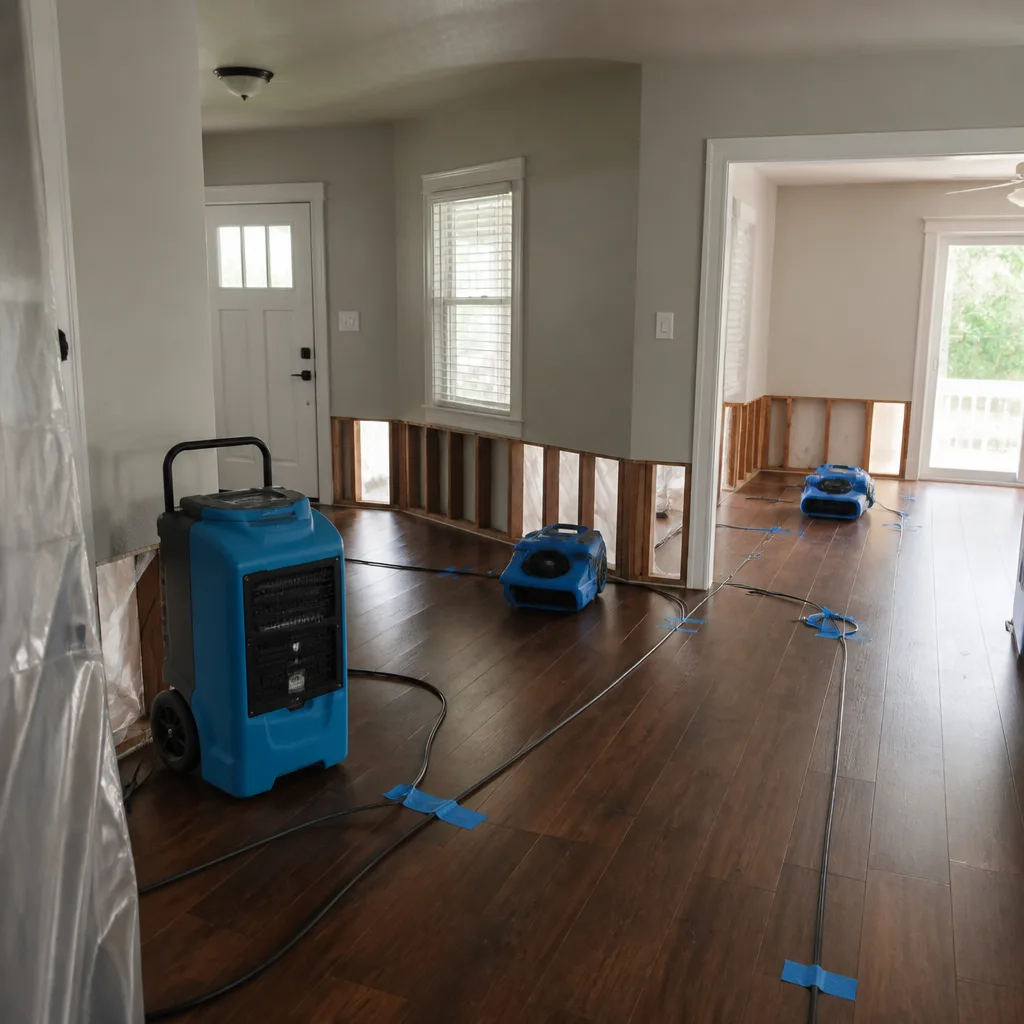
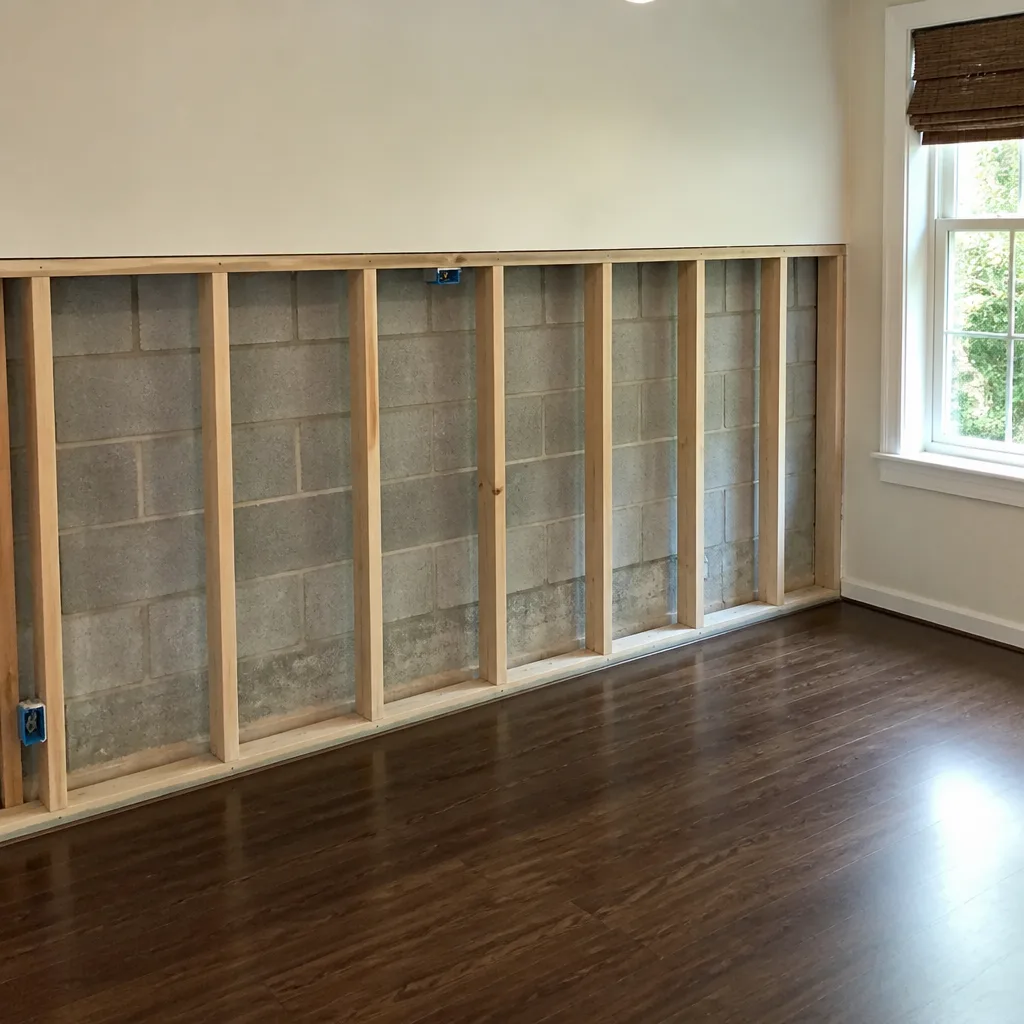
Free visual inspection and a written scope of work before any mitigation begins - photos, moisture readings, and drying logs go in your claim file
The scope we write is the scope we bill. Anything new gets shown to you, in writing, before we touch it.

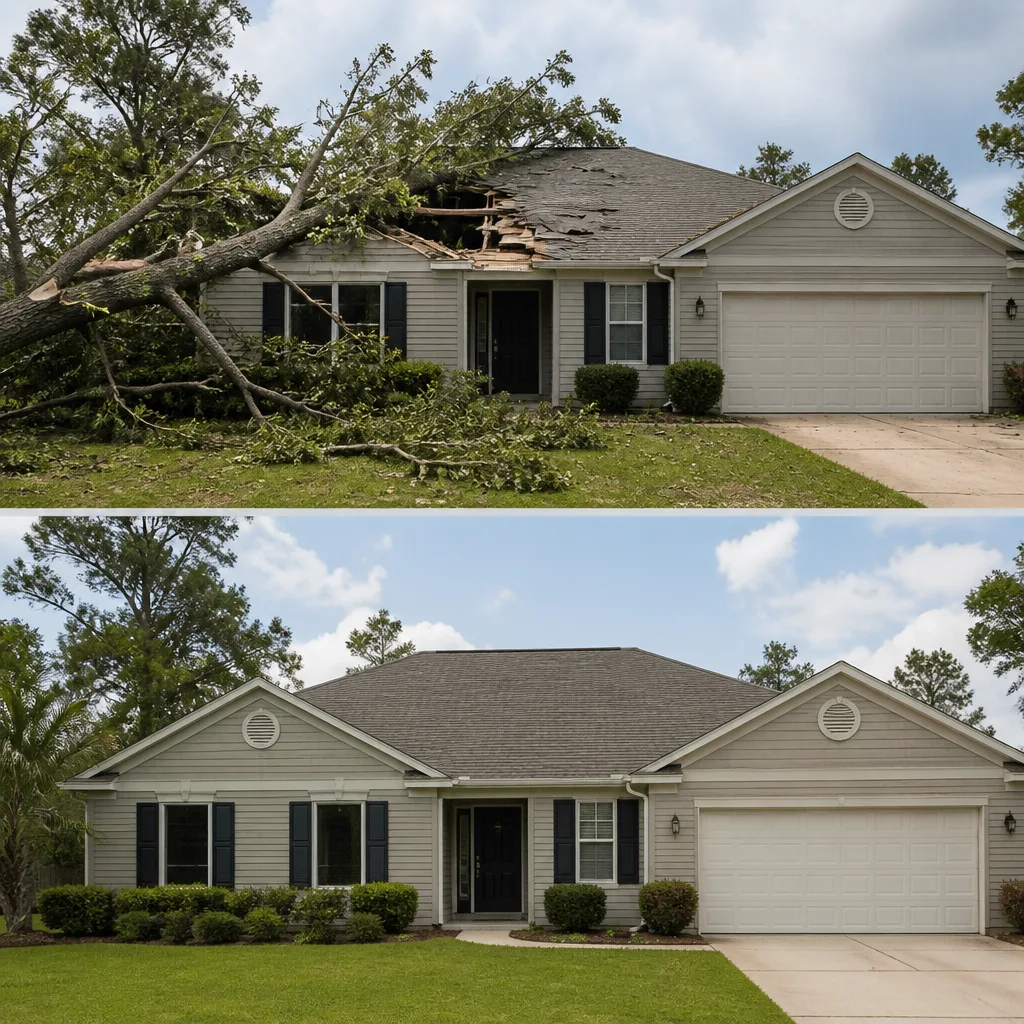
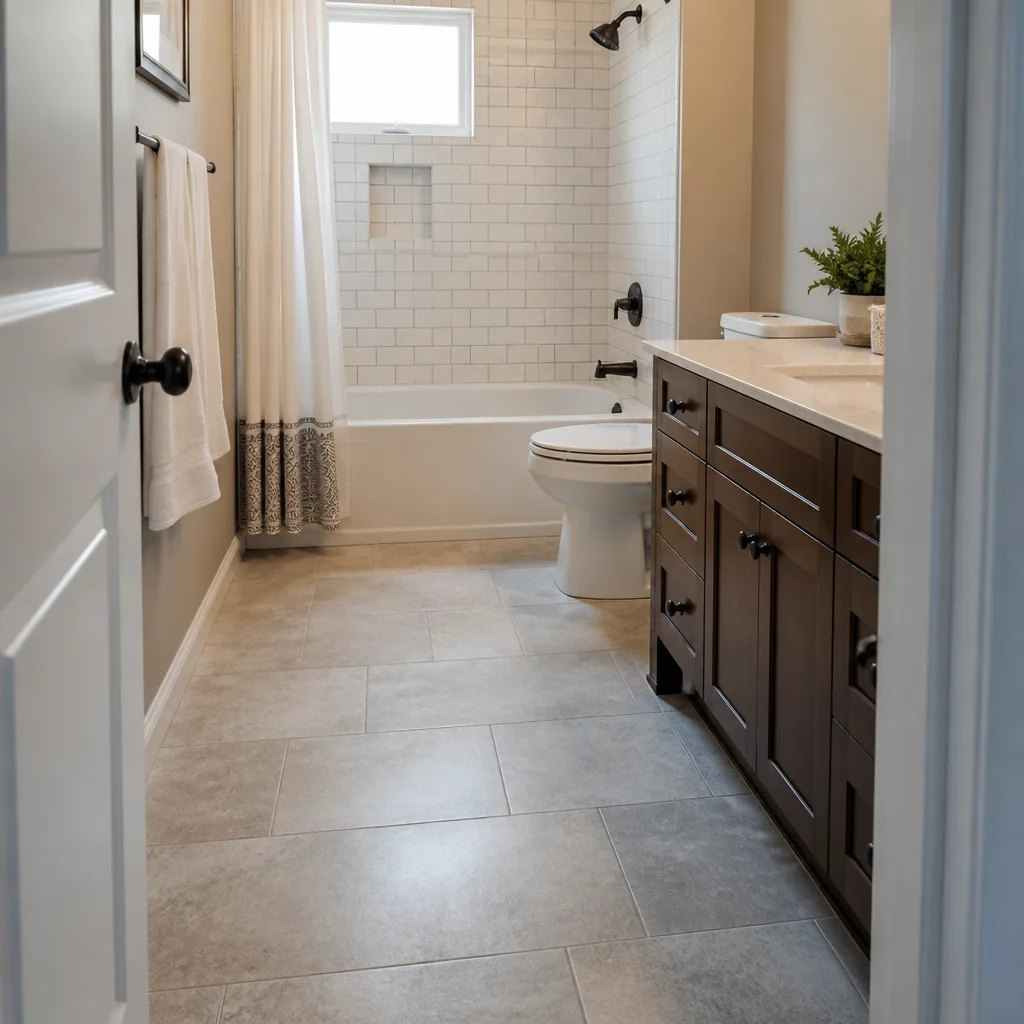

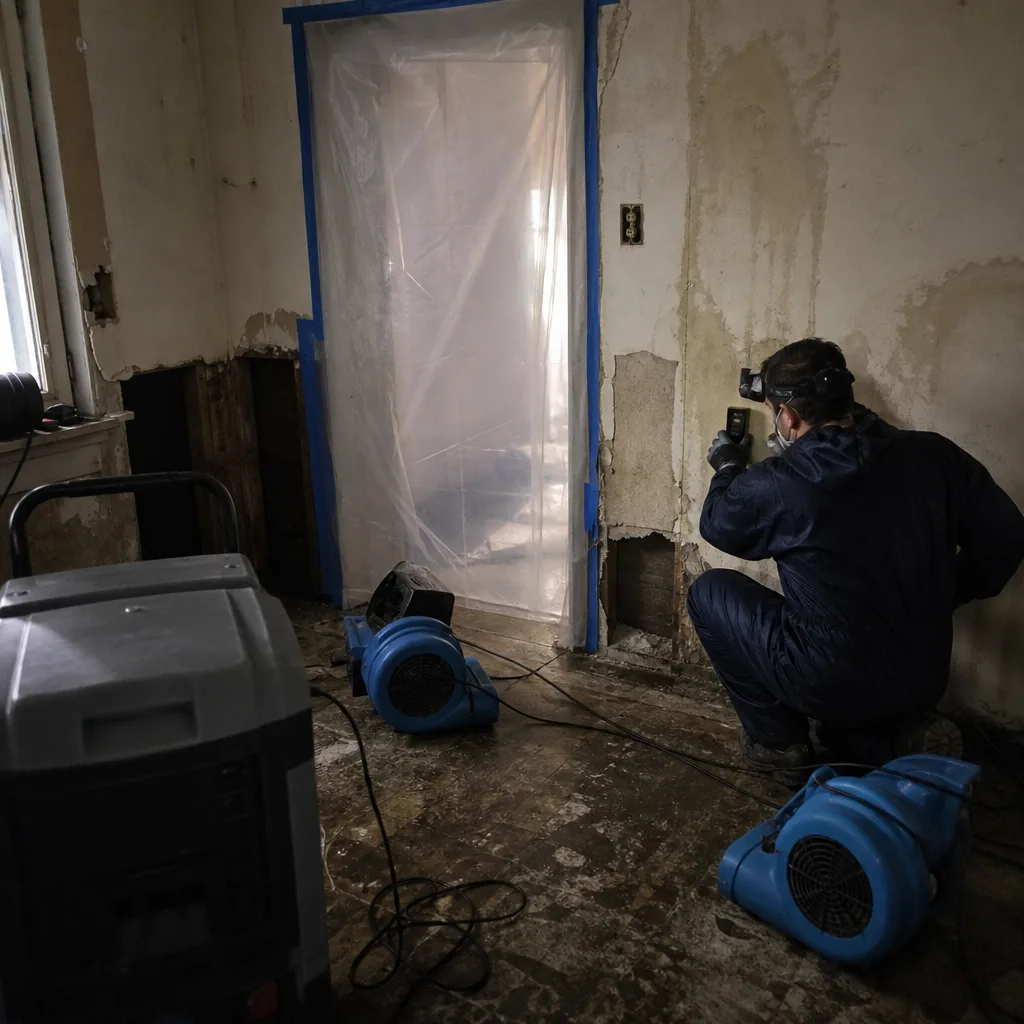 Before
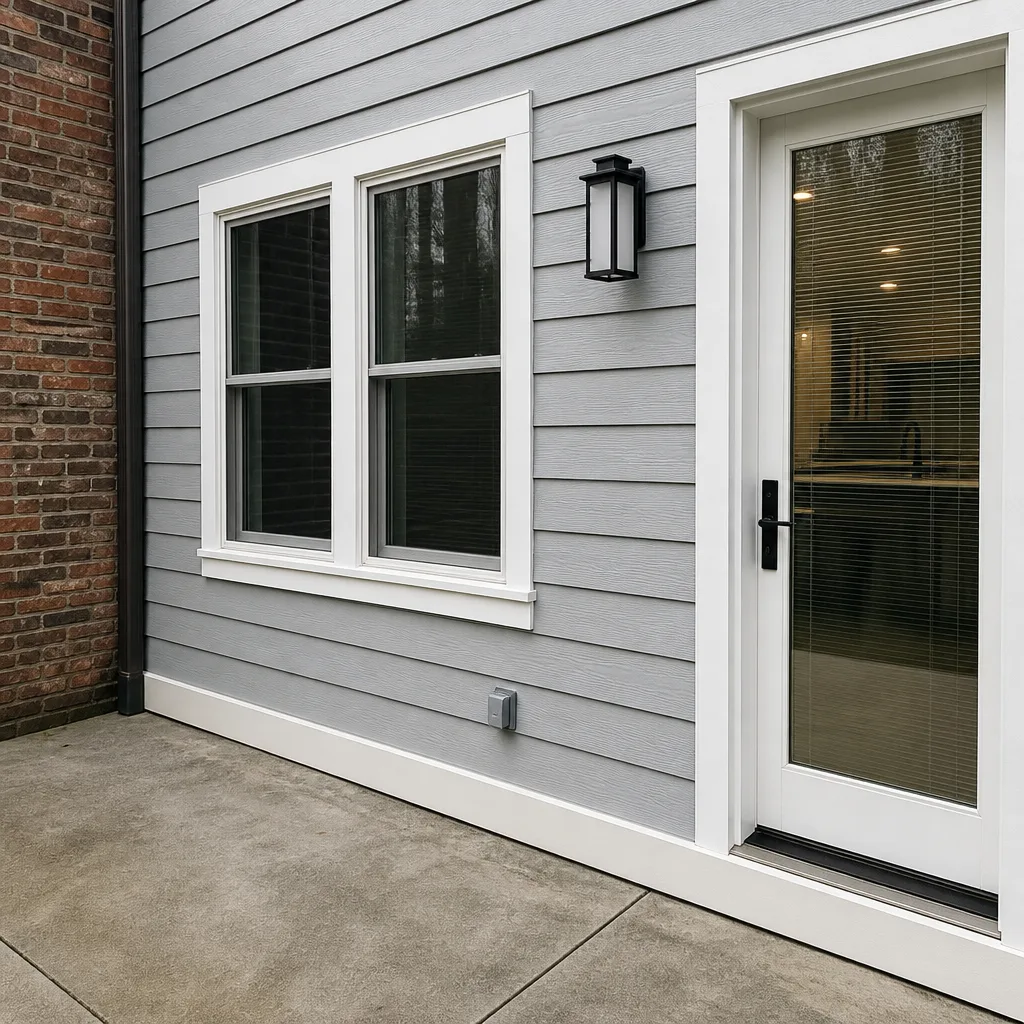 After
After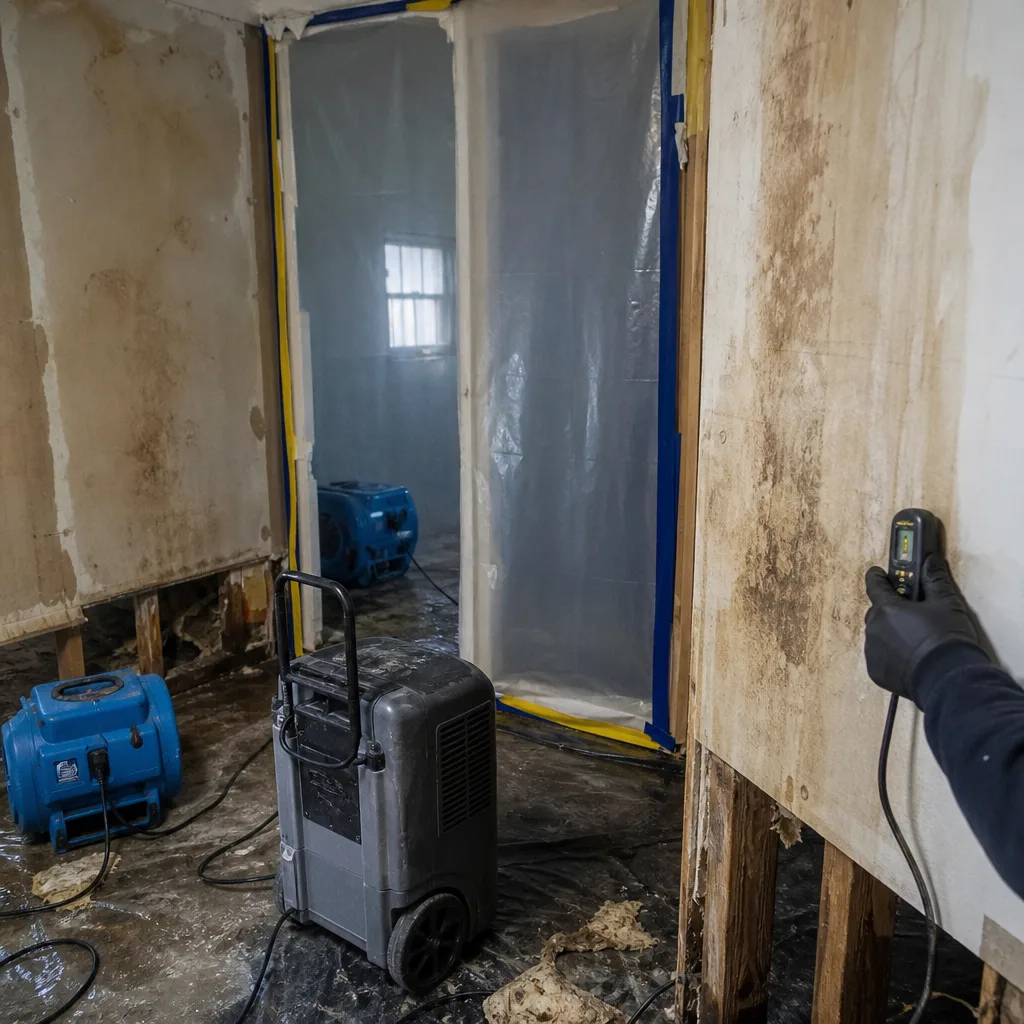 Before
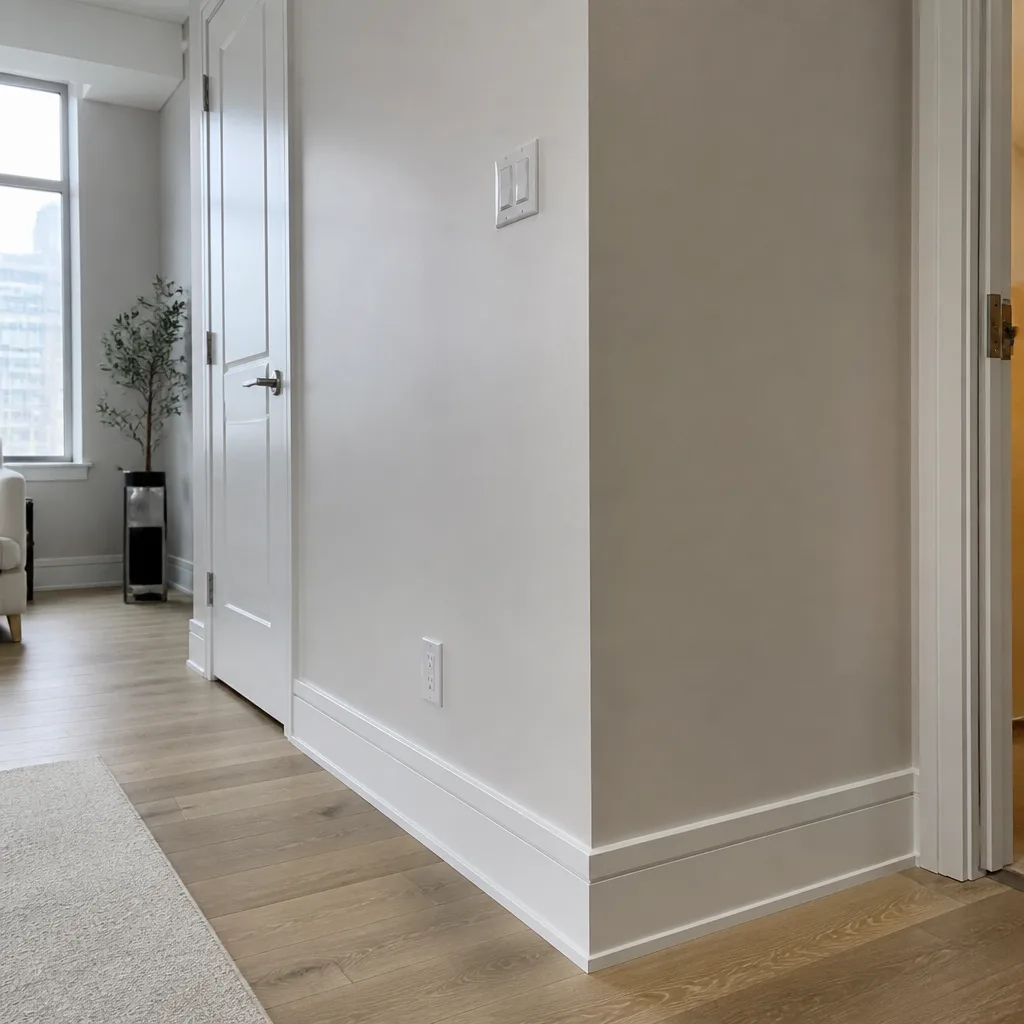 After
After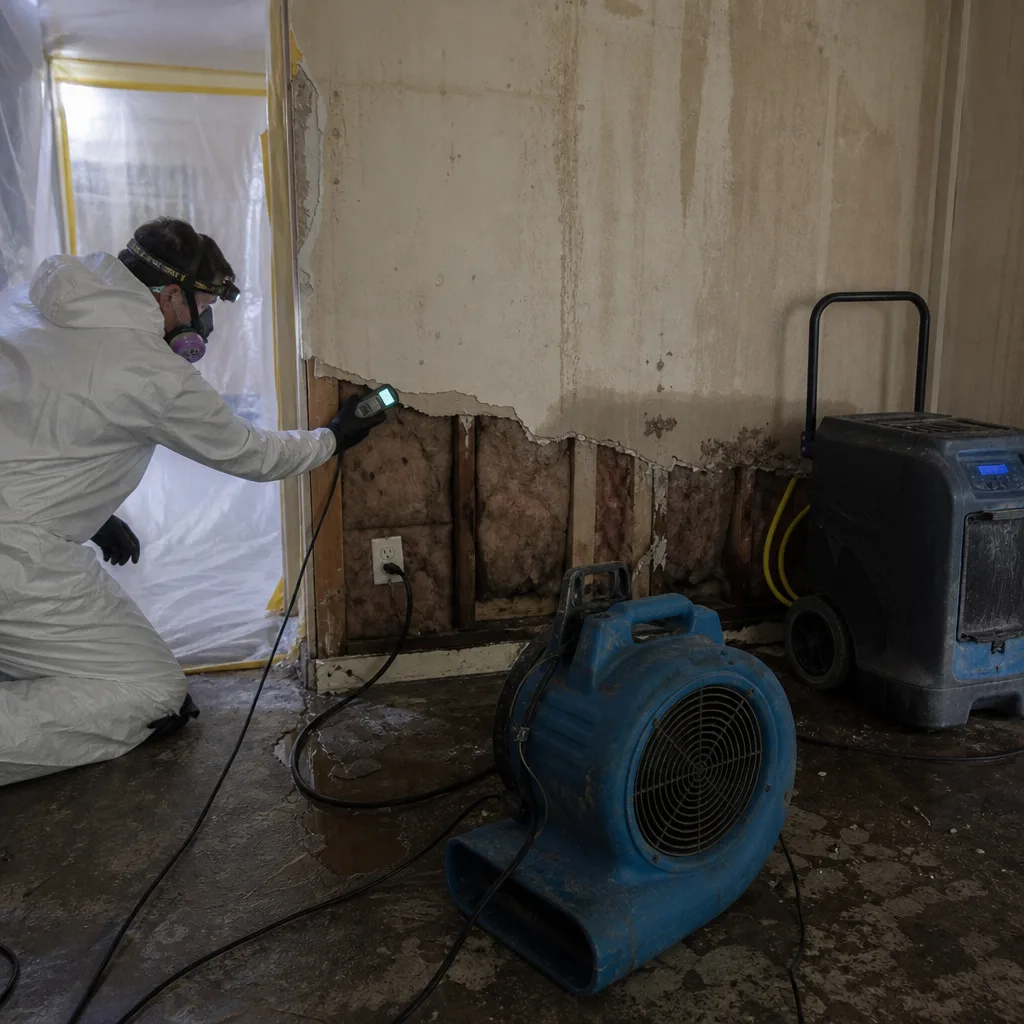 Before
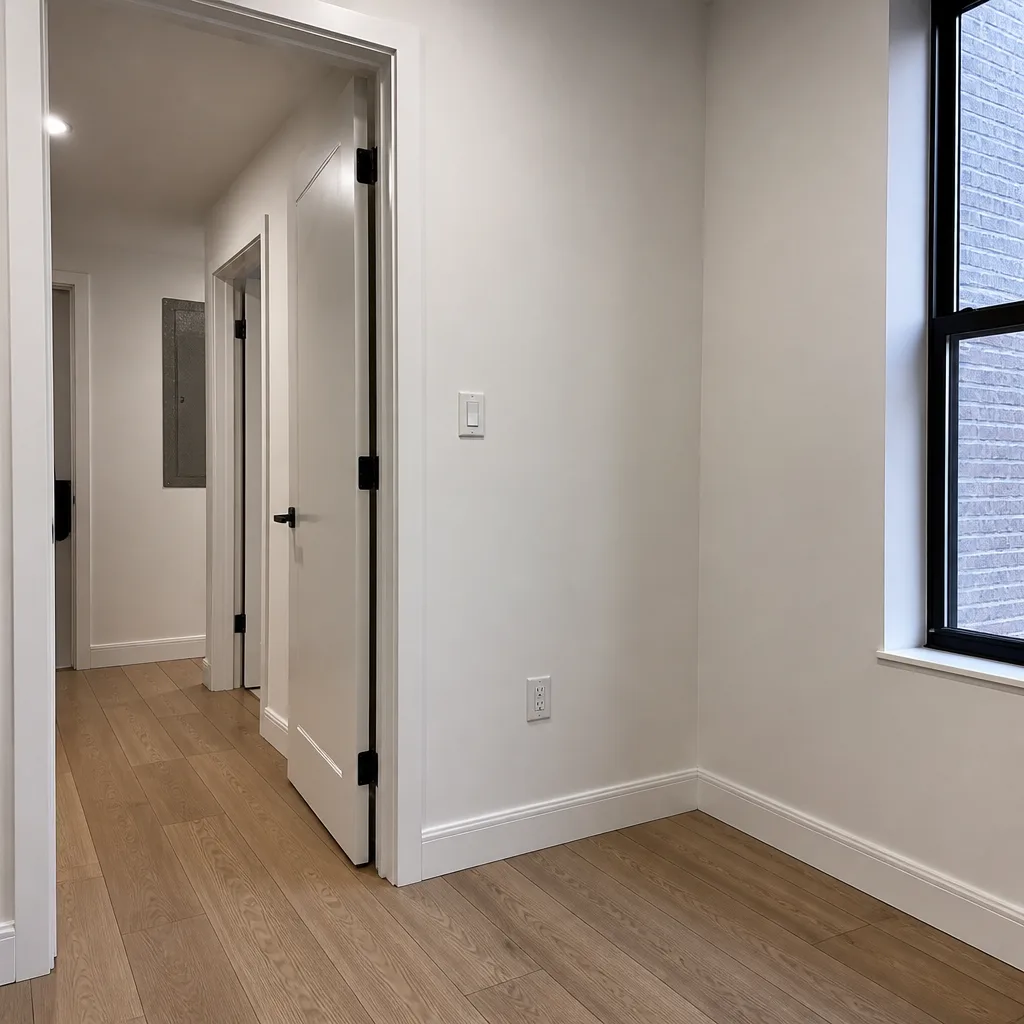 After
After24/7 Emergency Mold Remediation in Midtown Manhattan
Mold remediation in Midtown Manhattan typically runs $1,800-$6,400 for a contained area, and $12,000-$30,000+ when a steam-pipe or HVAC leak has spread growth through multiple floors of a pre-war tower. We answer the phone with a live person at 2 a.m., because a condo board meeting is not where you want to be at 7 a.m. with a mold bloom spreading behind original plaster. Call (518) 663-6491 any hour and a Floodline Restoration Co. dispatcher will start scheduling a crew for the freight elevator window, the same one your building allows. The first hour matters less for drama than for logistics: in Midtown, access is the scarce resource, not effort. A free visual inspection starts your file and puts a written scope in your hands before any wall is opened.
Understanding Mold Remediation Severity in Midtown Manhattan Properties
Midtown’s building stock makes mold behave differently than it does in a frame house in Queens. Pre-war towers from the 1910s-1940s have original cast-iron risers and galvanized supply lines behind plaster and lathe. When those fail, water travels vertically through wall cavities for days before anyone sees staining. That’s a Category 3 contamination event by the time we open the wall, even if the source was clean water. Mid-century curtain-wall offices hide decades of undocumented plumbing above suspended ceilings. A slow condensate leak there feeds mold growth in the ceiling plenum for weeks. Modern glass towers have chilled-water and VAV systems where condensation forms inside insulated chases that no one has opened since installation. In all three building types, the severity of a mold problem is rarely about how much you can see. It’s about how far moisture migrated inside the assembly. That’s why we map moisture before we cut, run air scrubbing with HEPA filtration during removal, and hold clearance testing until the drying standard is met, not when the stain disappears.
Why Midtown Manhattan Property Owners Choose Floodline Restoration Co.
- Freight-elevator logistics, handled. We know the booking windows at Penn Plaza, the Garment District, and Grand Central buildings. We set containment and schedule work inside your building’s 2-hour slot, so equipment never sits stranded in a lobby.
- A live person answers at any hour. Not an answering service. A Floodline dispatcher picks up at 2 a.m. and starts routing an IICRC-certified crew to Midtown Manhattan.
- IICRC-certified technicians, WRT and AMRT. Our crews carry the water restoration and applied microbial remediation certifications your building management and insurer both ask for. Background-checked, uniformed, and trained to IICRC, RIA, and IFA standards.
- Free visual inspection and a written scope. Before anything is opened, you know what we found, what we propose, and what it costs. No surprises on the bill.
- Direct insurance billing. We bill the carrier directly and talk to the adjuster ourselves. You do not play messenger between Floodline and your insurer.
- One team from first cut to final paint. The same mold remediation crew that sets containment also handles the repairs. No mid-job handoff to a subcontractor you’ve never met.
Our Mold Remediation Process
Inspection & Assessment
We start with a visual inspection and moisture mapping using Dri-Eaz sensors. Thermal imaging helps us trace migration behind original plaster walls and above drop ceilings without unnecessary cutting. Before any drywall is opened, we confirm whether your Midtown building falls under NYC DEP asbestos survey requirements, because it almost certainly does if it predates 1987.
Containment & Air Management
We build a containment barrier before removing anything. HEPA air scrubbers run negative air inside the work area so spores don’t move into neighboring tenant floors. In a Midtown high-rise, that’s not optional. It’s how you keep one mold patch from becoming a building-wide evacuation.
Moisture Control & Drying
Mold cannot survive without a moisture source. We dry the affected cavities with professional-grade equipment from Dri-Eaz, Phoenix, and XPOWER. Daily moisture readings get logged and handed to you and your carrier. The dry standard is the target, not a timer.
Mold Removal & Abatement
Affected porous materials like drywall and insulation are removed and bagged inside containment. Non-porous surfaces are cleaned with antimicrobial treatment and HEPA vacuuming. In pre-war plaster assemblies, we remove only what’s contaminated and save what can be dried in place.
Air Quality Restoration
After removal and cleaning, we run HEPA air scrubbing to pull remaining spores from the air. Clearance testing can be ordered to verify the indoor environment. Most Midtown building managers ask for that third-party clearance before they’ll reopen a floor to tenants.
Repairs & Restoration
The same Floodline crew rebuilds what was removed. Drywall, plaster, paint, cove base, ceiling tile. Midtown Manhattan commercial landlords appreciate getting one invoice, not three. We stand behind it with the 90-Day Done Right Promise, in writing.
Need Emergency Mold Remediation in Midtown Manhattan Now?
Crews minutes away, answering live 24 hours a day. The sooner we start, the less it costs.
Working With Your Insurance Company
Mold claims in Midtown Manhattan move differently than they do in a single-family house. The carrier wants documentation. The building management wants documentation. The condo board’s counsel wants documentation. We deliver all of it, starting the first hour. Our teams document the source of the water, the migration path, the containment protocol, and the drying logs. You will not be asked to explain a moisture reading to an adjuster at 3 p.m. on a Tuesday. That’s our job. We coordinate directly with your carrier using industry-standard estimating, and we bill them directly where coverage applies. If the claim is denied or limited, you’ll know the number before remediation starts, because the written scope comes first. Not after.
What We Provide Your Insurer
- Thorough documentation of the loss
- Photos of all damage, room by room
- Moisture readings and drying logs
- A detailed, line-item scope of work
- Direct coordination with your carrier
Built for Midtown Manhattan’s Loss Calendar
Midtown Manhattan’s mold season follows the water calendar. January and February bring freeze-thaw cycles that burst uninsulated supply lines in pre-war risers and rooftop mechanical rooms. Water pours down elevator shafts and through original plaster walls, waking up dormant mold inside chases that haven’t been opened in sixty years. Spring’s thaw drips through parapet walls and aging roof drains, feeding slow stains above ceiling plenums in Garment District lofts and Penn Station office floors. Summer thunderstorms hit flat roofs faster than roof drains can handle, and street-level mechanical rooms flood when the combined sewer system surcharges, as it did in 2011 and 2021. But Midtown’s signature winter failure is the steam-pipe leak in a 1920s-to-1940s cast-iron riser running above 15 PSI. Those pipes rupture and release steam, soot, and scale not just water. The result is a combined water-and-mold event across multiple tenant floors that suburban technicians almost never see. A Midtown-experienced crew recognizes it the day they open the wall.
Mold Remediation Across Midtown Manhattan’s Neighborhoods
We know the buildings, not just the streets. Around Penn Station, pre-war office towers pack freight elevators with single-window availability, and mold jobs get done early or they don’t get done at all. The Garment District’s 1910s-era loft buildings have original cast-iron plumbing that weeps slowly behind plaster and produces the steam-pipe cascades we described above. Over by Grand Central, older hotel stock and office floors hide decades of undocumented mechanical chases where a condensate line leak turns into a multi-tenant mold discovery. Up toward the Times Square corridor, hotel guest complaints move fast: a single visible patch in a room can put the floor on hold with the next call going to the health department. In the residential and mixed-use towers near Hudson Yards, newer construction means different problems, water inside insulated VAV chases and behind high-pressure plumbing runs. We stage equipment and schedule containment around these buildings’ realities, not around ours.
Specialized Mold Remediation Services We Offer in Midtown Manhattan
Mold Inspection & Testing
Midtown Manhattan building managers request mold inspections for two reasons: a visible patch or a complaint. We inspect, sample where needed, and map moisture before proposing any work. For pre-1987 buildings, we flag the asbestos survey requirement at the inspection stage, not after a stop-work order stops the job.
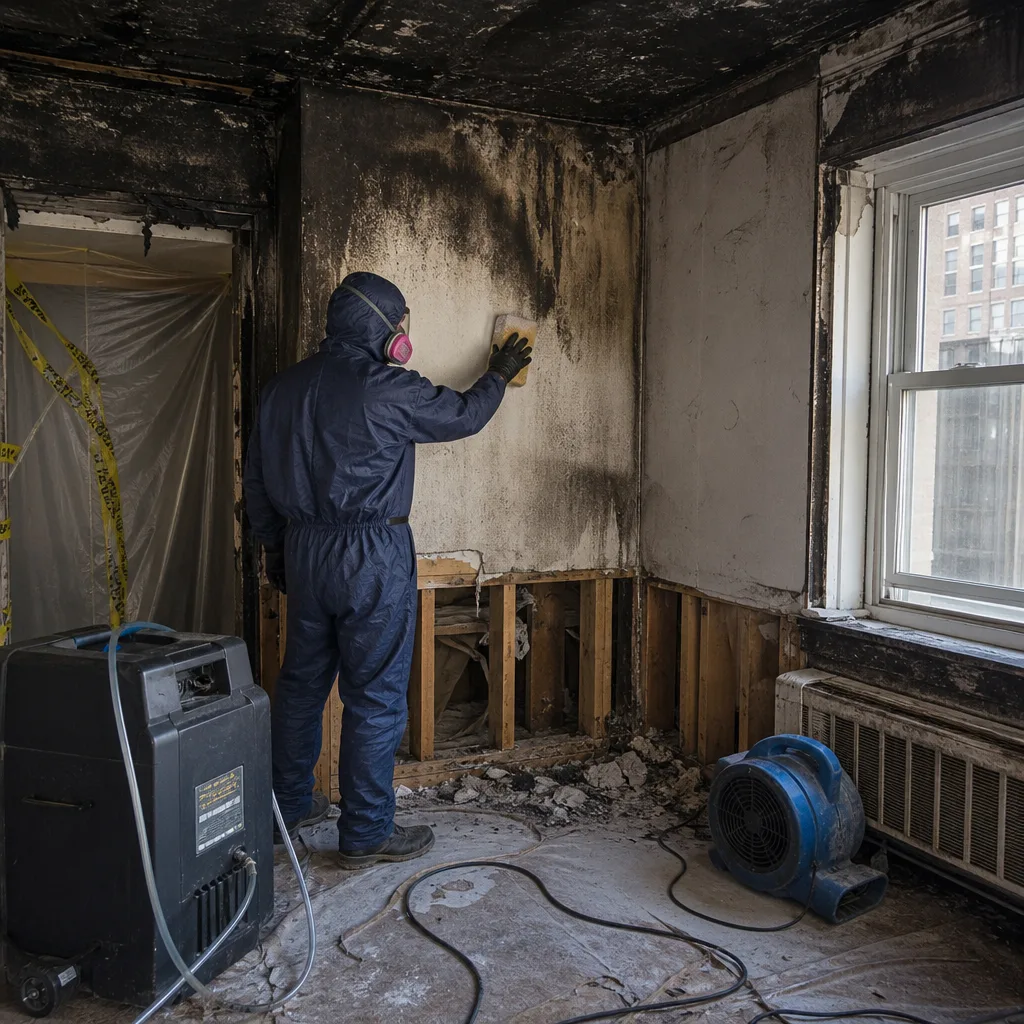
Mold Removal
Removing mold in Midtown is a logistics problem wrapped around a technical one. We contain, remove, and clean the affected area while respecting freight elevator windows, tenant occupancy, and building code. Most removal jobs in commercial and residential towers run $1,800-$6,400 for a contained area.
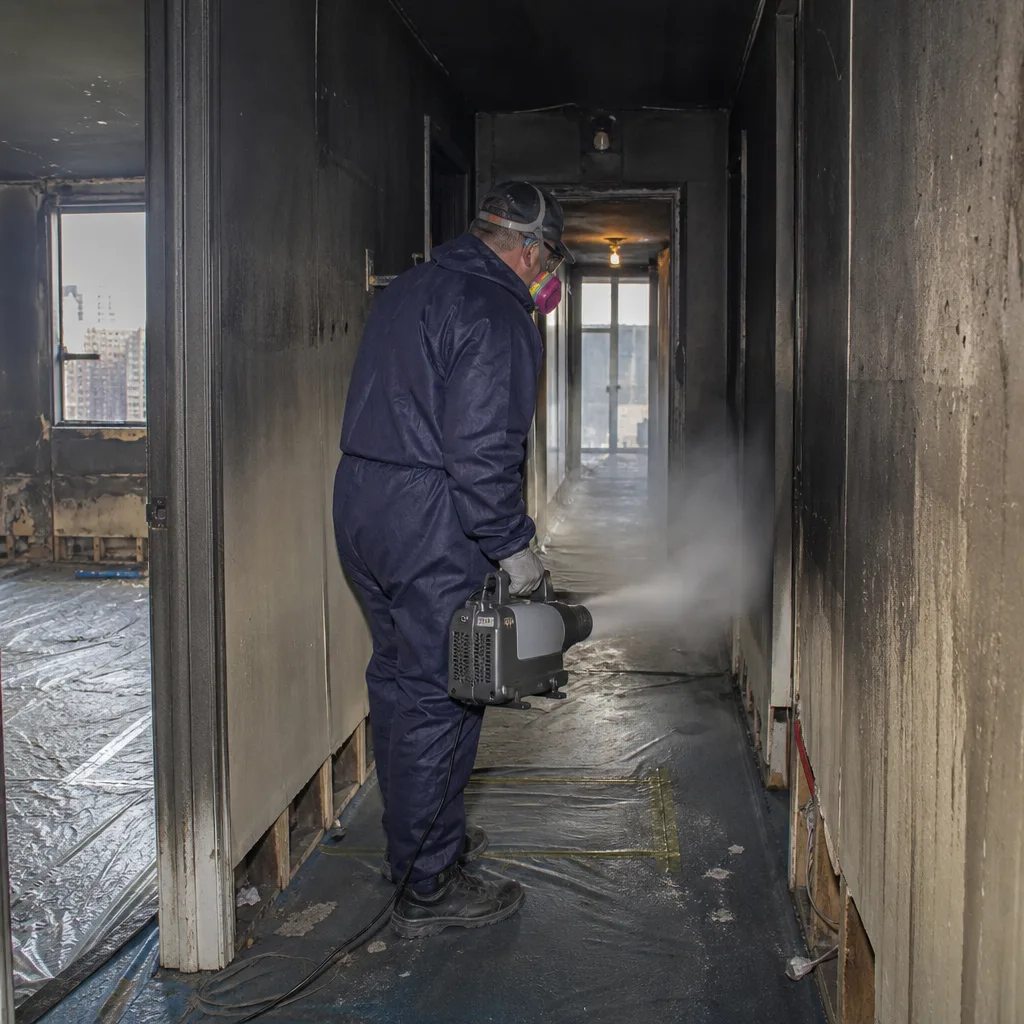
Black Mold Remediation
Stachybotrys gets attention because it’s visible and people are afraid of it. In Midtown, black mold often appears where steam-pipe condensation or a slow sewer backup has been feeding a cavity for months. We treat it the same way we treat any elevated fungal growth: contain, remove, dry to standard, and clear. No shortcuts, no fear-mongering.
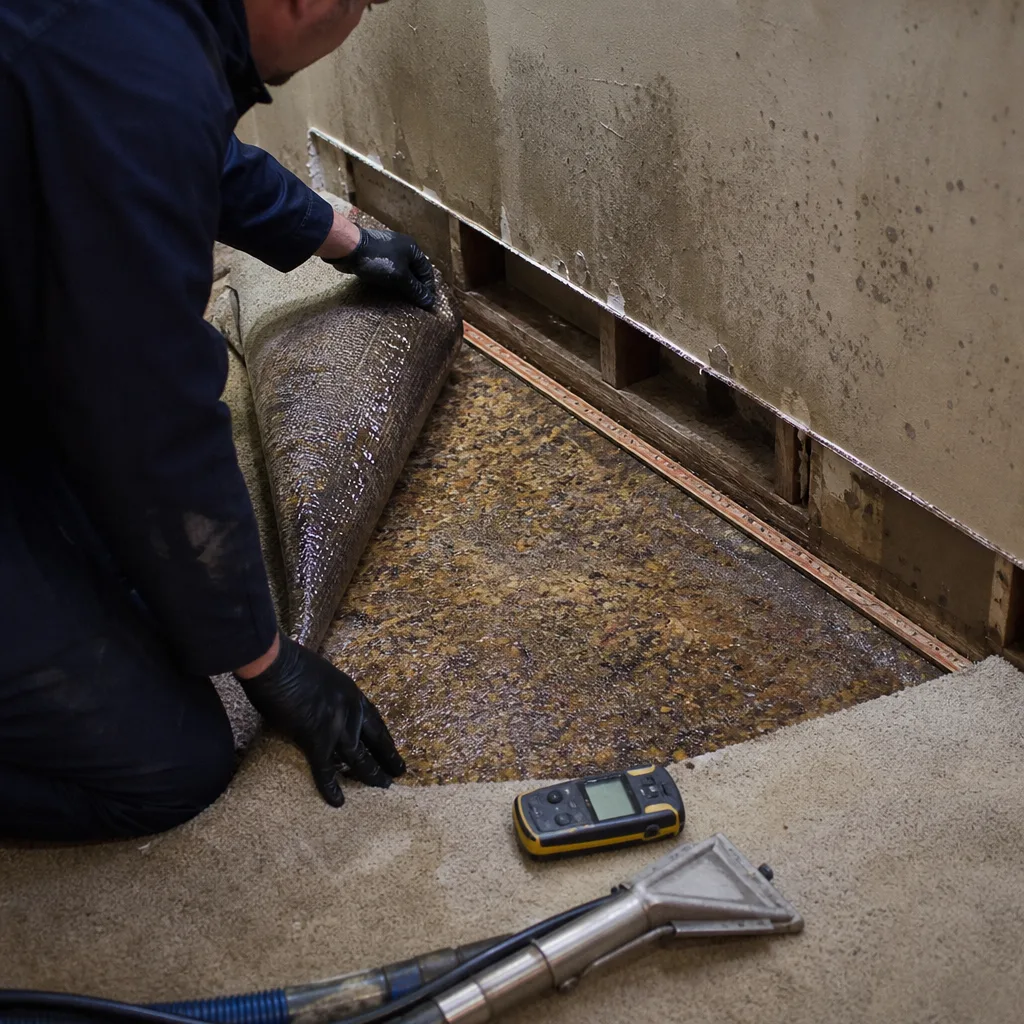
Air Quality Restoration
After any Midtown mold job, the air matters. HEPA air scrubbing runs during and after removal. We can coordinate third-party clearance testing so you have a report to show tenants, staff, or a co-op board. This is standard practice in Midtown’s commercial high-rises, and it should be standard for your property too.
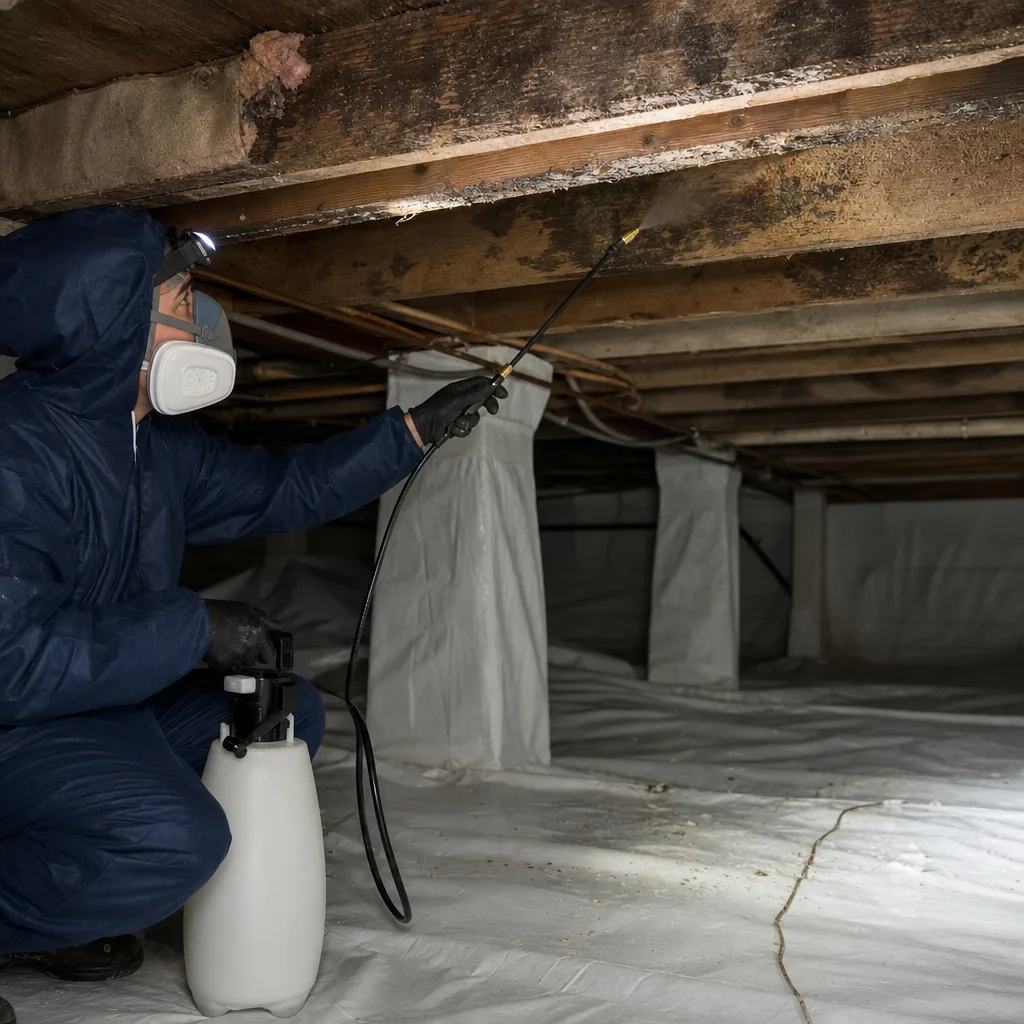
Crawl Space Treatment
Crawl spaces in Midtown Manhattan are rare, but they exist under some older residential buildings and mixed-use conversions. When we find one, we treat it like a contained cavity: moisture control first, then treatment. The same moisture-mapping discipline we apply above a drop ceiling gets applied below the floor joists.
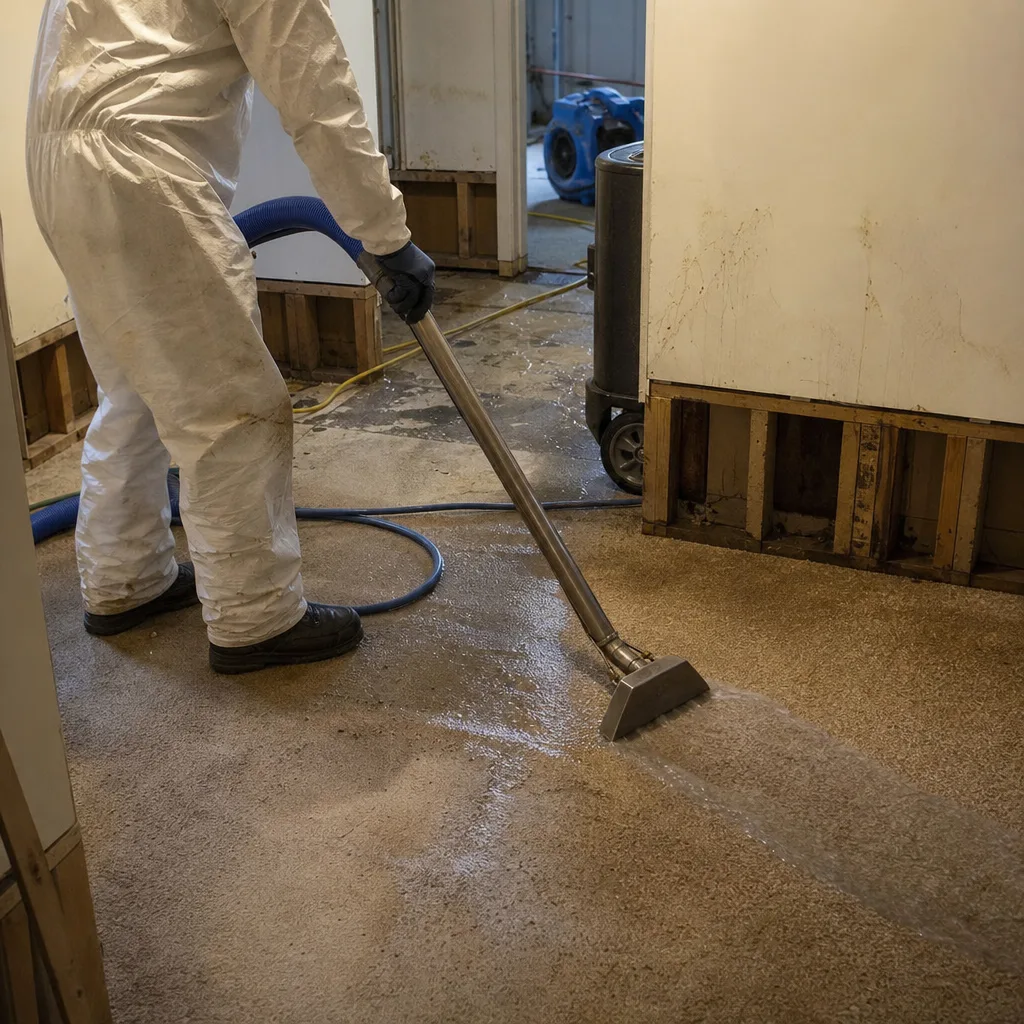
Moisture & Humidity Control
After the mold is gone, the humidity has to stay in check or the mold comes back. In Midtown’s tight mechanical spaces, that often means adjusting your building’s existing HVAC or dehumidification plan. We leave homeowners and building engineers with a plan, not a spot treatment. This is where the 90-Day Done Right Promise earns its keep.
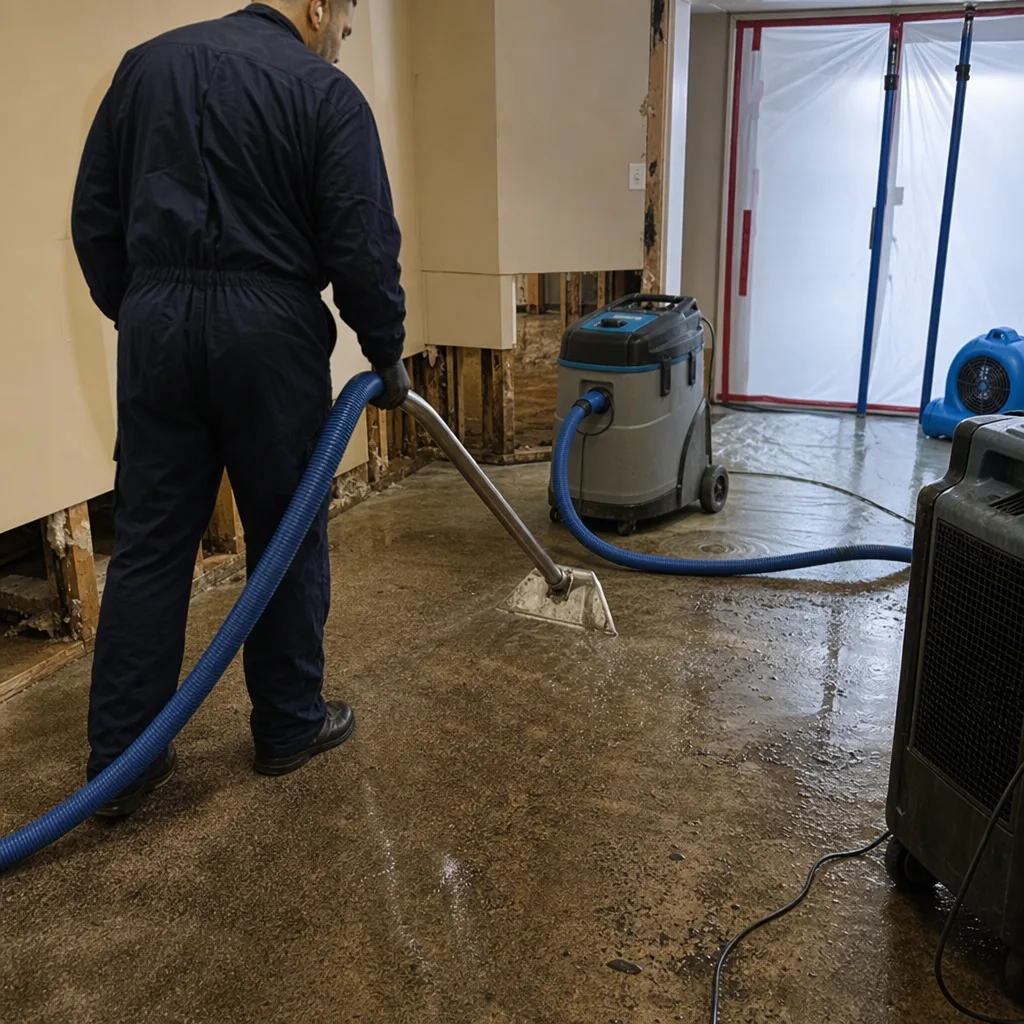
What happens when you call
- 1
A real person answersNo phone trees - you reach a local pro.
- 2
You get an upfront price rangeHonest numbers before anyone is dispatched.
- 3
A background-checked tech heads outLicensed & insured, dispatched right away.
- 4
You approve before work beginsNothing starts until you say go.
Mold Remediation Costs in Midtown Manhattan, NY
A contained mold remediation in a Midtown Manhattan apartment or single office suite runs $1,800-$6,400. A multi-room event crossing several floors in a pre-war tower lands between $12,000 and $30,000+. What moves the number: how far moisture migrated, whether asbestos survey and abatement holds apply, whether freight elevator access forces single-day containment, and how much drywall or plaster assembly must be removed. Insurance policies commonly cover mold remediation when the source is sudden and accidental, like a burst pipe. Slow leaks denied by the carrier still need to be fixed, and our written scope tells you the out-of-pocket number before you approve work. We offer current standing discounts: $50 off any repair over $250, the $89 Seasonal Tune-Up, and a 5% Senior & Veteran discount. Call (518) 663-6491 for a free visual inspection and a firm written estimate.
We Also Serve Cities Near Midtown Manhattan
Our local teams serve the Financial District, Lower Manhattan, Washington Square, and Brooklyn Heights, in addition to Midtown Manhattan. The same certified crews, the same 90-Day Done Right Promise, and the same live 24/7 dispatch answer across the metro.
Serving Midtown Manhattan, NY - Our Local Coverage Area
We’re based in the Midtown Manhattan area and know this community well. Use the map below to see our service coverage - if you’re nearby, we can almost certainly help.
Midtown Manhattan Mold Remediation Questions, Answered
How do you handle mold remediation in a Midtown high-rise without disrupting neighboring tenants?
Containment barriers and negative air pressure keep the work area sealed and keep spores out of shared corridors and neighboring floors. We schedule work inside your building’s freight elevator windows and use HEPA air scrubbers from Dri-Eaz and Phoenix. In Midtown, the tenant next door should never know we were there until the final paint is dry.
Does every mold job in Midtown Manhattan require an asbestos survey?
If the building predates 1987 and any material will be disturbed, yes. That includes drywall, plaster, insulation, and floor tiles. NYC DEP requires the survey before work starts. Our team schedules it early, because waiting for the survey result after you’ve already opened a wall creates a stop-work order, fines, and a bigger bill.
Why do we hear about ‘moisture mapping’ for mold in Midtown commercial spaces?
Because in Midtown, the visible mold is rarely the whole problem. Water travels behind plaster, above drop ceilings, and along pipe chases. Moisture mapping with Dri-Eaz sensors tells us where the cavity is wet, so we can remediate the entire affected area, not just the patch you can see. For a commercial landlord, that means one job, not three follow-ups.
Can you remediate mold behind original plaster walls in a pre-war Midtown office?
Yes. We remove only the contaminated plaster and lathe inside the containment area, dry the remaining cavity to standard, and rebuild the assembly to match. In a pre-war Midtown office, preserving original plaster is often faster than full drywall replacement, and it keeps the character your tenants expect.
How fast can you start after a Midtown hotel guest reports visible mold in a room?
Same visit in most cases. We answer live 24/7 and can dispatch a certified mold remediation crew to Midtown Manhattan within 45 minutes. For a hotel, speed equals avoided guest complaints and avoided health-code escalation. Call (518) 663-6491 and we’ll start the file immediately.
How long does mold remediation take in Midtown Manhattan?
A contained room or suite usually takes 2-4 days including drying and repairs. Multi-floor events in pre-war buildings can take 1-2 weeks because of containment shifting and freight elevator windows. We log daily moisture readings so you and your insurer can see progress against the dry standard.
Can tenants stay in the building during remediation?
In most Midtown commercial and residential buildings, yes. Containment barriers and negative air pressure isolate the work area. Neighboring tenants stay in place. If the affected area is a single hotel room or apartment, that unit is temporarily out of use, but the rest of the floor can remain occupied.
What certifications do your mold remediation technicians hold?
Our crew members are certified to IICRC, RIA, and IFA standards, including the AMRT applied microbial remediation credential and WRT for water restoration. Background-checked, uniformed, and trained for high-rise Midtown logistics. For more on our broader Mold Remediation capabilities, see our service page.
Floodline Restoration Co. keeps mold remediation in Midtown Manhattan honest: containment first, drying to standard, documentation for your insurer, and the 90-Day Done Right Promise in writing. We’re the same crew from first cut to final paint. Call (518) 663-6491 for a free estimate, and talk to a live person, not a recording.
Written by Curt Bowman, Owner at Floodline Restoration Co., serving Midtown Manhattan and the New York metro since 2010.