
Free visual inspection and a written scope of work before any mitigation begins - photos, moisture readings, and drying logs go in your claim file
The scope we write is the scope we bill. Anything new gets shown to you, in writing, before we touch it.
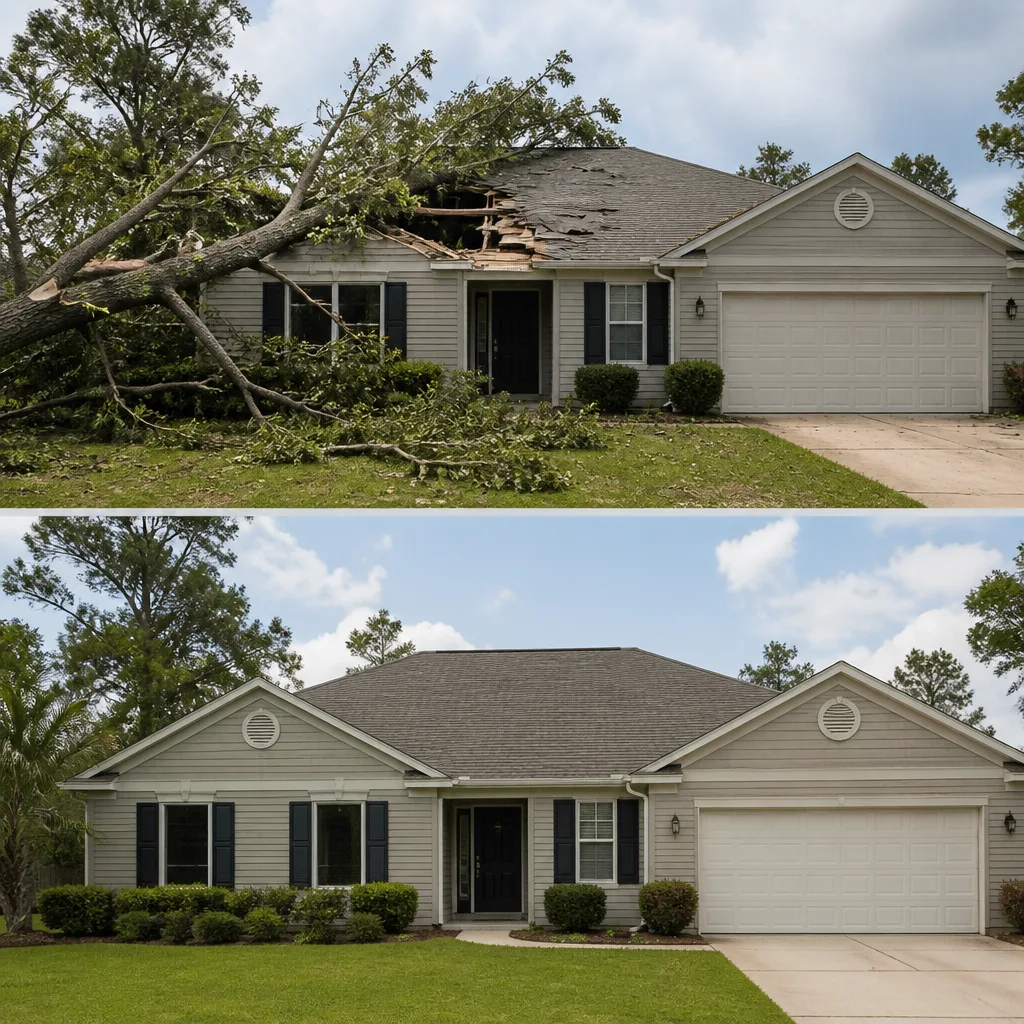

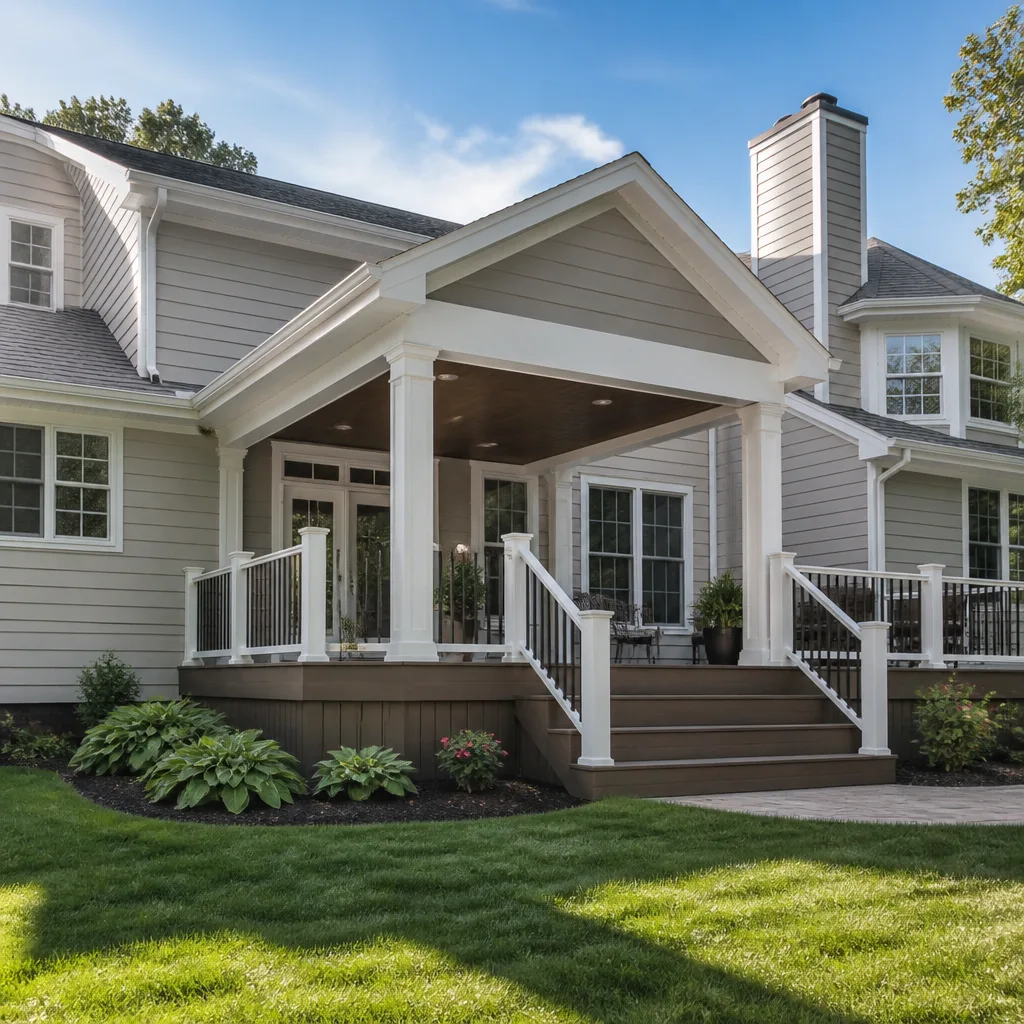
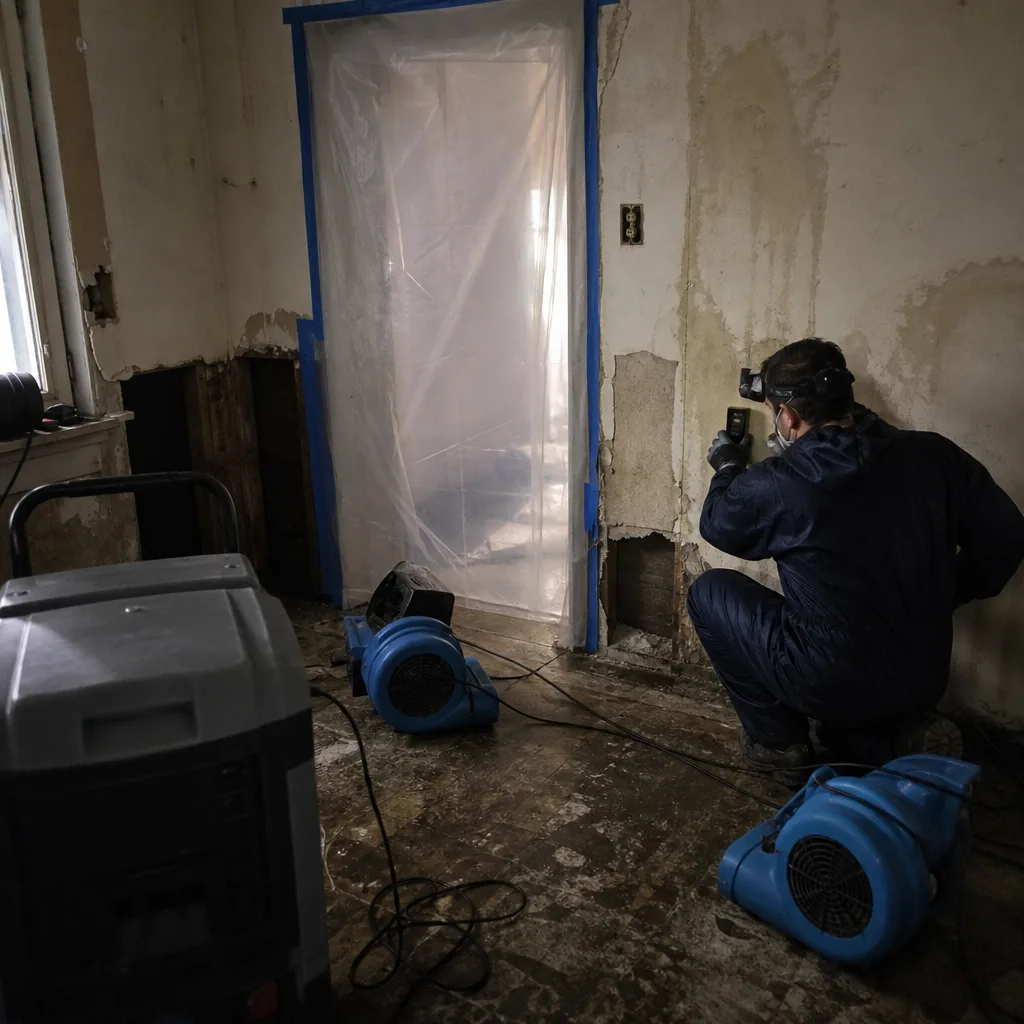 Before
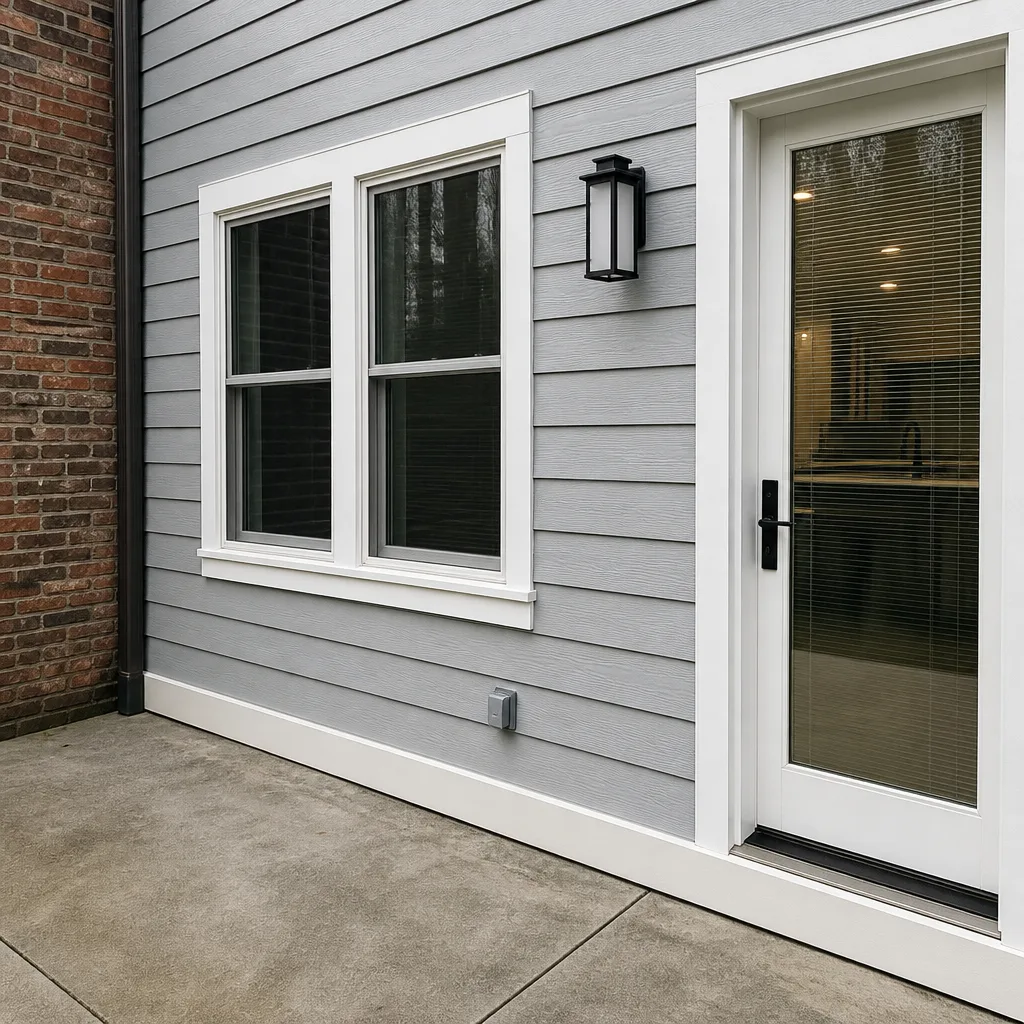 After
After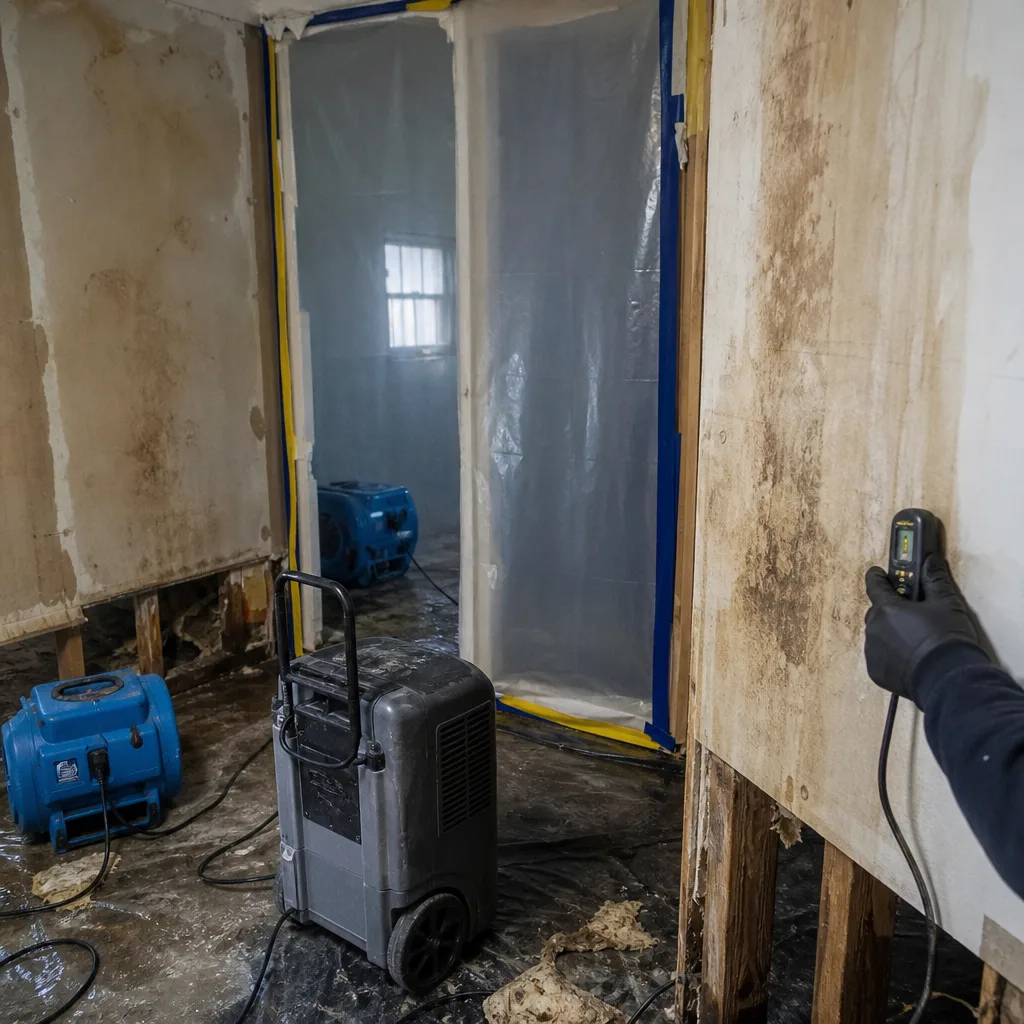 Before
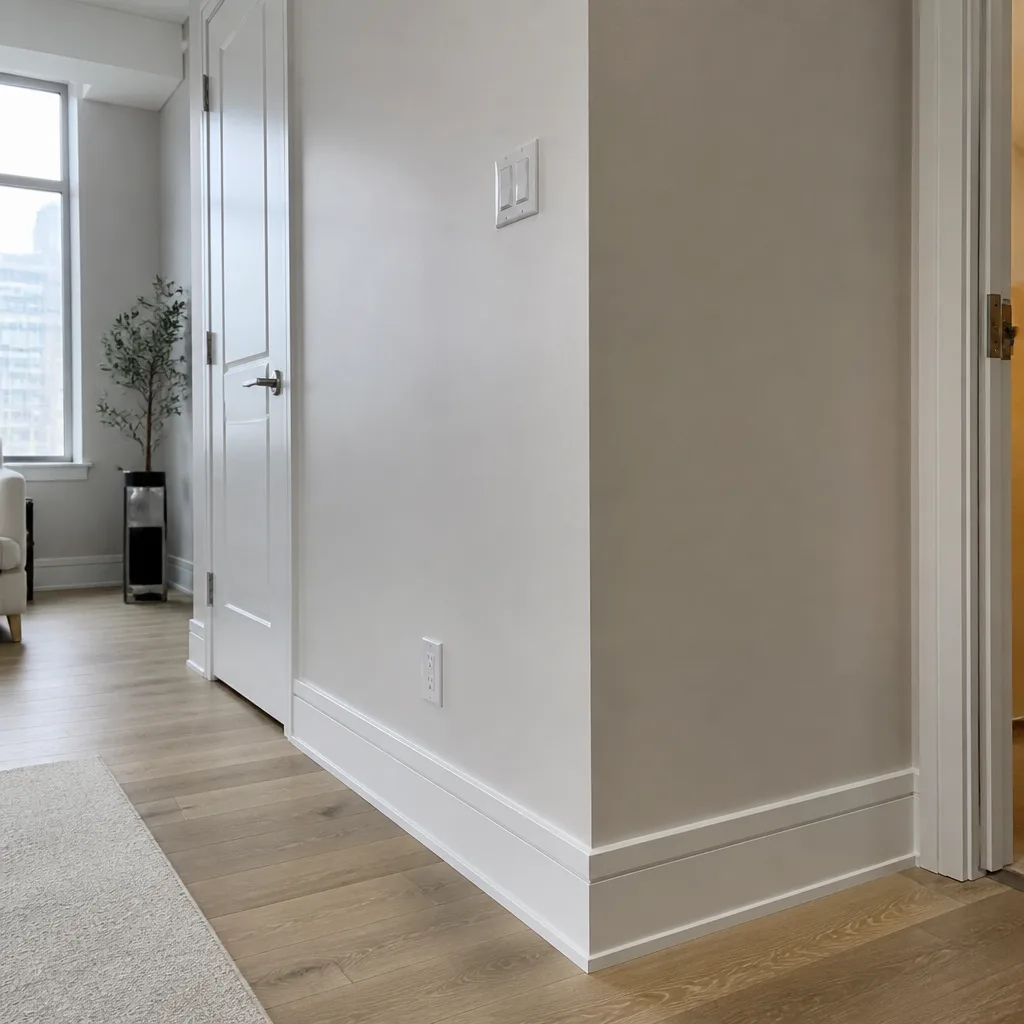 After
After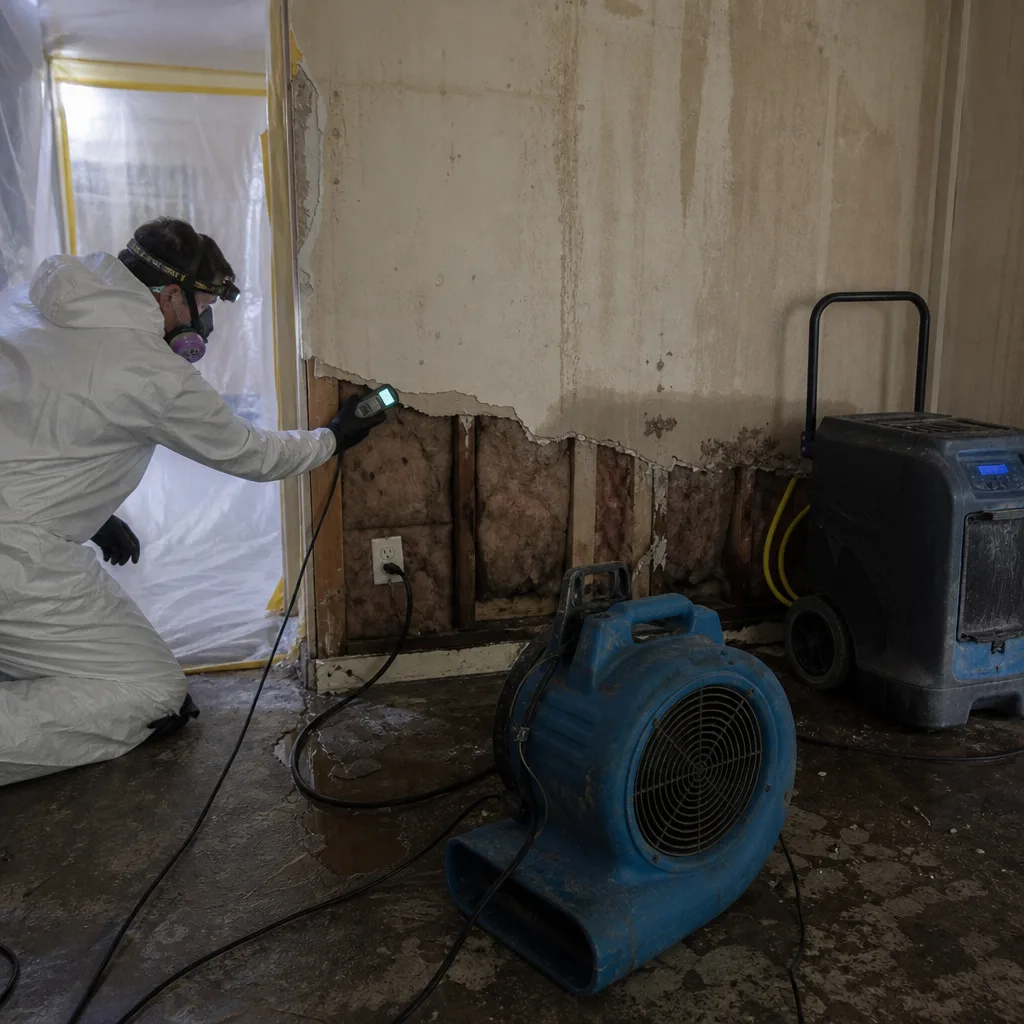 Before
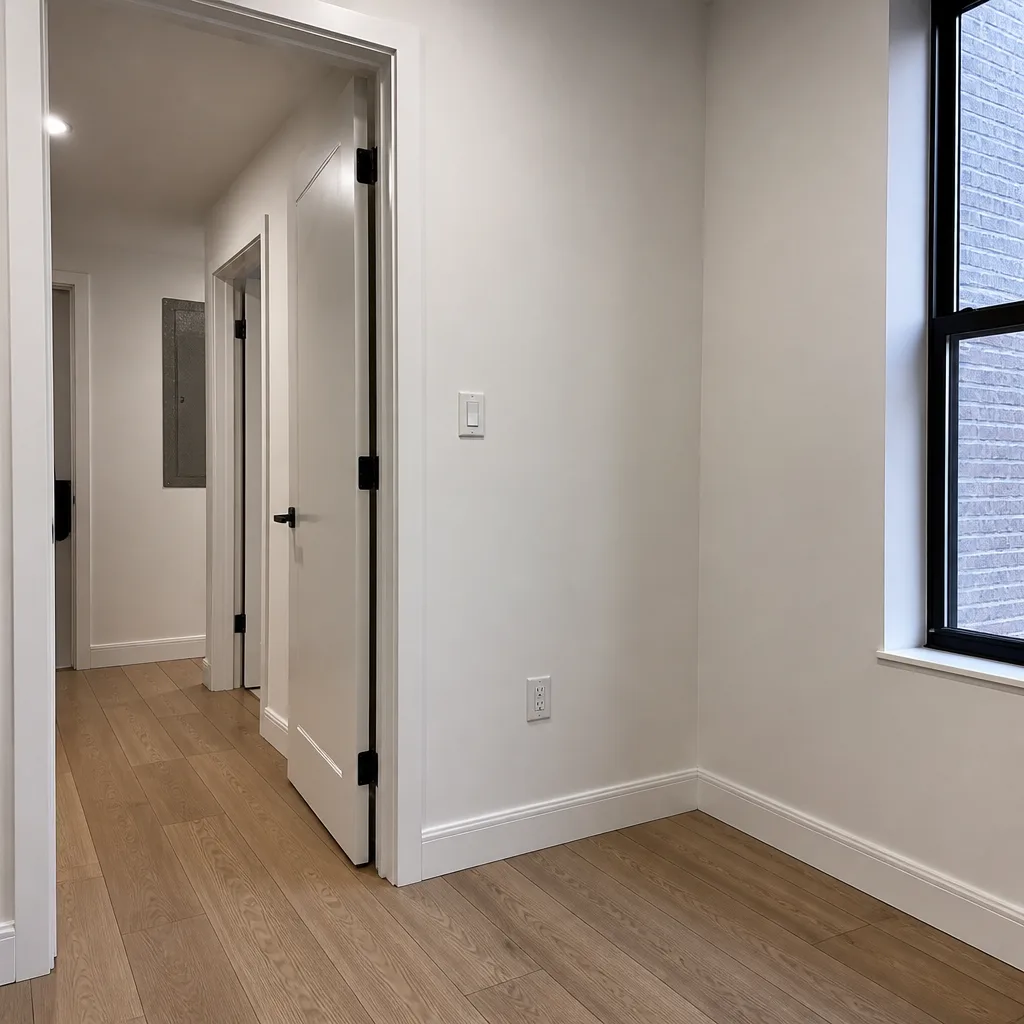 After
After24/7 Emergency Fire & Smoke Damage Restoration in Lower Manhattan
Fire and smoke damage in Lower Manhattan demands a response that matches the pace of the city that never sleeps. When a kitchen fire at 3 a.m. forces smoke through a pre-war building’s cavity walls, or an electrical panel failure in a Financial District high-rise sends soot through ductwork, waiting until business hours isn’t an option. Floodline Restoration Co. answers live around the clock. A real person picks up the phone, not a recording, and a certified crew can be dispatched to your location in Lower Manhattan immediately. Call (518) 663-6491 for a free visual inspection. The first hour matters most: smoke residue turns acidic within hours, permanently etching glass, corroding metal fixtures, and driving soot deeper into porous brick and timber. Speed is not a luxury here. It’s the difference between a cleaned surface and a gut renovation.
Understanding Fire & Smoke Damage Restoration Severity in Lower Manhattan Properties
Not all fire damage behaves the same way, and Lower Manhattan’s building stock makes severity assessment especially unforgiving. We classify soot residue by type. Dry soot from paper and wood fires settles as fine powder and responds to HEPA vacuuming and dry sponging. Oily soot from kitchen grease fires leaves a tacky, smeared film that requires aggressive degreasing agents and often imbedded heat from the source. Protein-based soot from burnt food is nearly invisible but produces the most stubborn odor, clinging to paint and varnish. Wet smoke from smoldering, low-heat fires produces a stronger, stickier residue that bonds to surfaces. The real challenge in Lower Manhattan’s 19th-century cast-iron and timber buildings is soot migration into vertical chases. Those old cavity walls act like chimneys, pulling smoke far from the original fire, into neighboring units and multiple floors. What appears as a one-room cleanup often requires building-wide air scrubbing. And when firefighting runoff introduces water, the water is rarely clean. It carries soot, ash, and dissolved construction materials through the structure. We map moisture with thermal imaging and hygrometers, because water trapped behind brick and plaster in a 1920s walk-up doesn’t dry on its own. That trapped moisture feeds mold within 24 to 48 hours.
Why Lower Manhattan Property Owners Choose Floodline Restoration Co.
- 45-minute response commitment in Lower Manhattan. Our local dispatch coordinates crews stationed near the Financial District, Battery Park City, Tribeca, and the Seaport, so someone is always minutes away.
- A live person answers, day or night. No automated attendant. No call-back promise. You speak to a dispatcher who knows the Lower Manhattan streets and can deploy immediately.
- IICRC-certified crews. Our technicians hold FSRT (Fire & Smoke Restoration Technician) and ASD (Applied Structural Drying) certifications, backed by RIA and IFA training standards. Uniformed, background-checked, and accountable.
- Free visual inspection. We assess the damage in person and give you a straight written scope before any work begins. No pressure. No vague verbal estimates that balloon later.
- Direct insurance billing. We bill your carrier directly and coordinate with your adjuster. You never play messenger. We document everything, photo everything, and handle the paperwork.
- One crew from first response to final rebuild. We don’t hand your building off to a different contractor for reconstruction. The same team that extracts and dries also rebuilds. You know exactly who is accountable.
Our Fire & Smoke Damage Restoration Process
Inspection & Assessment
We walk the entire affected area, not just the fire site. Soot travels. We inspect adjacent units, vertical chases, and shared walls in your Lower Manhattan building. Thermal imaging reveals heat paths and hidden moisture. You get a written scope and a firm price before work starts.
Stabilization & Emergency Board-Up
We secure the structure immediately. Board-up and tarping protect against weather, looting, and further damage. If the fire compromised a window on Water Street or a roof penetration in Tribeca, we seal it now.
Water Extraction & Structural Drying
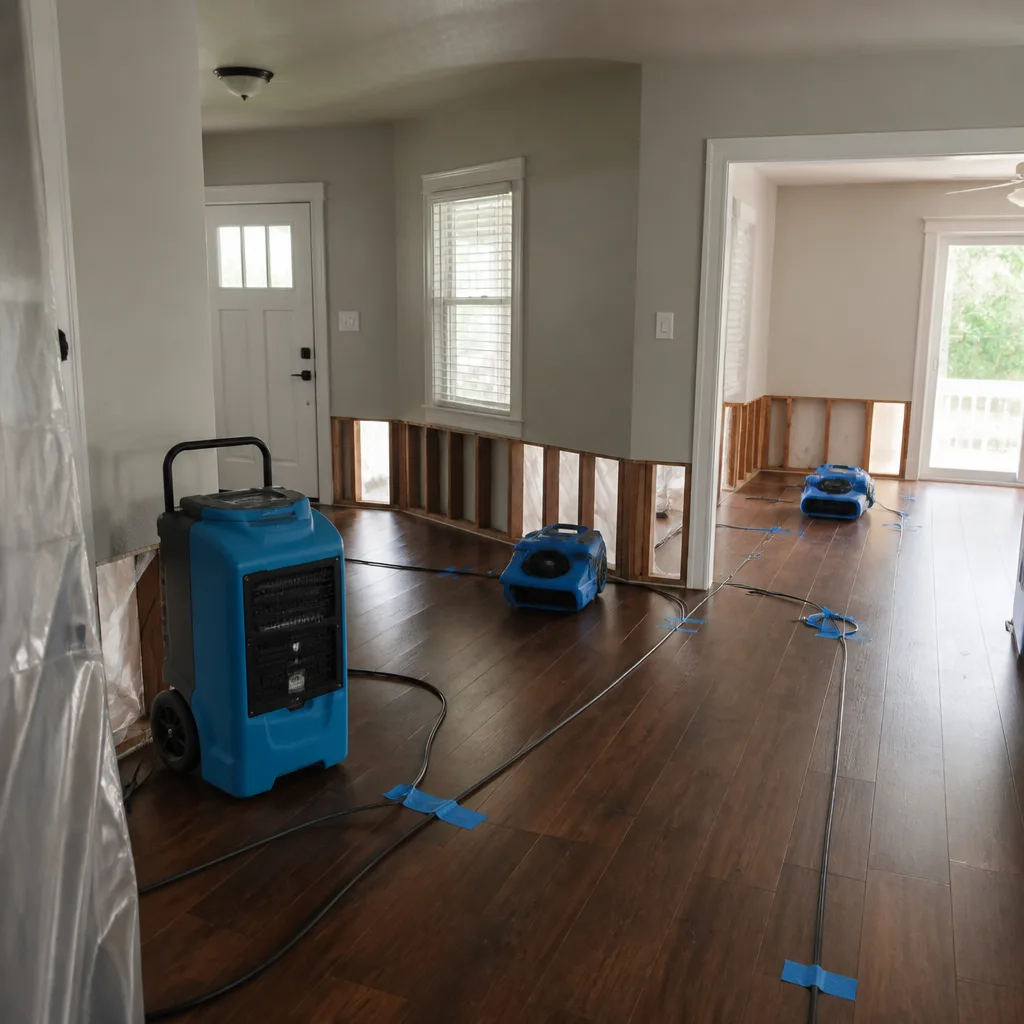
Firefighting runoff is removed using Dri-Eaz and Phoenix extraction units. Then we deploy air movers and dehumidifiers to dry the structure. Daily moisture readings are logged until the dry standard is met. In Lower Manhattan’s brick and timber buildings, this step prevents mold from taking hold inside porous materials.
Smoke & Soot Removal
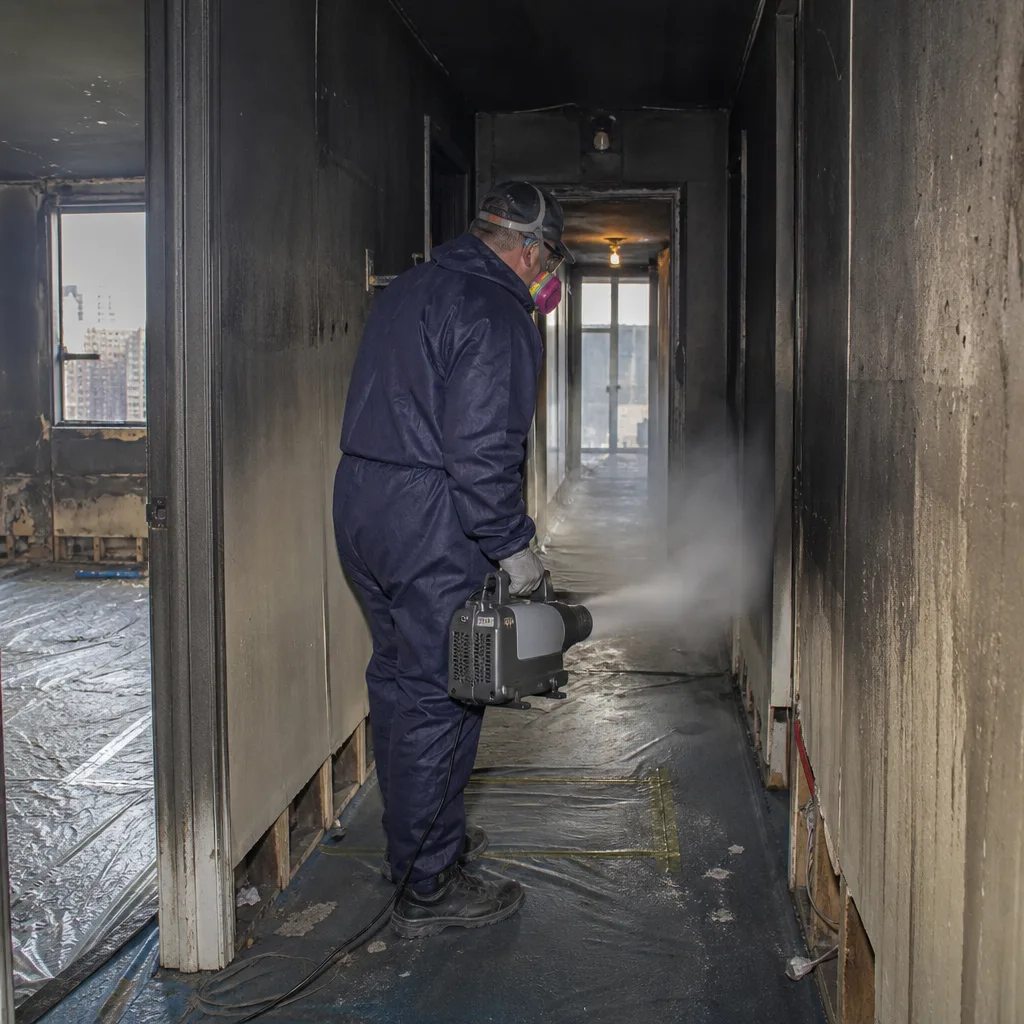
We use HEPA air scrubbers to capture airborne particulates while technicians clean every surface. Dry soot is sponged. Oily soot is degreased. Ductwork is inspected and cleaned so the odor doesn’t recirculate through the building.
Odor Removal & Deodorization
Odor molecules embed in porous surfaces. We use thermal fogging and hydroxyl generators to neutralize odors at the molecular level, not mask them. For Lower Manhattan’s exposed brick and timber interiors, this is especially critical. Odor in masonry is permanent unless treated properly.
Repairs & Restoration
From drywall and plaster to refinishing structural timbers to full reconstruction, our crew handles it. In flood-zone buildings, we coordinate with the DOB and your engineer on any required BFE relocations. You get your space back, done right.
Need Emergency Fire & Smoke Damage Restoration in Lower Manhattan Now?
Crews minutes away, answering live 24 hours a day. The sooner we start, the less it costs.
Working With Your Insurance Company
Fire claims in Lower Manhattan are rarely simple. The adjuster wants documentation. The building owner wants certainty. The lender wants a schedule. We handle all three. From the first hour, our crews photograph every room, log moisture readings, and document the full extent of the loss before any demolition begins. That pre-loss condition record is what protects you when the adjuster reviews the claim. We write a line-item scope of work using industry-standard estimating software, then send it directly to your carrier. We coordinate with your adjuster by phone and email. We don’t wait for them to call us back. And when the carrier has questions about whether an item is covered, we provide the evidence that supports your coverage. The 90-Day Done Right Promise means if something isn’t right, we make it right. In writing. No arguing.
What We Provide Your Insurer
- Thorough documentation of the loss
- Photos of all damage, room by room
- Moisture readings and drying logs
- A detailed, line-item scope of work
- Direct coordination with your carrier
Built for Lower Manhattan’s Loss Calendar
Fire losses in Lower Manhattan follow patterns as predictable as the tide charts. January and February bring deep freezes that push aging heating systems past their limits and overload electrical circuits with space heaters in pre-war apartments that were never wired for that load. March and April bring the first thunderstorms of spring, and with them power surges that arc through old panels and fire-damaged wiring in converted office buildings. Summer is peak kitchen-fire season in the dense residential towers of Battery Park City, where a grease fire on the 20th floor imposes smoke on two floors below through shared risers. And then there is hurricane season, from August through November, when the real danger is not the fire itself but saltwater surge making contact with energized electrical systems, a combination that has caused electrical fires in Lower Manhattan basements and sub-grade mechanical rooms during major coastal storms. Any restoration contractor working this ZIP code knows the calendar. We staff accordingly.
Fire & Smoke Damage Restoration Across Lower Manhattan’s Neighborhoods
Lower Manhattan is not one neighborhood. It’s a collection of radically different building types, each with its own fire loss profile. In Tribeca, the cast-iron loft buildings from the 1860s and 1870s hold heat differently than anything built after 1950. Timber post-and-beam framing inside brick shells means a kitchen fire can smolder inside a cavity wall for hours before it’s even noticed, and smoke travels along those cavities into units two floors away. In Battery Park City, the residential towers built on Hudson River landfill face a different problem: below-grade electrical rooms and switchgear installed before 2012 sit in flood zones, and fire or smoke damage to those systems triggers DOB substantial-improvement compliance if repairs aren’t handled properly. The Financial District has a dense mix of office-to-residential conversions along Wall Street, Broad Street, and Exchange Place, many retaining original mechanical infrastructure at or below the 100-year flood elevation. The older tenement and walk-up buildings along Fulton Street and the South Street Seaport were built with flammable wood lath-and-plaster walls and no fire separation between units. A small fire in one unit of a 1905 tenement on Front Street becomes a building-wide problem faster than anyone wants to admit.
Specialized Fire & Smoke Damage Restoration Services We Offer in Lower Manhattan
Smoke & Soot Removal
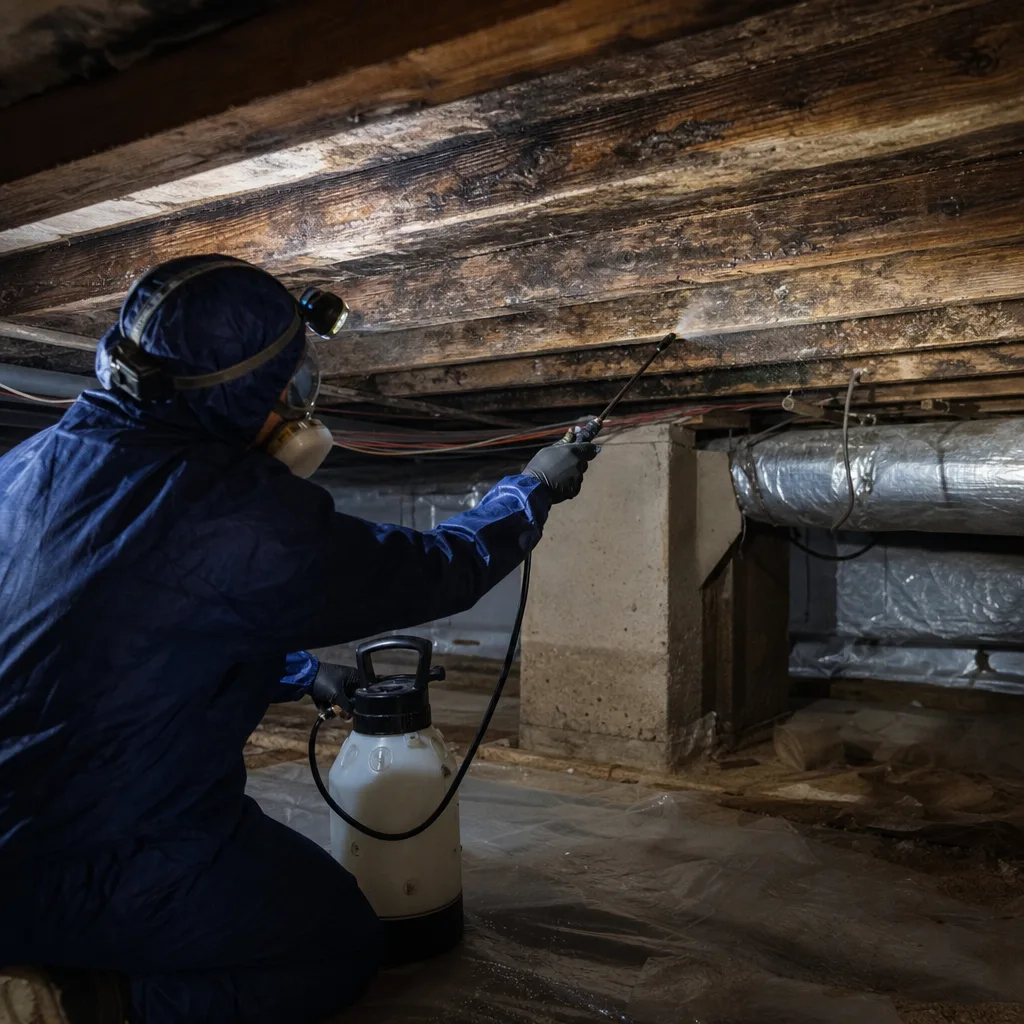
Soot is acidic. Left on metal fixtures, it pits and corrodes. Left on glass, it etches. On the exposed brick walls of a Tribeca loft, it bonds to the mortar and requires specialized cleaning to avoid permanent staining. We remove soot from every surface, including inside ductwork, behind baseboards, and on structural timbers. The goal is a clean surface with no residue left to off-gas odor later.
Odor Removal & Deodorization
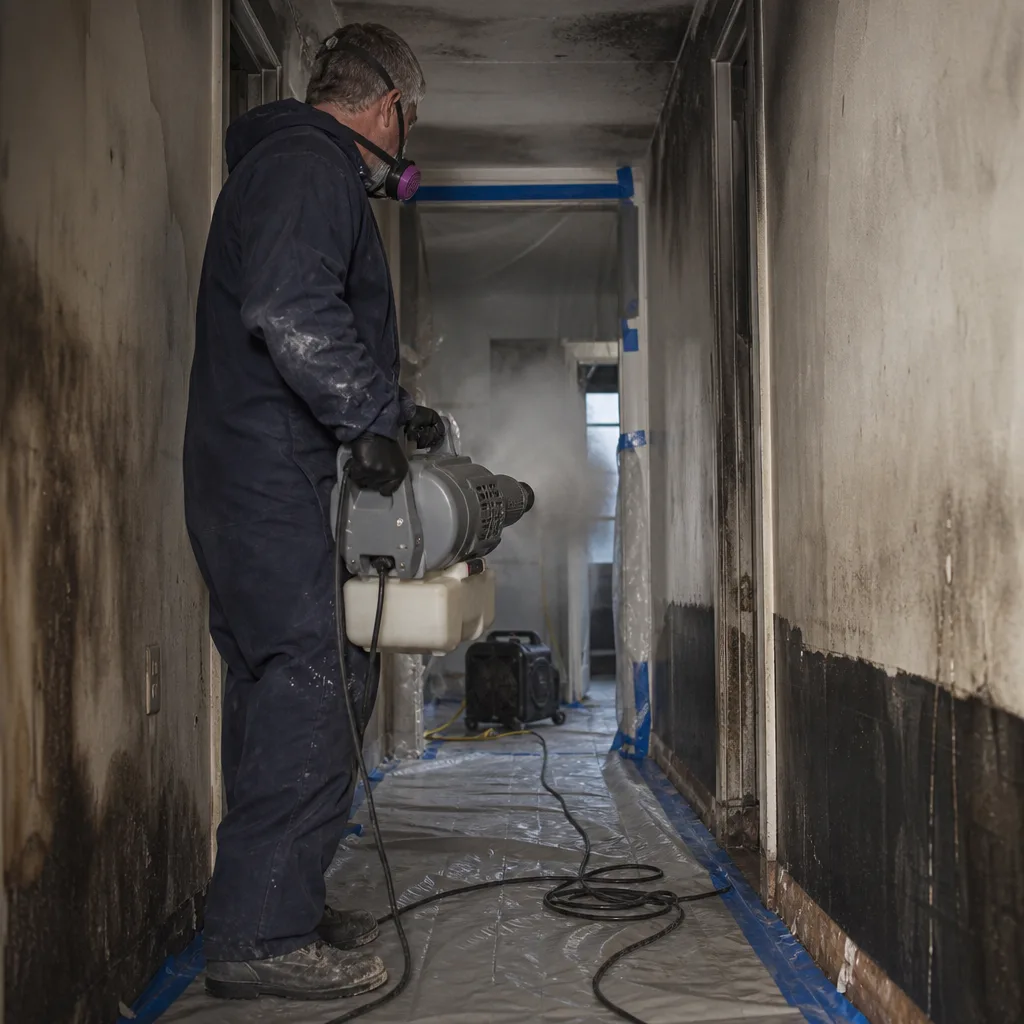
Odor molecules penetrate porous materials. Brick, timber, plaster, drywall, carpet, fabric. Masking agents fail because the odor returns. We use thermal fogging, which heats deodorizing agents into a vapor that penetrates the same pores the smoke entered, and hydroxyl generators that neutralize odor molecules safely, even in occupied buildings. For Lower Manhattan lofts with exposed brick and wood beams, this is not optional. It’s the difference between a restored space and one that always smells faintly of smoke.
Structural Fire Repair
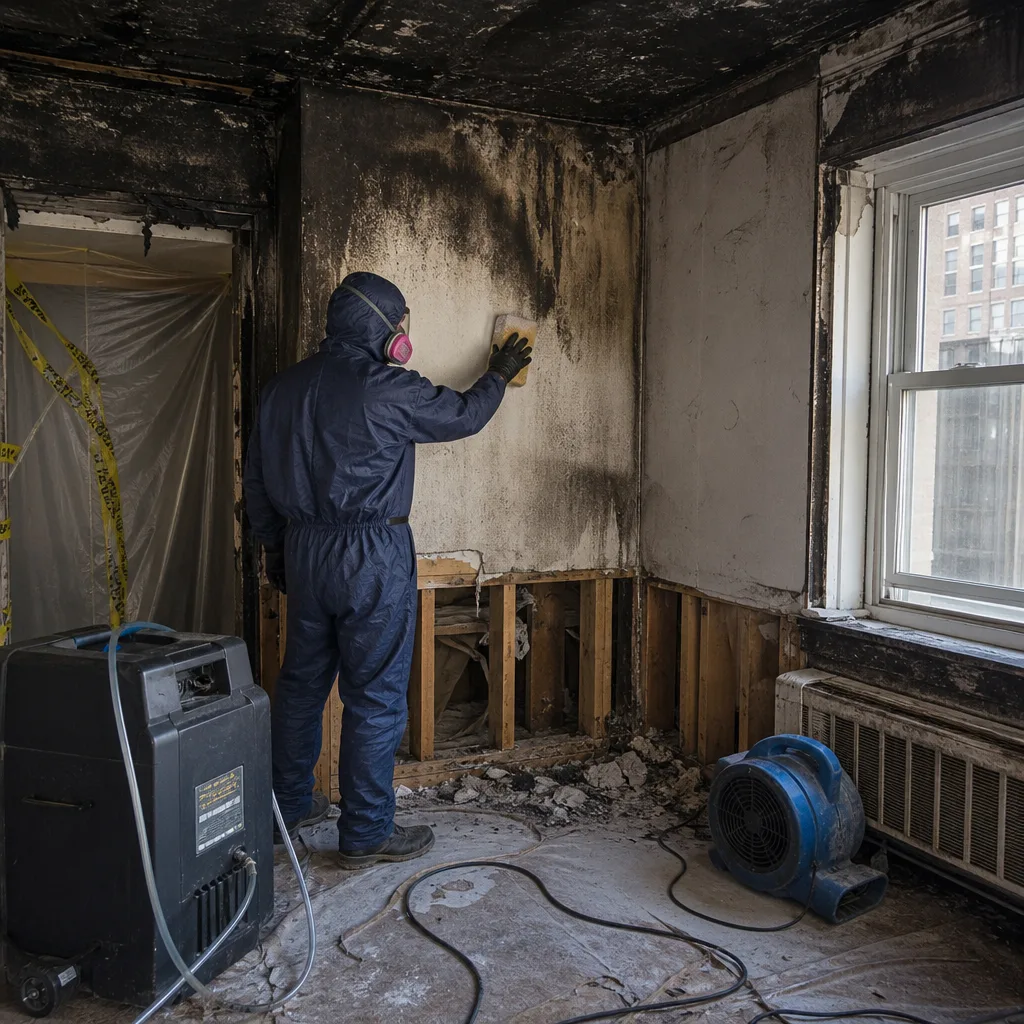
When fire damages the structural components of a building, speed matters. Charred timber loses load-bearing capacity. Heat-damaged cast iron becomes brittle. We assess the structural damage honestly, coordinate with structural engineers when required, and perform the repairs. That includes the post-Sandy reality: restoring a below-BFE electrical room in Battery Park City without triggering a substantial-improvement review is nearly impossible. We manage the code compliance so the building doesn’t get red-tagged.
Emergency Board-Up & Tarping
A fire that breaks a window or compromises a roof leaves your Lower Manhattan property exposed to weather and intrusion. We board up and tarp within the first visit. If the fire happened during a nor’easter, that board-up is doing double duty, keeping wind-driven rain out of already-compromised interior space.
Contents Cleaning & Pack-Out
Fire-damaged contents don’t always get thrown away. We inventory, pack out, and clean salvageable items, including electronics, documents, furniture, and artwork. For Financial District high-rise residents with limited storage, we coordinate off-site contents restoration and return everything cleaned and cataloged. Insurance documentation is part of the service.
What happens when you call
- 1
A real person answersNo phone trees - you reach a local pro.
- 2
You get an upfront price rangeHonest numbers before anyone is dispatched.
- 3
A background-checked tech heads outLicensed & insured, dispatched right away.
- 4
You approve before work beginsNothing starts until you say go.
Fire & Smoke Damage Restoration Costs in Lower Manhattan, NY
We will be straight with you. Fire damage restoration in Lower Manhattan runs higher than the national average, and the reason is structural. A typical smoke and soot cleanup in a Battery Park City studio runs $2,800 to $6,500. A full kitchen fire restoration in a Tribeca loft, including structural drying, smoke removal, and refinishing original timber, lands between $18,000 and $45,000. When a fire damages electrical systems below the Base Flood Elevation and DOB compliance enters the picture, the scope can reach $75,000 to $150,000 or more, because mechanical relocation is not optional. The variables that move the price: how many floors the smoke traveled, whether water from firefighting saturated brick or timber, the presence of lead paint or asbestos requiring abatement, and whether the building is in a flood zone with post-Sandy code triggers. Insurance covers most of this, and we bill your carrier directly. But you should know what’s coming before you sign anything. That’s why the free visual inspection matters. We give you a firm written scope with line items, no vague ranges, before work starts. Call (518) 663-6491 and we’ll come look.
We Also Serve Cities Near Lower Manhattan
Our crews serve the entire Lower Manhattan peninsula and beyond. We work regularly across the Financial District, around Washington Square, over the bridges in Brooklyn Heights, and up into Williamsburg. If you’re in one of these neighborhoods and dealing with fire or smoke damage, call the same number. We’ll be there.
Lower Manhattan Fire & Smoke Damage Restoration Questions, Answered
How does the post-Sandy BFE relocation rule change a fire restoration scope in Lower Manhattan?
Post-Sandy NYC Building Code amendments require that when storm-damaged mechanical or electrical systems in flood-zone buildings are restored, critical equipment like boilers, switchgear, and elevators must be relocated above the Base Flood Elevation rather than replaced in-kind. This means a fire restoration job in a Lower Manhattan flood-zone building can escalate from a smoke cleanup into a full DOB-permitted vertical relocation. We coordinate with your engineer and the DOB so the scope is handled correctly the first time. Call (518) 663-6491 with any questions.
Why does saltwater exposure from storm surge make fire damage worse in Battery Park City?
Saltwater is corrosive. When storm surge floods an electrical room and then a fire occurs, the salt accelerates corrosion of electrical panels and steel structural elements. The moisture trapped by salt also compresses mold timelines. We use specialized saltwater remediation protocols, including accelerated electrical assessments and aggressive drying, before any fire restoration work proceeds.
Can you restore smoke-damaged timber and brick in a Tribeca cast-iron loft without gutting the original fabric?
Yes. The original timber and brick in Tribeca lofts can be cleaned and refinished rather than replaced, if the fire hasn’t charred the timber to the point of structural compromise. We use dry sponges, degreasers, and thermal fogging to remove soot and odor from masonry and timber. The decision to refinish rather than replace depends on how deep the soot penetrated and how long it sat. The sooner we start, the more original fabric survives. Call (518) 663-6491 for an assessment.
What is the difference between Category 1, 2, and 3 water when it comes to firefighting runoff in Lower Manhattan?
Category 1 water is clean, from a broken supply line. Category 2 carries some contamination. Category 3 is grossly contaminated, and that’s what firefighting runoff usually is. It carries soot, ash, dissolved construction materials, and whatever else the fire produced. We treat firefighting runoff as Category 3, which means full extraction, antimicrobial treatment, and structural drying before any cosmetic work begins. This matters because the water is not just wet. It’s contaminated.
Do you handle pack-out and contents cleaning for fire-damaged units in Financial District high-rises?
Yes. We inventory, pack out, and document fire-damaged contents from Financial District high-rise units. We coordinate with your carrier for off-site cleaning and restoration, then return everything cleaned, cataloged, and ready. This is common in office-to-residential conversions where residents have limited on-site storage for damaged contents. Call (518) 663-6491 to discuss your specific situation.
How fast can you actually get to a fire-damaged property in Lower Manhattan?
Typically within 45 minutes. Our dispatchers know Lower Manhattan streets and coordinate crews stationed near the Financial District, Battery Park City, and Tribeca. The first hour matters because soot turns acidic quickly and odor penetrates deeper into porous materials. A live person answers 24/7. Call (518) 663-6491 and a crew will be dispatched immediately.
Will insurance cover fire and smoke damage restoration in Lower Manhattan?
Most standard property insurance policies cover fire and smoke damage, including restoration and contents cleaning. But Lower Manhattan has nuances: flood-zone buildings may have separate NFIP policies, and post-Sandy code upgrades may fall under ordinance or law coverage. We document everything from the first hour, bill your carrier directly, and coordinate with your adjuster so you don’t have to interpret coverage language yourself. Call (518) 663-6491 and we’ll work the claim with you.
What should I do in the first 30 minutes after a fire in my Lower Manhattan property?
Call us at (518) 663-6491. Do not enter the affected area if structural integrity is questionable. Do not turn on electrical systems. Do not attempt to clean soot yourself, as improper cleaning can push residue deeper into surfaces. If it is safe, open windows to ventilate. Take photos of everything before anyone touches anything. Then let our crew take it from there. We’ll be there fast.
Serving Lower Manhattan, NY - Our Local Coverage Area
We’re based in the Lower Manhattan area and know this community well. Use the map below to see our service coverage - if you’re nearby, we can almost certainly help.
The Lower Manhattan Restoration Standard
In a Financial District office-to-residential conversion on Water Street, our crew responded to a kitchen fire that had forced smoke through the building’s 19th-century timber post-and-beam cavity walls. We set up containment around the fire-damaged unit, used air movers and dehumidifiers to stabilize the space, then performed smoke and soot removal on the exposed brick and structural timbers before coordinating with the building’s engineer on a retrofit plan to bring the basement switchgear above the BFE. That’s the kind of coordination most restoration contractors never face. It’s the norm in this part of the city. Lower Manhattan is a narrow peninsula surrounded on three sides by the Hudson River, East River, and New York Harbor. Saltwater storm surge, FEMA flood-zone compliance, pre-war timber-and-brick construction, and post-Sandy building code amendments all intersect here. This is our Fire & Smoke Damage Restoration expertise, built for Lower Manhattan specifically. Curt Bowman founded Floodline Restoration Co. in 2010 around a dispatch board, not a sales desk. The 90-Day Done Right Promise, the Keystone Standard, is in writing on every job. The K.E.Y.S. values code: Krafted right, Every time, Your home first, Standing behind it. Background-checked, uniformed technicians. IICRC, RIA, and IFA training. Dri-Eaz and Phoenix equipment, moisture-mapped from day one with daily readings logged until the dry standard is met. We answer the phone with a person at 2 a.m. We will be there when we say. And the work will be done right, or we’ll make it right. No paperwork battles. No arguing. A square deal.
Written by Curt Bowman, Owner at Floodline Restoration Co.