
Last updated August 25, 2026
Free visual inspection and a written scope of work before any mitigation begins - photos, moisture readings, and drying logs go in your claim file
The scope we write is the scope we bill. Anything new gets shown to you, in writing, before we touch it.
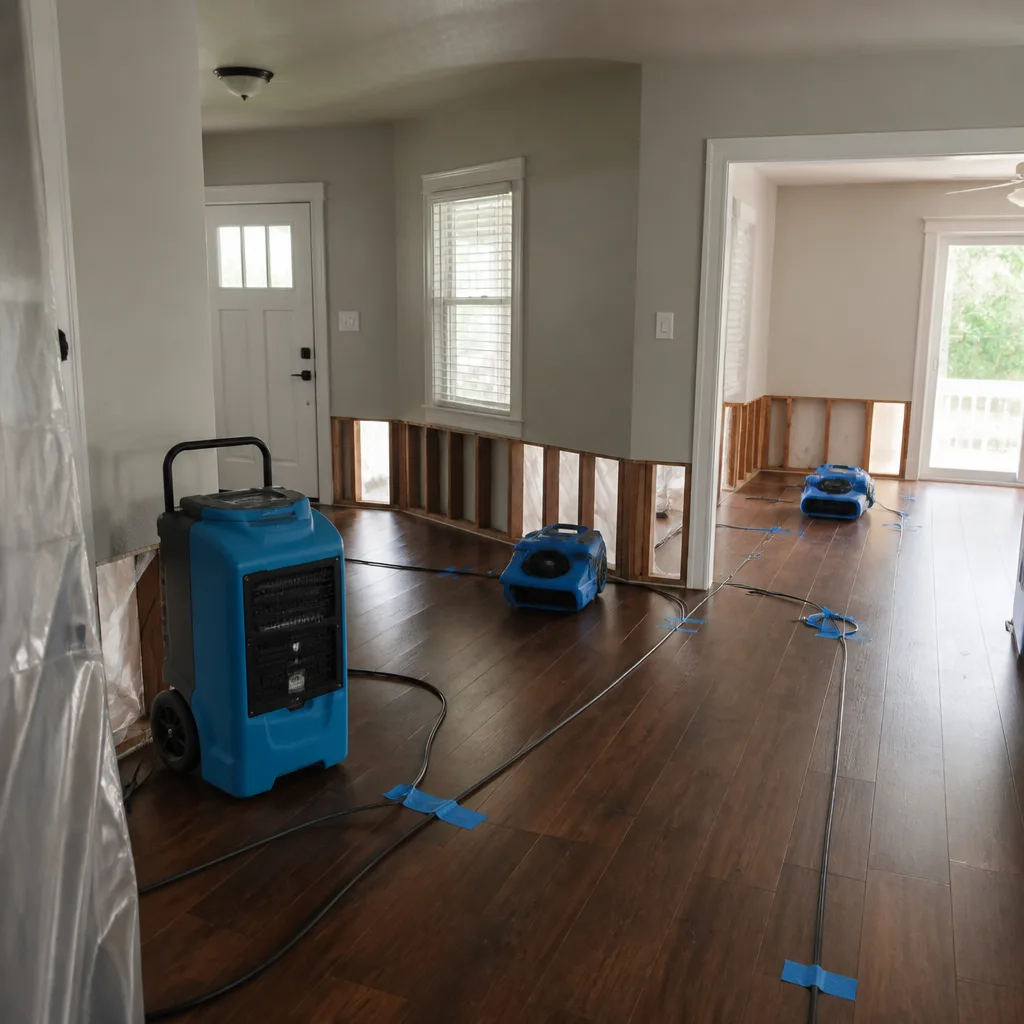

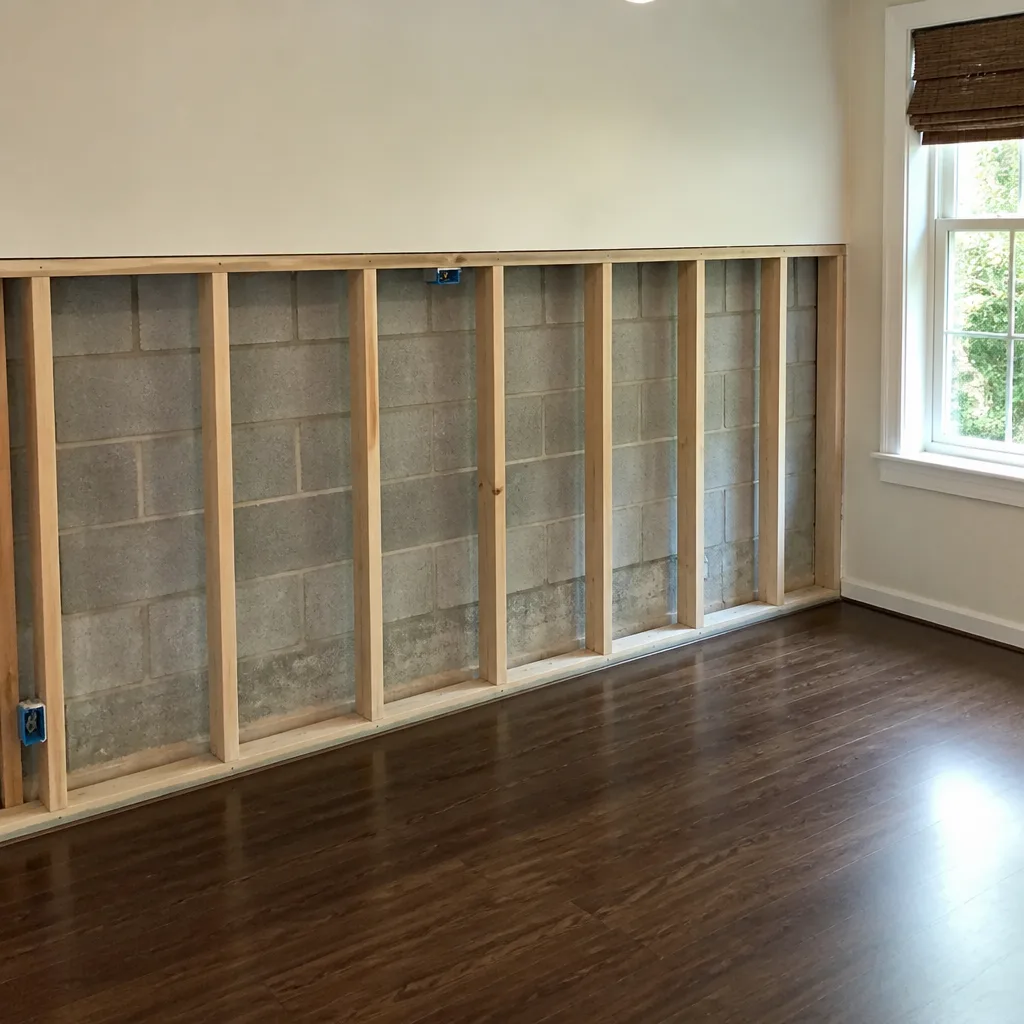
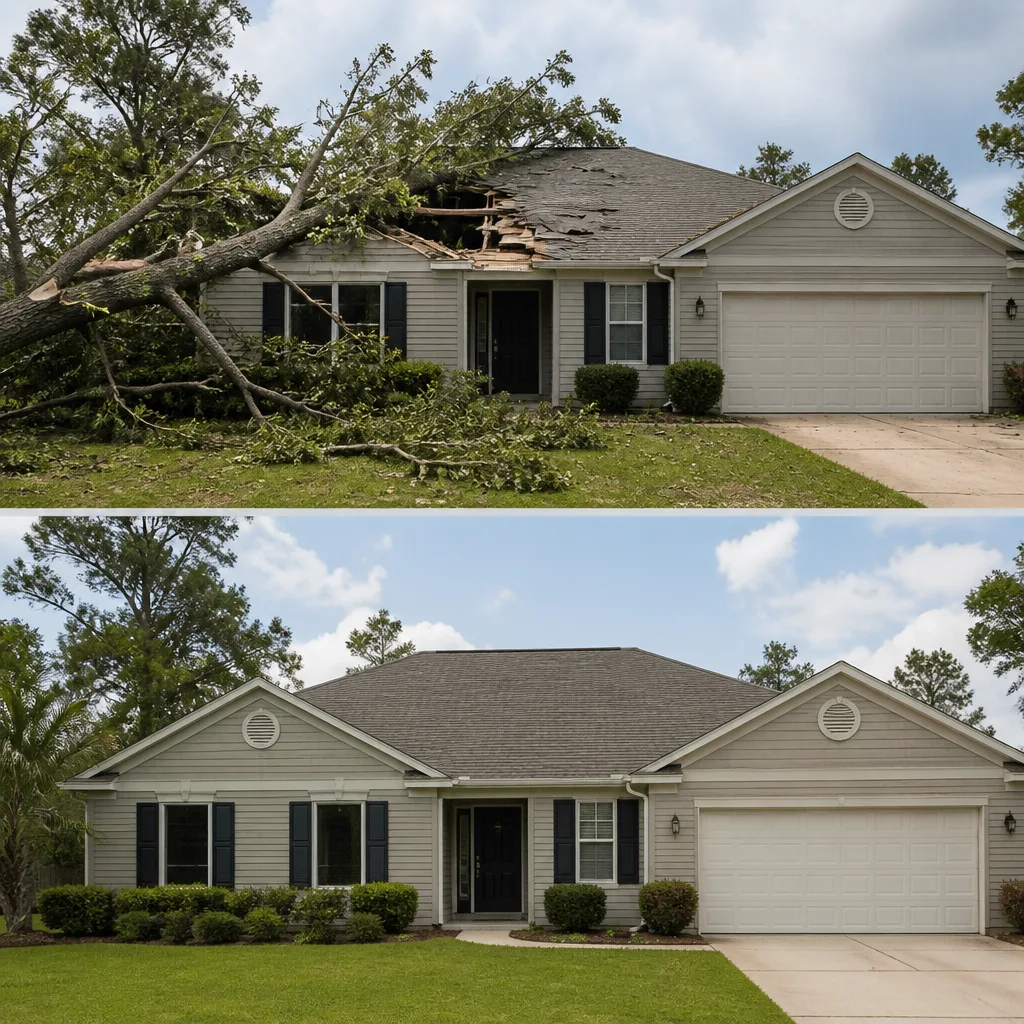


 Before
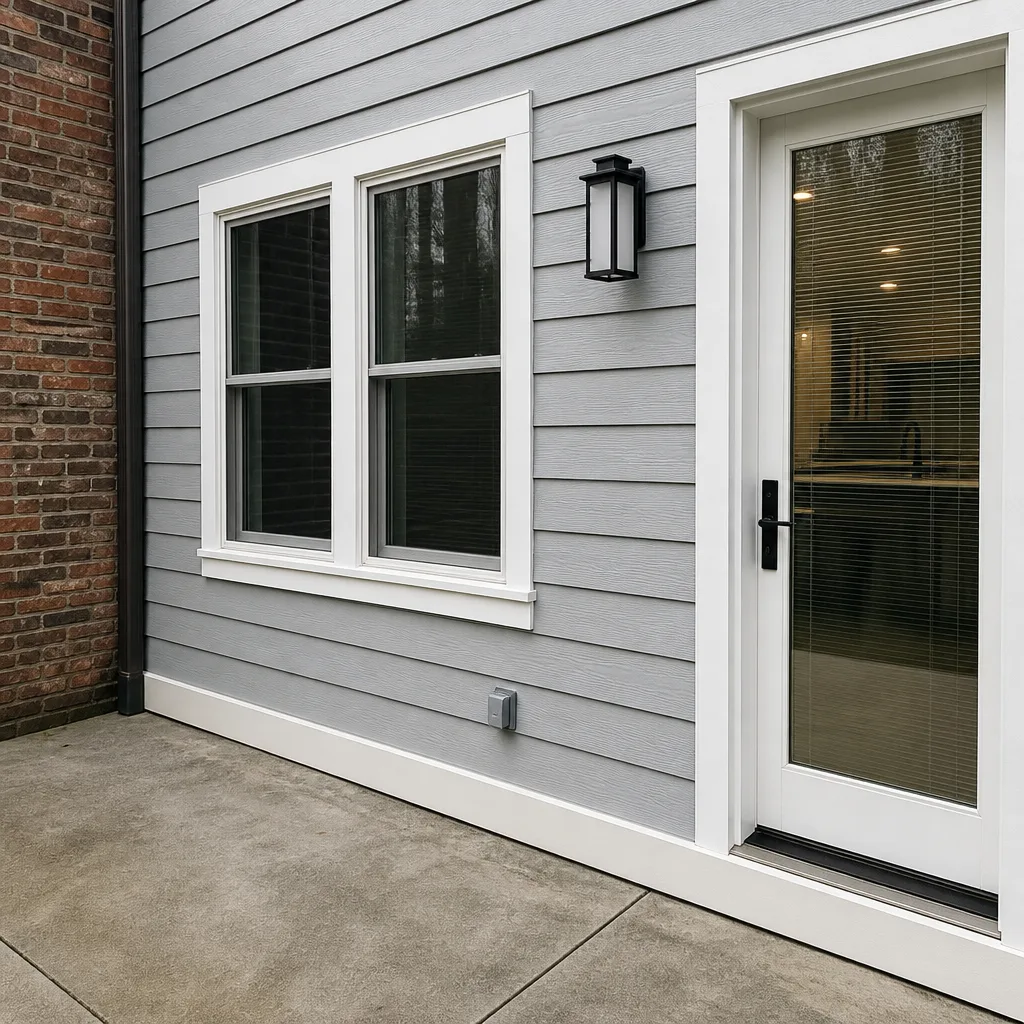 After
After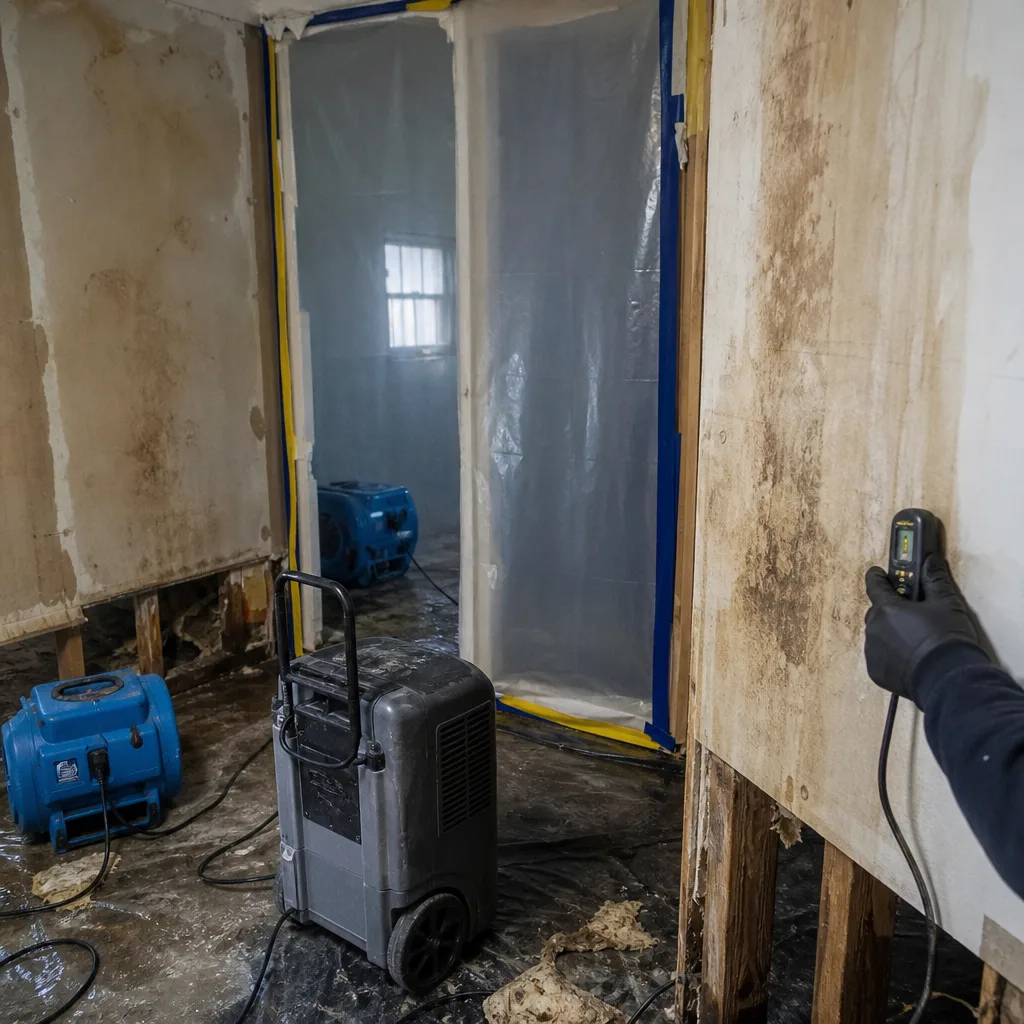 Before
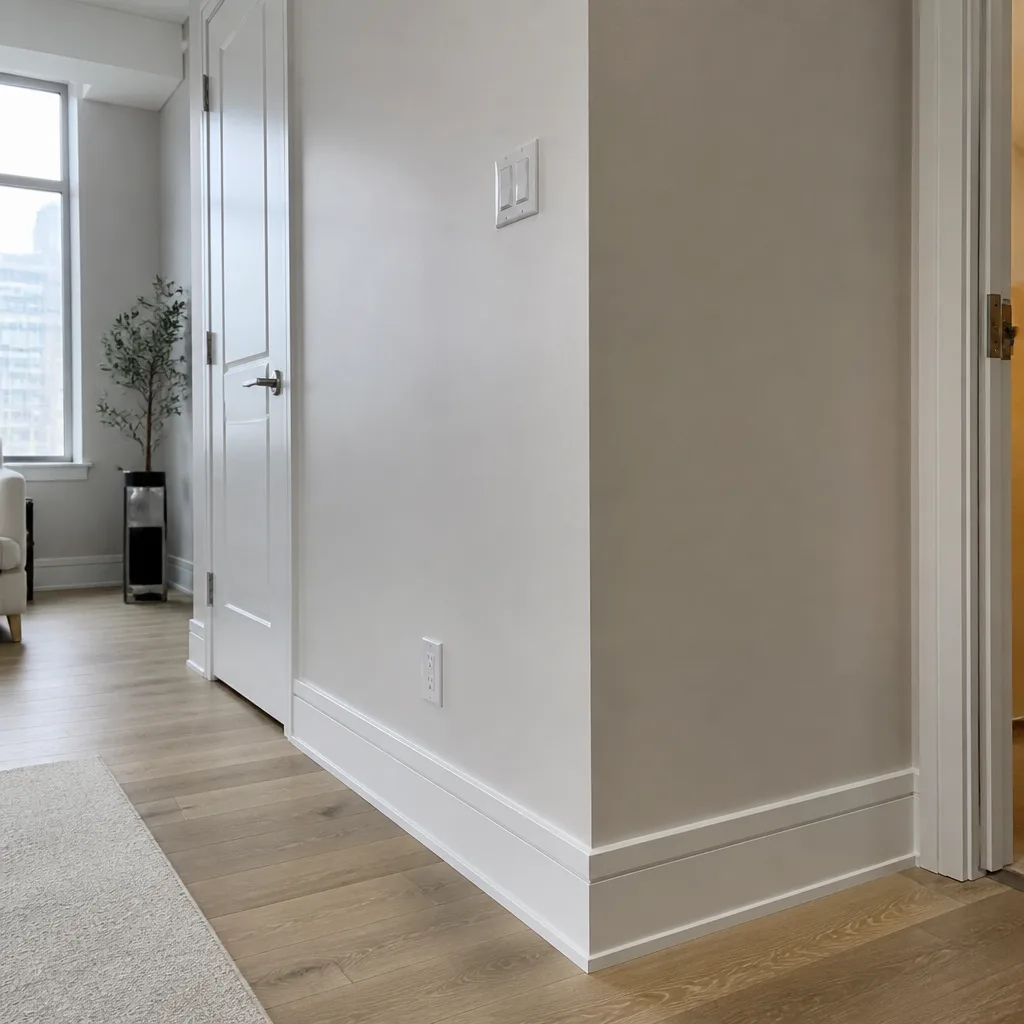 After
After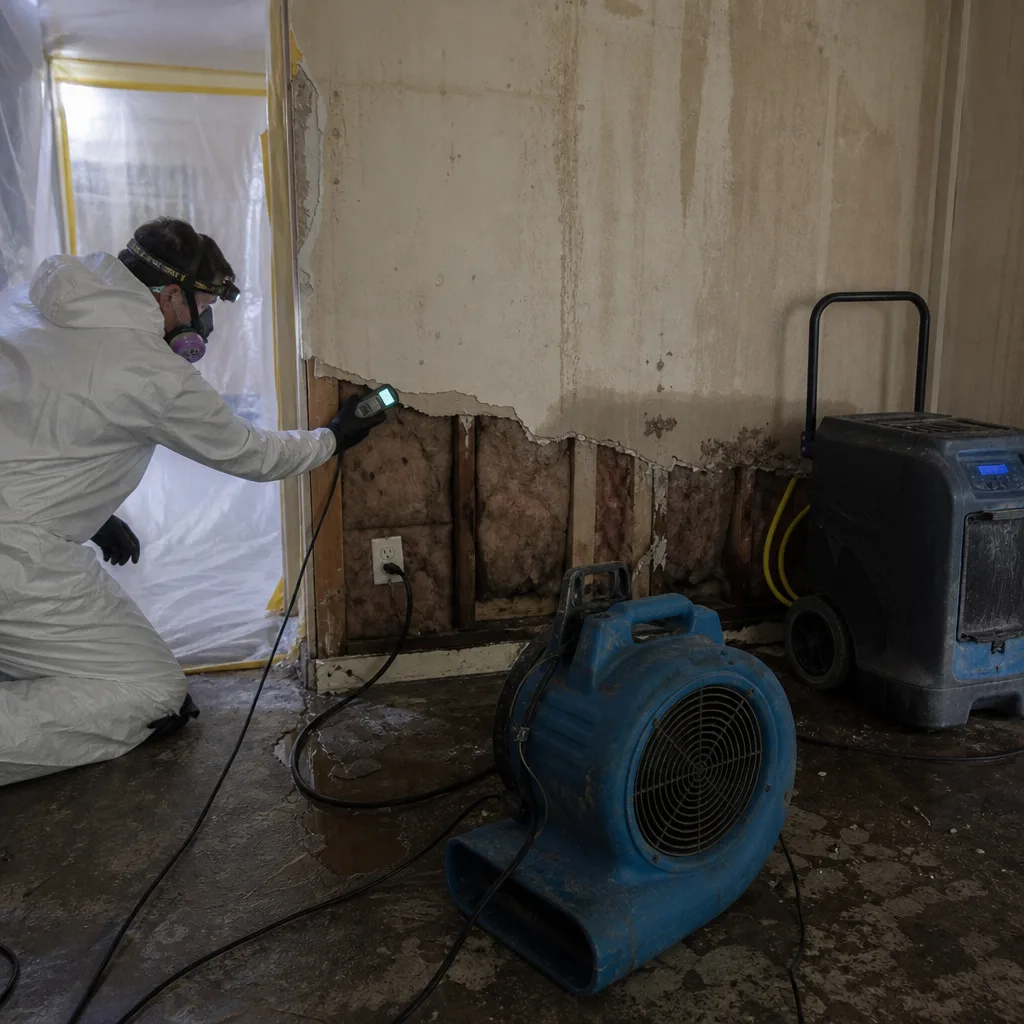 Before
 After
AfterDamage Restoration Warning Signs: A Financial District Homeowner’s Reference Guide
Most homeowners in the Financial District don’t discover a water leak the day it starts. They discover it the day the paint starts to bubble, or the floor begins to cup, or the baseboard pulls away from the wall and shows a dark seam behind it. By then the water has been at work for weeks, sometimes months. This guide covers the warning signs that show up before a restoration bill gets serious: what to look for, what it means, what it costs to fix when it’s caught early versus late, and when to call someone rather than investigate further yourself.
Quick Answer
Damage restoration warning signs in Financial District homes generally fall into four categories: water stains or discoloration, persistent musty odors, visible mold growth, and structural changes like warping, cracking, or soft drywall. If you see any of these, act within days, not weeks. A small hidden leak in a Financial District apartment or condo often costs $400-$900 to fix when caught early, but can run $8,000-$25,000 once it has spread through flooring, drywall, and into neighboring units.
Table of Contents
- Water Stains and Discoloration: What They Actually Mean
- Musty Odors and What They Tell You About Hidden Moisture
- Mold Growth: When It’s a Surface Issue and When It’s Structural
- Warping, Cupping, and Soft Drywall: The Late-Stage Signs
- Condensation and Humidity Patterns Specific to the Financial District
- Plumbing and Appliance Warning Signs That Precede Water Damage
- Fire and Smoke Damage Warning Signs in Older Financial District Buildings
- Sewage and Drain Warning Signs You Should Never Ignore
Water Stains and Discoloration: What They Actually Mean
Water stains are the most common first sign of a problem, and the most commonly misread. A pale yellow ring on a ceiling in a Financial District prewar building often means a slow leak from a pipe above or a failed seal around a roof drain. A darker brown stain with a defined edge usually means the water has been sitting long enough to pull tannins from wood or rust from metal fasteners. Neither one goes away on its own.
Here is what different stain patterns typically indicate in our experience working in Financial District high-rises and converted commercial buildings:
- Ceiling stains directly below a bathroom or kitchen - usually a supply line leak, a drain trap failure, or worn caulking around a tub or shower pan. In older Financial District buildings, the original cast iron drain stacks are now 60 to 100 years old, and pinhole leaks at the joints are common.
- Stains that appear after heavy rain - likely a roof membrane issue, a clogged roof drain, or a failing parapet cap. Financial District buildings with flat roofs and internal drains are especially prone to this when debris blocks the drain and water ponds.
- Stains running down an interior wall in a vertical stripe - this usually tracks a pipe inside the wall cavity. The stripe is the path of least resistance where water follows the pipe or a stud.
- Stains around window frames - failed window flashing, deteriorated exterior sealant, or a clogged weep hole. Financial District buildings near the East River get wind-driven rain that finds its way into small gaps that would never leak in calmer weather.
- Stains on a wall shared with a neighboring unit - common in Financial District condos and co-ops, where a leak originates in the adjacent apartment and migrates through the party wall before showing up on your side.
A stain that feels damp to the touch is an active leak. A stain that feels dry may still indicate a problem that has temporarily stopped, or it may be the visible remnant of a leak that was never properly dried. In our moisture mapping work, we regularly find elevated moisture readings in drywall and framing six inches or more beyond the visible edge of a stain. The visible stain is rarely the full extent of the damage.
In Financial District apartments where square footage is tight and walls are shared, one unit’s slow leak is often two units’ problem. Co-op boards and condo associations in the area typically have specific protocols for water infiltration claims, and documentation matters. Take photos with a date stamp, note when you first saw the stain, and if you live in a multi-unit building, notify your management office promptly.
Musty Odors and What They Tell You About Hidden Moisture
A musty smell is not a problem by itself. It is the airborne signature of a moisture problem that is hidden from view. The odor comes from microbial volatile organic compounds, the gases released by mold and bacteria as they grow on damp materials. If you smell it, the moisture is already there, even if you cannot see the source.
In Financial District buildings, the most common places we find hidden moisture behind a musty odor are:
- Inside wall cavities where a slow pipe leak has been saturating insulation for months
- Under kitchen and bathroom cabinets where a drain line has been weeping at a fitting
- Behind baseboards where water has wicked up from a slab or subfloor
- Inside HVAC ductwork or around air handler units where condensation collects
- Under area rugs or carpet padding where a spill or fixture overflow was never properly dried
The smell often comes and goes with humidity. In summer, when Financial District apartments run warmer and more humid, the odor intensifies because the microbial growth becomes more active. In winter, when heating systems dry the air, the odor may fade. Homeowners sometimes convince themselves the problem has resolved. It has not. The moisture source remains, and the growth goes dormant only to reactivate in the next humid spell.
Here is the process we follow when a homeowner reports an odor but cannot see the source:
- We walk the unit and note the strongest odor concentration. Odors concentrate near the source.
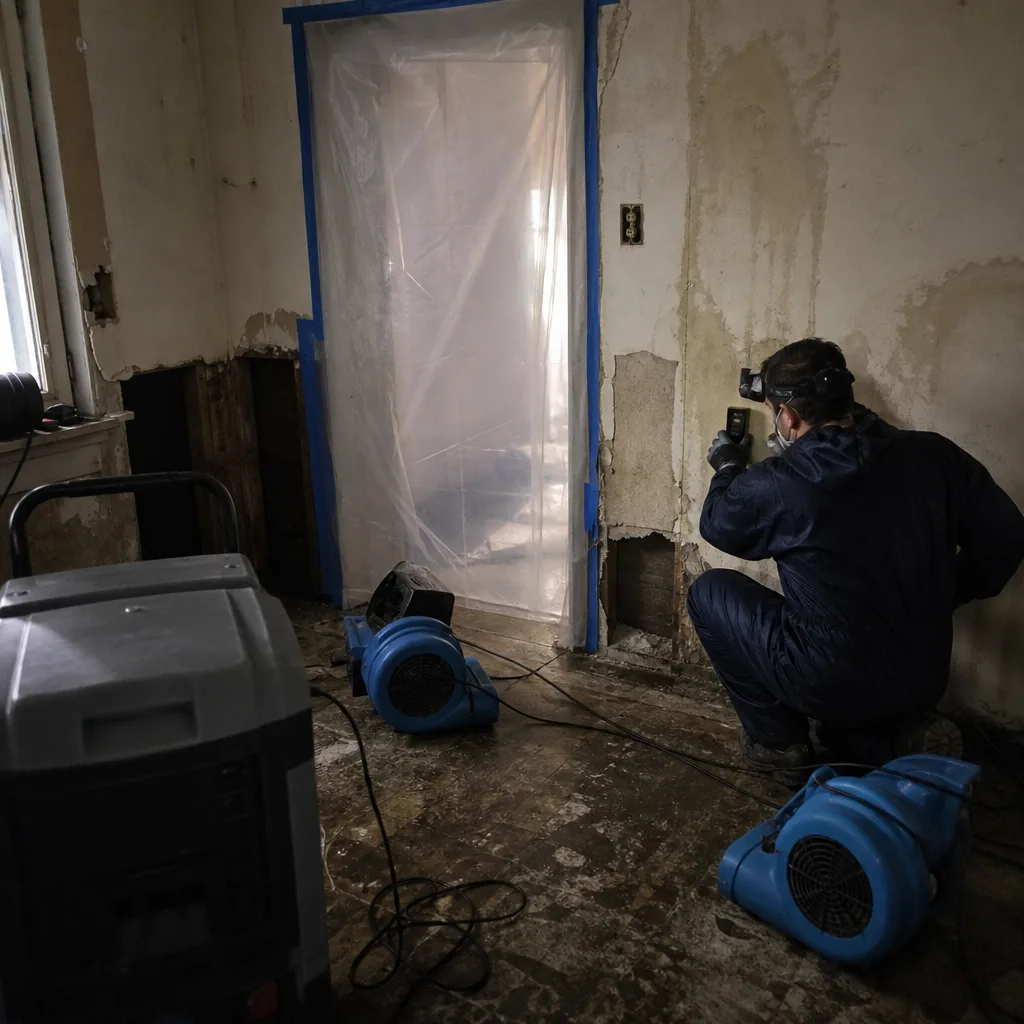
- We use a moisture meter on the walls, floors, and ceilings in that area. Non-invasive meters detect elevated moisture behind surfaces without cutting into anything.
- If the meter readings point to a cavity, we may use a borescope through a small access hole to see inside the wall.
- We map the affected area and share the findings with the homeowner, so they know exactly what is wet, what is growing, and what the options are.
Do not try to mask the odor with air fresheners or run a dehumidifier indefinitely without finding the source. A dehumidifier can slow growth, but it will not stop it. The source has to be found and the affected material dried or removed. In our experience, an odor that has been present for more than two weeks almost always means the damage is past the quick-fix stage.
Mold Growth: When It’s a Surface Issue and When It’s Structural
Mold in a Financial District home is either a surface condition or a structural one, and the difference determines the scope of the fix. Surface mold grows on the outside of a material: the face of drywall, the surface of a wood sill, the grout line in a shower. It can often be cleaned and treated if the underlying material is sound and the moisture source is corrected.
Structural mold growth has penetrated into the material itself: the core of drywall, the fibers of carpet and padding, the interior of a cabinet box, the space behind a baseboard. When mold has colonized the interior of porous material, cleaning the visible surface is not enough. The material has to be removed and replaced.
Signs that mold growth may be more than surface-level:
- The growth returns within days or weeks after cleaning
- The affected drywall feels soft or spongy when pressed
- The baseboard pulls away from the wall and reveals dark staining behind it
- There is a persistent musty odor from the same area even after surface cleaning
- The area is in contact with a known leak, condensation source, or past water event
Financial District apartments have particular mold risk factors. Many units are in older buildings with limited ventilation, and the original window configurations often cannot be altered due to landmark or building restriction. The East River proximity raises ambient humidity compared with inland Manhattan blocks. Bathrooms and kitchens that rely on recirculating exhaust fans, common in Financial District conversions, do not actually remove moisture from the unit. They just move it around.
We recommend that homeowners treat any mold growth larger than a 3-foot by 3-foot contiguous area as a professional remediation project. That square footage is the threshold many industry standards, including IICRC guidance, use to distinguish a small cleanup from a larger containment project. Smaller patches can sometimes be handled by a homeowner with appropriate precautions, but if the growth is on drywall, the material often has to be cut out regardless of the patch size. When in doubt, have it looked at. Mold remediation in a Financial District apartment typically runs $1,500-$6,000 depending on the extent, the containment required, and whether the finish materials are standard or custom.
Warping, Cupping, and Soft Drywall: The Late-Stage Signs
By the time flooring cups, drywall softens, or a door starts sticking in its frame, the moisture event is almost never recent. These are late-stage signs that water has been present long enough to change the physical shape of building materials. They are also the signs most easily dismissed as normal settling or age.
Flooring changes to watch for in a Financial District apartment:
- Cupping: The edges of wood planks rise higher than the center, creating a shallow U shape. This happens when the underside of the flooring absorbs more moisture than the top surface. In Financial District units, we often see cupping around radiators, dishwashers, refrigerators with ice maker lines, and entry doors where rain is tracked in.
- Crowning: The center of the plank rises higher than the edges. This typically happens after cupped flooring was sanded while still damp, or when the top surface gets wet while the underside stays dry.
- Gapping: Planks separate and leave visible cracks between boards. Seasonal expansion and contraction causes some gapping in all wood floors, but consistent gaps that do not close in humid weather suggest the flooring has dried after being saturated and has lost its original dimension.
- Tile lippage: One tile edge sits higher than the adjacent tile. In a water event, the thinset bond fails in spots and the tile shifts. In Financial District bathrooms and kitchens installed 15 or more years ago, this is a common sign of a past leak that was never addressed.
Drywall changes:
- A wall that yields slightly under hand pressure instead of feeling rigid
- Nail pops or screw pops appearing in a line, especially near the ceiling or along a wall shared with plumbing
- Cracking at the corner of a door or window opening, especially if the crack widens over a few months
- Baseboard that has pulled away from the wall, revealing a gap that widens toward one end
In Financial District buildings, wall sections that have been wet and dried improperly often look fine for a year or two, then fail as the gypsum core loses cohesion. The repair at that point is not a patch; it is a cut-out and replacement of the affected section, followed by tape, mud, and repainting. If a wall has been wet, the studs behind it need to be checked with a moisture meter before new drywall goes up. Putting drywall over wet framing guarantees the problem comes back.
Condensation and Humidity Patterns Specific to the Financial District
The Financial District sits at the southern tip of Manhattan, surrounded by water on three sides. That geography affects indoor humidity in ways homeowners should understand. Ambition to keep a unit at a comfortable temperature often works against moisture control. Here is what we see regularly in Financial District buildings:
- Window condensation in winter: Warm indoor air hits cold glass and drops moisture. On older single-pane windows in prewar Financial District buildings, this is normal to a degree. But condensation that runs down and pools on the sill, saturates the wood, or drips onto the floor below is a problem. The moisture is feeding the window frame, the sill, and possibly the wall cavity below the window.
- Condensation on interior walls in summer: This indicates a dew point issue inside the wall. It happens when a mechanical system or a plumbing line chills the wall surface while the room air is warm and humid. We see this around duct runs, chilled water lines, and poorly insulated refrigerant lines in Financial District apartments.
- Bathroom humidity after showers: In units with recirculating exhaust fans, a shower adds roughly a pint of water vapor to the air that never leaves the apartment. That moisture condenses on the coolest surfaces available, which in a Financial District apartment is often the ceiling above the shower, the exterior wall, or the window glass. Repeated wetting fuels mold growth on the ceiling and the upper wall.
- Radiator steam and heat pipe condensation: Steam heating systems common in older Financial District buildings produce moisture as part of normal operation. When the radiator valve leaks, or the pipe insulation is missing, condensation runs onto the floor or into the wall. This is a slow drip, often unnoticed, that keeps the subfloor wet through the entire heating season.
Aim to keep indoor relative humidity between 30 and 50 percent year-round. Use a hygrometer to measure it. They cost $10 to $20 at any hardware store. If readings consistently exceed 55 percent in summer, run a dehumidifier. If winter readings exceed 50 percent despite cold outside air, there may be a mechanical source of moisture that needs attention.
Plumbing and Appliance Warning Signs That Precede Water Damage
Most water damage in Financial District apartments starts with a plumbing or appliance failure that gave warning first. These are the signs we tell homeowners to take seriously:
- A water bill that spikes without explanation: In a Financial District co-op or condo where usage is sub-metered, an unexplained increase often means a running toilet, a dripping supply line, or a leak inside a wall. Compare month over month. A 20 percent jump you cannot explain is worth investigating.
- Water hammer: A loud bang when a valve closes. It means the water flow is stopping hard against a closed valve, and the pressure spike travels through the pipe. Over time, water hammer can crack joints and fittings inside walls. If the banging is new or getting louder, have the piping system checked.
- A toilet that rocks: A toilet that shifts under pressure is breaking its wax ring seal. Waste water then leaks under the toilet at every flush and soaks into the subfloor. In Financial District apartments, this is one of the most common causes of subfloor rot in bathrooms.
- A dishwasher that leaves water in the tub after a cycle, or puddles appearing at the base: Either one means a drain restriction or a door seal failure. The water that leaks from a dishwasher follows the path under the cabinetry, where it is invisible until the cabinet base swells.
- Refrigerator ice maker lines that are plastic rather than braided steel: Plastic supply lines harden with age and fail at the push-in fittings. We have seen floods in Financial District apartments from a $4 plastic line that snapped while the homeowner was at work. If you have a plastic ice maker line, replace it.
- Water staining on the ceiling below a bathroom or kitchen in a neighboring unit: In Financial District multi-unit buildings, your leak may show up downstairs before it ever shows up in your unit.
An annual check of the supply lines, valves, drains, and appliance connections in an apartment costs little and catches most of these issues before they become water events. The $89 Seasonal Tune-Up that Floodline Restoration Co. offers includes a visual inspection of accessible plumbing connections and fixture seals, which is a practical way to stay ahead of the common failure points.
Fire and Smoke Damage Warning Signs in Older Financial District Buildings
Financial District buildings include some of the oldest residential structures in Manhattan, and the fire risks in these buildings are different from newer construction. The warning signs are also different, and they show up before a fire starts.
- Burning smell from an outlet or switch: This indicates heat building at a connection point, usually from a loose wire, an overloaded circuit, or backstabbed wiring connections that are failing. Do not wait on this. The fix is electrician work, and it should happen immediately.
- Flickering lights that do not correlate with a known appliance cycling on: A loose neutral or a failing breaker can create resistance, and resistance creates heat. In older Financial District buildings with original wiring, this is worth checking with a licensed electrician.
- Warm or discolored wall plates: The wall plate over an outlet or switch should never feel warm. If it does, the connection behind it is generating heat.
- Acrid or chemical odor from an HVAC register when the heat first comes on in fall: Dust burns off heating elements or heat exchangers, which is normal for the first cycle or two. A smell that persists suggests something else is heating up that should not be, or a foreign object in the ductwork.
- Smoke alarms that chirp intermittently or sound without smoke: In older Financial District buildings, aging detectors or detectors that have not been replaced within their rated service life (typically 10 years) may false alarm or fail to alarm. Test every detector. Those that do not respond need replacement.
If a fire does happen, the smoke and soot damage is not limited to the burned room. Smoke travels through wall cavities, chase ways, and HVAC ducting, and the soot it deposits is acidic. It etches glass, corrodes metal fixtures, and bonds to painted surfaces within days. The longer it sits, the harder it is to clean. Quick soot removal is not a cosmetic preference; it is a material-protection decision.
Sewage and Drain Warning Signs You Should Never Ignore
Sewage backups in Financial District buildings are unpleasant and they are dangerous. Waste water carries bacteria, viruses, and parasites. A backup that seeps into a unit through a floor drain, a toilet, or a bathtub is not a DIY cleanup. It requires professional extraction, disinfection, and often removal of porous materials that absorbed the waste water.
Warning signs that a sewage or drain problem is developing:
- Multiple drains gurgling when a toilet flushes or a washing machine drains: This means air is being pushed or pulled through the drain system, which indicates a venting problem or a restriction building in the main line.
- Water backing up into a tub or shower when you run the sink: The line is partially blocked, and water is finding the next available outlet.
- Sewer odor inside the unit, especially near floor drains: The trap in the floor drain may have dried out, which is common in Financial District apartments where floor drains are rarely used. The fix is to pour water into the drain to refill the trap. If the odor persists, there is a venting or trap seal problem.
- Slow drains that stay slow after repeated attempts to clear them: A chronic slow drain usually means a restriction deep in the branch line or the building stack, not hair in the trap. In older Financial District buildings, original cast iron stacks corrode on the inside, and the corrosion catches debris until the line closes off.
- Water stains on the ceiling below a toilet or tub drain, especially in a line: The waste pipe is leaking at a joint or a crack, and the water running through the drainage system is escaping into the floor assembly.
If sewage has entered your Financial District unit, the affected area needs to be treated as contaminated. Carpet, padding, drywall that wicked the water, and any porous furnishings in contact with it are typically removed. Non-porous surfaces are cleaned and disinfected. This is work for a certified crew with the right protective equipment and the right disposal procedures. It is not a bleach-and-mop situation.
Common Mistakes to Avoid
- Painting over a water stain without fixing the water source. The stain will bleed through the new paint within months, and the leak continues behind the wall. The stain is a symptom. Fix the leak, dry the cavity, then repaint.
- Assuming a dried stain means the problem is over. Water that dried on its own usually left moisture inside a wall cavity or under a floor. Dry does not mean resolved. It means the standing water evaporated into the materials around it.
- Running a dehumidifier forever instead of finding the source. This slows visible symptoms but does not stop the underlying moisture. The moisture source keeps feeding the problem, and the electric bill climbs while the damage spreads.
- Cleaning visible mold with bleach and calling it done. Bleach does not penetrate porous materials where the mold roots are, and on materials like drywall it does not kill the growth below the surface. The mold returns, usually worse.
- Ignoring a small leak because the damage looks minor. In Financial District apartments, a slow leak inside a wall can go months without visible damage, then fail all at once, flooding the unit and the one below. Small leaks are cheap to fix early.
- Waiting to notify a co-op board or condo association. In Financial District multi-unit buildings, the building’s insurance and the unit owner’s insurance both have notification timelines. Delaying notice can affect coverage and can turn a neighbor’s problem into a shared liability dispute.
- Attempting sewage cleanup without proper protection. Waste water is a biohazard. Contact with it without proper PPE, containment, and disinfection procedures can cause serious illness. This is not a task for household gloves and a mop.
When to Call a Professional
Some warning signs are informational. Others call for action. Call a restoration professional when you find an active leak you cannot trace to a visible source, when a water stain grows over a few days, when flooring cups or drywall softens, when a musty odor persists for more than two weeks, when mold growth exceeds a small patch, or when sewage backs up into the unit. A certified technician with a moisture meter and thermal imaging can find what is happening behind walls and floors without destructive demolition, and can tell you honestly whether the situation is a cleanup or a rebuild. Floodline Restoration Co. offers free estimates in the Financial District. Call (518) 663-6491 and a live dispatcher answers, day or night.
Frequently Asked Questions
Water damage restoration in the Financial District typically costs between $1,200 and $8,000 depending on the extent of the affected area, the materials involved, and whether containment and drying equipment are required. A small, contained leak under a sink might run $500-$900, while a whole-room extraction with wall drying and floor removal can reach $8,000 or more. Most Financial District restoration projects we handle fall in the $2,000-$5,000 range. Call (518) 663-6491 for a free estimate with a written scope before work starts.
Most homeowner and condo policies cover sudden and accidental water damage, such as a burst pipe or an appliance supply line failure, but they exclude damage from gradual leaks that were not addressed. The distinction matters. In Financial District multi-unit buildings, the building’s master policy may cover certain structural elements while your unit policy covers finishes and contents. Documentation is the deciding factor in most claims: photos, dates, and a professional assessment all help establish what happened and when. Floodline Restoration Co. bills your carrier directly and coordinates with your adjuster, so you are not the one ferrying paperwork back and forth.
In the Financial District, Floodline Restoration Co. can usually have a certified crew on site within 60 to 90 minutes of your call, because our dispatch is live and our technicians are based in the area. Mitigation work, meaning extraction and the start of the drying process, typically begins the same visit. Call (518) 663-6491 and a person answers, not a recording.
If the mold growth is confined to a non-porous surface and the moisture source is corrected, cleaning may be enough. If the mold is on drywall, carpet, or insulation, remediation is required because those materials absorb the growth below the surface where cleaning cannot reach. In our Financial District work, visible mold on a wall is usually accompanied by invisible mold inside the wall cavity, and the only way to resolve it is to remove the wet material. A professional assessment tells you which situation you have before you spend money on a fix that will not hold.
Floodline Restoration Co. coordinates directly with your adjuster every step of the way. We document the damage with moisture readings, thermal images, and photos, provide the written scope and supporting evidence the carrier requests, and bill the carrier directly for covered work. You are not left translating between a contractor and an insurance company. That is our job, and in the Financial District, where claims often involve co-op and condo board involvement as well, having one contractor who talks to everyone keeps the process moving.
The 90-Day Done Right Promise, which we call the Keystone Standard, is a written guarantee that covers the work we perform. If it is not done right, we make it right within 90 days of completion, with no arguing and no paperwork battles. It applies to all restoration and reconstruction work we do in Financial District homes, and it is given in writing on every job.
The Bottom Line
Restoration warning signs in Financial District homes follow a pattern: a visible stain, a persistent odor, a small change in a floor or wall that is easy to dismiss. The mistake we see most often, after 42 years of serving local communities and more than a decade working in Manhattan’s Financial District specifically, is waiting. A small leak is a repair. A neglected leak is a restoration project with a much larger bill. If you see something, take a picture and get it looked at. The estimate is free, the assessment tools are professional, and the answer is often better than you fear. Call (518) 663-6491.
Written by Curt Bowman, Owner at Floodline Restoration Co., serving Financial District since 2010.